
Butter Tea
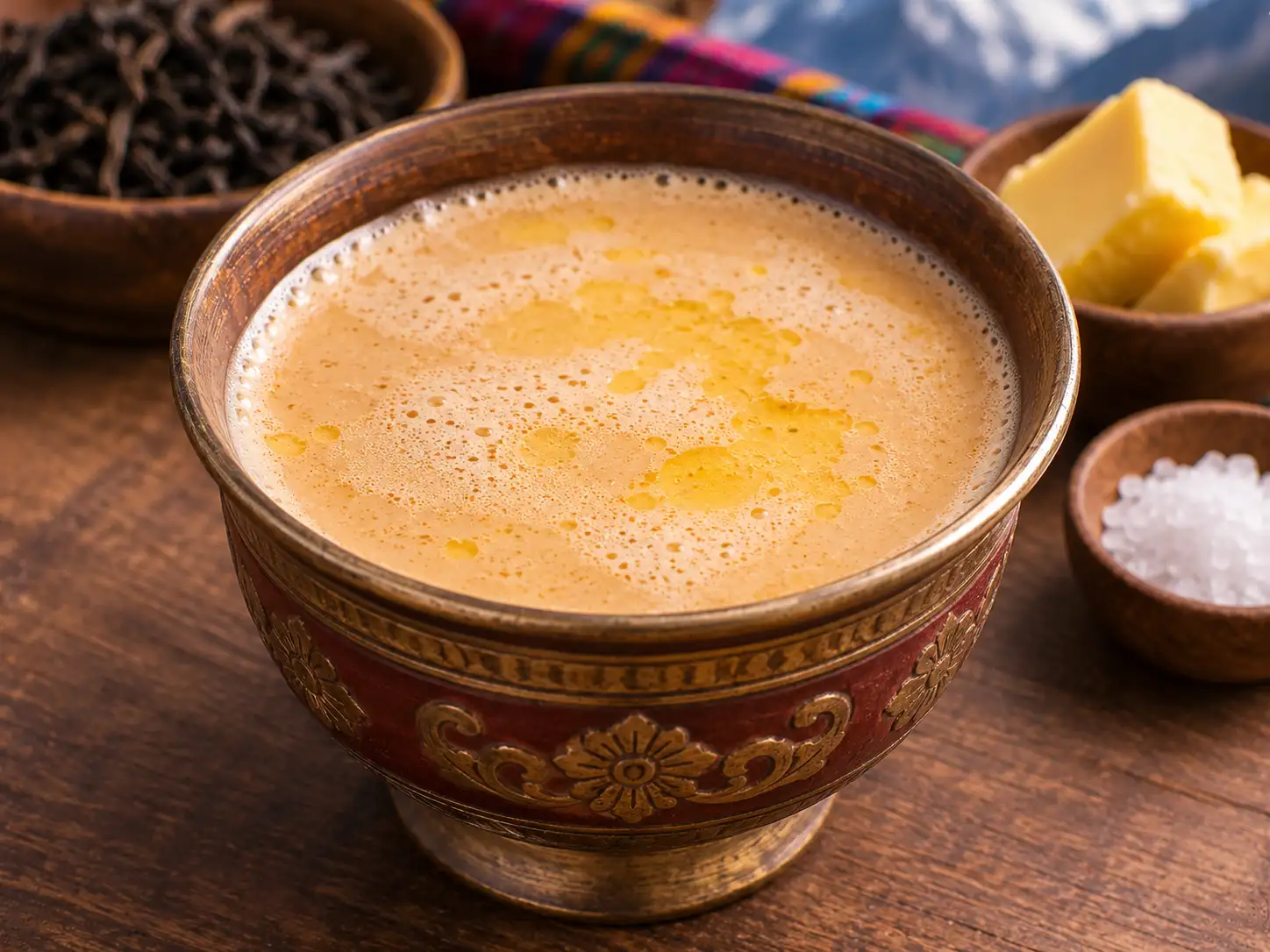
For many people, tea means a fragrant drink served with sugar, milk, or perhaps a slice of lemon. In Tibet and parts of the Himalayas, however, a traditional cup of tea can be savory, salty, and surprisingly rich. Known as po cha, Tibetan butter tea combines strongly brewed tea with butter and salt, then churns the ingredients into a smooth, creamy drink. Traditionally made with butter from female yaks, this distinctive beverage has long provided warmth, energy, and hospitality in the cold, high-altitude regions of the Tibetan Plateau.
What Is Butter Tea?
Butter tea is a traditional hot beverage associated with Tibetan culture and neighboring Himalayan communities. Its basic ingredients are tea, butter, salt, and water, sometimes with added milk. Unlike sweet milk tea, butter tea is deliberately savory, with a rich texture created by blending the butter into the brewed tea.
In Tibetan, the drink is commonly called po cha or cha süma, the latter referring to churned tea. Related drinks are known by different names elsewhere in the Himalayas, including gur-gur cha in Ladakh and suja in Bhutan.
Traditional butter tea is often prepared using compressed tea bricks, which produce a strong brew capable of standing up to the richness of butter. The mixture is churned until the fat is dispersed throughout the liquid, creating a creamy drink that may range from pale tan to light brown.
Its taste can surprise newcomers. Rather than the sweetness expected from many tea drinks, butter tea offers saltiness, a noticeable dairy richness, and the earthy bitterness of strong tea. Some versions also have a faintly tangy flavor depending on the butter used.
Quick Facts
Quick Facts
- Region: Tibet and neighboring Himalayan regions
- Tibetan names: Po cha and cha süma
- Main ingredients: Tea, butter, salt, and water
- Traditional butter: Butter made from female yak milk
- Texture: Smooth, creamy, and lightly frothy
- Flavor: Savory, salty, buttery, and earthy
- Serving temperature: Hot
- Traditional equipment: Wooden tea churn
- Common accompaniment: Tsampa, roasted barley flour
- Cultural role: Daily nourishment, hospitality, and social gatherings
Common Ingredients
Butter tea relies on a few essential ingredients, each contributing to its distinctive taste and texture.
- Tea: Traditionally made from compressed tea bricks, often using robust, mature tea leaves. The tea is brewed strongly before being mixed with the other ingredients.
- Yak butter: Provides the richness and creamy consistency. More precisely, the butter comes from the milk of female yaks, sometimes called dris.
- Salt: The defining seasoning that distinguishes butter tea from sweetened tea drinks.
- Water: Used to boil or simmer the tea and extract its flavor.
- Milk: Added in some regional or household preparations to create a milder, creamier beverage.
Traditional recipes may use varying amounts of butter and salt. Some produce a relatively light drink, while others are noticeably thick and rich.
Outside the Himalayas, cooks sometimes substitute ordinary cow's milk butter for yak butter and use loose-leaf black tea in place of compressed tea bricks. These adaptations can resemble the traditional drink, although the flavor and texture may differ.
How Butter Tea Is Prepared
The traditional preparation begins with strong tea. A portion of compressed tea is broken from a brick and simmered in water, sometimes for an extended period, to produce a concentrated infusion.
The brewed tea is strained to remove the leaves and transferred to a tall wooden churn. Salt and butter are added, and the mixture is repeatedly churned using a plunger.
This vigorous mixing disperses the butter into tiny droplets throughout the hot tea. The result is a smooth, creamy liquid rather than a cup with a separate layer of melted fat floating on top.
The traditional Tibetan churn, known as a mdong mo, is a distinctive piece of household equipment. It consists of a tall cylindrical container and a plunger that moves up and down to mix the ingredients.
Once churned, the tea is poured into a pot or serving vessel and kept warm. It may be served in small bowls or cups, particularly when guests are present.
Modern adaptations sometimes use a blender instead of a wooden churn. While this changes the equipment, the goal remains the same: to combine tea, salt, and butter into a unified, creamy beverage.
History & Origins
Butter tea developed within the food traditions of the Tibetan Plateau, where high elevations, cold weather, and pastoral livelihoods have influenced everyday eating habits for centuries.
Tea is not traditionally cultivated across most of the Tibetan Plateau. Historically, it reached the region through trade with neighboring areas of China and other parts of Asia. Compressed tea bricks were particularly practical for transporting large quantities across mountainous routes.
Yaks were already important to many Tibetan pastoral communities, providing milk, butter, meat, fiber, and other resources. Combining imported tea with locally available butter created a distinctive beverage suited to regional tastes and ways of life.
Butter tea became closely connected with daily meals and hospitality. In many Tibetan households, offering tea to visitors is an expression of welcome, and a guest's bowl may be refilled repeatedly during a visit.
The exact date when butter tea was first prepared is uncertain. Its development is best understood as part of the long interaction between Tibetan pastoral traditions, regional agriculture, and historic tea-trading networks rather than as the invention of a single person.
Varieties & Differences
Butter tea traditions extend beyond Tibet, with related beverages appearing in several Himalayan regions. Their ingredients and methods share similarities, but local names and practices differ.
- Tibetan po cha: The classic salted butter tea made by churning strong brewed tea with butter, traditionally from yak milk.
- Cha süma: Another Tibetan name emphasizing the churning process used to blend the tea and butter.
- Ladakhi gur-gur cha: A salted butter tea popular in Ladakh, India, traditionally prepared with a churn. Its name is associated with the sound made during mixing.
- Bhutanese suja: A traditional salted butter tea served in Bhutan, including during social and ceremonial occasions.
- Modern adapted butter tea: Versions made with ordinary butter, commercial tea, milk, and a kitchen blender when traditional ingredients or equipment are unavailable.
Butter tea should not be confused with ordinary sweet milk tea, which is also consumed in parts of the Himalayas. Sweet milk tea and salted butter tea may appear in the same region but offer very different flavors and textures.
How Butter Tea Is Enjoyed
In Tibetan households, butter tea is commonly enjoyed throughout the day. Its warmth and richness make it particularly welcome in cold weather, while its role in hospitality gives it a social importance beyond everyday refreshment.
One of its most familiar accompaniments is tsampa, a traditional Tibetan food made from roasted barley flour. Tsampa may be mixed with butter tea to create a soft dough or porridge-like mixture that can be eaten by hand.
Butter tea is also served with other foods, including bread and simple household meals. It may be offered to guests during visits and shared at family or community gatherings.
For people accustomed to sweet tea, the first sip may taste more like a light savory broth than a conventional beverage. The salt enhances the buttery richness, while the strong tea contributes an earthy, slightly bitter background.
The butter adds substantial energy, which has historically made the drink valuable within demanding high-altitude livelihoods. However, the amount of fat and sodium varies by recipe, and butter tea should not be regarded as a treatment for altitude sickness or other medical conditions.
For many Tibetan and Himalayan communities, the beverage is inseparable from familiar routines, family hospitality, and memories of home. Its significance cannot be reduced simply to its unusual ingredients.
Did You Know?
Traditional Tibetan butter tea is mixed in a tall wooden churn rather than stirred with a spoon. Repeated plunging disperses the butter throughout the tea, creating its characteristic creamy texture. The Smithsonian Institution preserves examples of these churns as objects connected to Tibetan food and household traditions.
A Savory Tea Rooted in Himalayan Life
Butter tea is more than a surprising combination of tea, butter, and salt. It reflects centuries of trade, pastoral life, and hospitality across the Tibetan Plateau and neighboring Himalayan regions. Its creamy texture, savory flavor, and warming character distinguish it from sweet tea traditions found elsewhere in the world. Whether served with tsampa, offered to a guest, or enjoyed during a quiet household meal, butter tea remains an enduring expression of Tibetan and Himalayan food culture.