
Caldo de Piedra
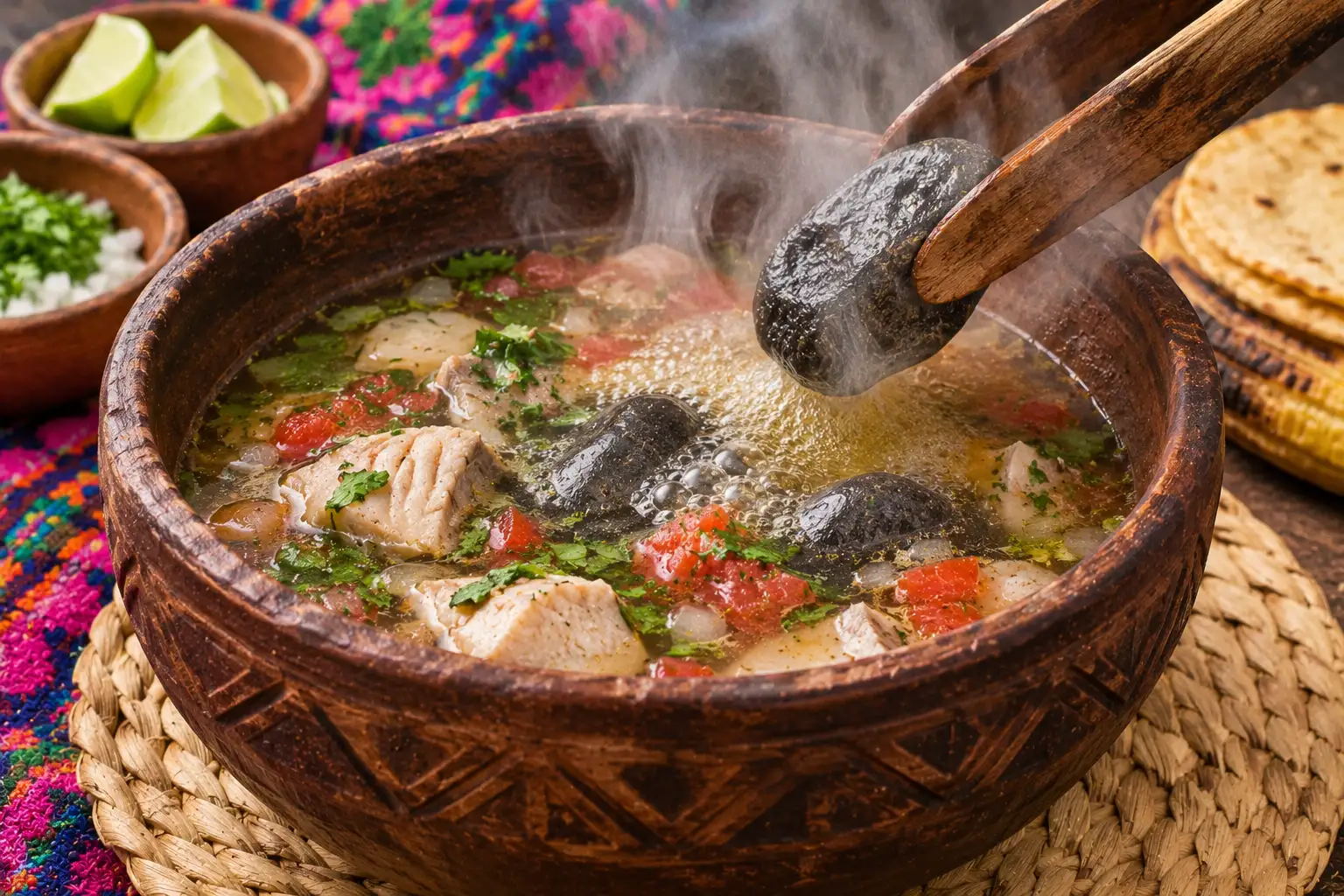
Imagine a bowl filled with fresh river fish, shrimp, tomatoes, chiles, and herbs. Instead of putting it on a stove, the cook lowers a stone heated in a wood fire directly into the liquid. The water erupts into bubbles, steam rises, and the ingredients begin cooking before your eyes. This is caldo de piedra, or stone soup, an extraordinary culinary tradition of the Chinantec people of Oaxaca, Mexico. Closely associated with San Felipe Usila, the dish is more than a dramatic way to prepare seafood. It reflects generations of Indigenous knowledge about rivers, fire, cooking materials, and communal hospitality. Its cultural significance was formally recognized by the state of Oaxaca in 2021.
What Is Caldo de Piedra?
Caldo de piedra is a traditional Chinantec soup prepared by transferring heat from fire-heated stones directly into water containing fresh ingredients.
Its Spanish name translates as "stone broth" or "stone soup."
The dish is especially associated with San Felipe Usila, a community in the Chinantla region of northern Oaxaca, within the Papaloapan River basin.
Traditional preparations commonly feature freshwater fish, river shrimp, tomatoes, onions, chiles, and aromatic herbs.
The resulting broth is light and savory, with the freshness of the seafood complemented by the acidity of tomatoes and the distinctive flavors of local seasonings.
What makes the soup extraordinary is that the vessel holding the ingredients does not have to be placed over a fire. The cooking heat arrives inside the vessel, carried by stones that have been heated separately.
Although the method attracts attention for its dramatic appearance, caldo de piedra is also an expression of Chinantec identity and community relationships.
Quick Facts
- Food Name: Caldo de piedra
- English Meaning: Stone soup or stone broth
- Country: Mexico
- Region: Chinantla, northern Oaxaca
- Famous Locality: San Felipe Usila
- Cultural Origin: Chinantec Indigenous culinary tradition
- Main Ingredients: Freshwater fish, river shrimp, tomatoes, onions, and chiles
- Traditional Herbs: Cilantro and epazote, depending on the preparation
- Cooking Method: Fire-heated stones placed directly into the broth
- Traditional Vessel: Dried-gourd bowl or suitable stone basin
- Cultural Recognition: Recognized as intangible cultural heritage of Oaxaca in 2021
How Can Hot Stones Cook a Soup?
The science behind caldo de piedra is simple, but applying it safely requires considerable practical knowledge.
Stones can absorb and store thermal energy when heated in a fire.
When a sufficiently hot stone is transferred into water, heat flows from the stone into the surrounding liquid.
If enough energy is transferred, the water reaches boiling temperature and begins to cook the fish, shrimp, and vegetables.
As the stone cools, its ability to heat the broth decreases. Experienced cooks may use additional heated stones when necessary.
This process is sometimes described as stone boiling, a cooking technique that has been used in different forms by communities around the world.
Why Use Stones Instead of a Cooking Pot?
One advantage of the technique is that the cooking vessel itself does not need to withstand direct contact with flames.
A dried-gourd bowl, for example, would not be suitable for placement over an open fire in the same way as a metal pot.
By heating stones separately, cooks can transfer energy into a vessel made from a different material.
In the Chinantec tradition, this approach became part of a distinctive way of preparing and sharing food using resources available in the local environment.
The method demonstrates a sophisticated understanding of heat, materials, and cooking, developed through practical experience rather than modern kitchen equipment.
History & Origins: A Chinantec Tradition
Caldo de piedra is closely connected to the Chinantec people, whose homeland includes the mountainous and riverine landscapes of northern Oaxaca.
San Felipe Usila is particularly associated with the preparation and preservation of the dish.
Local accounts describe caldo de piedra as an ancestral tradition with roots extending into the pre-Hispanic past.
However, the exact date when the specific dish originated is not securely documented. The existence of ancient hot-stone cooking elsewhere does not establish when the Chinantec version first developed.
The tradition reflects knowledge of local waterways, aquatic foods, firewood, stones, and suitable serving materials.
Fresh fish and shrimp from rivers historically provided important ingredients, while the preparation brought together activities such as gathering, cleaning, heating, cooking, and serving.
Why Is San Felipe Usila Important?
San Felipe Usila is widely recognized as a cultural center of the caldo de piedra tradition.
Accounts from the community emphasize that the soup is not merely a recipe but a practice connected with family relationships, hospitality, and the sharing of food.
Its preparation has been passed down through generations, with experienced community members teaching others how to select materials and handle the cooking process.
The setting matters as much as the ingredients. River environments have traditionally supplied food and shaped the practical knowledge required to prepare the dish.
A Tradition of Hospitality and Respect
Traditional descriptions of caldo de piedra often emphasize a particular social custom: men preparing the soup as an expression of respect and appreciation for women and other members of the community.
Accounts documented by Mexican Indigenous cultural institutions have described this practice as an important part of the dish's meaning.
It should not be interpreted as a rigid rule governing every household or every contemporary preparation.
Families and communities adapt traditions over time, and women also participate in preserving and transmitting Chinantec food knowledge.
What remains central is the relationship between preparing food, honoring others, and sharing a meal.
Oaxaca's Recognition of Caldo de Piedra
In 2021, the Congress of the State of Oaxaca recognized caldo de piedra as part of the state's intangible cultural heritage.
The recognition acknowledged the dish's importance as an expression of Chinantec identity and traditional knowledge.
Intangible cultural heritage includes practices, skills, knowledge, and customs that communities transmit between generations.
In the case of caldo de piedra, the heritage extends beyond the finished soup.
It includes knowing which materials are suitable, understanding how to prepare the ingredients, organizing the cooking process, and maintaining the social customs associated with sharing the meal.
The Oaxaca recognition should not be confused with inscription on UNESCO's international intangible cultural heritage lists. These are different forms of cultural recognition.
Common Ingredients in Caldo de Piedra
The soup generally uses fresh aquatic ingredients and a relatively simple combination of vegetables and herbs.
Exact recipes vary with the local catch, family practices, and availability of ingredients.
- Freshwater Fish: A central ingredient, with the species depending on what is locally available.
- River Shrimp: Add sweetness and delicate seafood flavor.
- Crab: Included in some preparations when available.
- Tomatoes: Contribute color, acidity, and mild sweetness.
- Onions: Add a savory foundation to the broth.
- Chiles: Provide freshness and varying levels of heat.
- Garlic: Used in some versions for additional aroma.
- Cilantro: Adds a fresh herbal note.
- Epazote: A pungent Mexican herb used in some preparations.
- Water and Salt: Form and season the broth.
Unlike a soup built around a stock simmered for hours, caldo de piedra develops much of its flavor during a relatively short cooking process.
The ingredients are therefore important in their own right, particularly the freshness of the fish and shrimp.
How Caldo de Piedra Is Traditionally Prepared
Preparing caldo de piedra requires coordinated work and familiarity with the materials involved.
The following describes the traditional process rather than providing instructions for attempting hot-stone cooking at home.
Preparing the Fish and Vegetables
The seafood is cleaned and prepared, while tomatoes, onions, chiles, and herbs are cut or arranged for cooking.
The ingredients are placed in a suitable vessel with water and seasoning.
In traditional presentations, a large dried-gourd bowl called a jícara may be used.
Some accounts also describe preparations associated with suitable stone basins or hollowed stone surfaces.
The exact vessel and arrangement depend on the community and the circumstances of the meal.
Heating and Transferring the Stones
Separately, experienced cooks heat carefully selected stones in a wood fire.
The stones must be suitable for the purpose. Their composition, condition, and behavior under intense heat matter greatly.
Once sufficiently heated, the stones are transferred into the liquid using appropriate tools and practiced handling techniques.
The sudden transfer of heat produces vigorous bubbling and clouds of steam.
Additional stones may be used if needed to maintain sufficient heat for cooking.
Finishing and Serving the Soup
As the water heats, the fish and shrimp cook alongside the vegetables and herbs.
The cooking period varies with the size of the portions, the amount of liquid, and the heat delivered by the stones.
Some descriptions give approximate cooking times of 10 to 15 minutes, but elapsed time alone cannot establish that the seafood is fully cooked.
When properly prepared, the finished broth is served hot, with tender seafood and freshly cooked vegetables.
The stones remain dangerously hot after cooking and require careful handling.
Why This Is Not a Safe Home Experiment
Heating random rocks in a fireplace, oven, or outdoor fire and dropping them into water is hazardous.
Some stones can fracture or fragment under thermal stress, particularly when moisture or other structural weaknesses are present.
There are also risks from scalding liquid, steam, burns, and potentially unsuitable or contaminated materials.
Traditional caldo de piedra depends on specialized experience, not simply on finding a rock that can be heated.
The safest way to experience the authentic technique is through knowledgeable Chinantec cooks or an established food provider familiar with the practice.
Traditional Preparations and Modern Adaptations
Caldo de piedra is associated with a specific culinary tradition, but the ingredients and presentation are not completely uniform.
Variations reflect local availability, household preferences, and the circumstances in which the dish is served.
- Fish-Based Caldo de Piedra: Emphasizes freshly caught river fish as the main ingredient.
- Shrimp-Based Preparations: Feature freshwater shrimp prominently in the broth.
- Mixed Aquatic Ingredients: May include fish, shrimp, and sometimes crab, depending on the local catch.
- Traditional Gourd-Bowl Presentation: Uses a suitable dried-gourd vessel for cooking and serving.
- Stone-Basin Preparations: Reflect accounts of cooking in suitable stone receptacles.
- Restaurant Adaptations: May use different vessels, standardized ingredients, or a presentation designed for individual diners.
These are descriptive differences rather than formally recognized varieties of the dish.
The defining feature remains the use of heated stones to cook the soup, together with its connection to Chinantec culinary heritage.
How Caldo de Piedra Is Enjoyed
Caldo de piedra is best experienced freshly prepared.
Its broth is generally light rather than thick or creamy, allowing the flavor of the fish and shrimp to remain prominent.
Tomatoes contribute gentle acidity, while chiles and herbs provide aromatic complexity.
The soup is associated with communal occasions and acts of hospitality, although it may also be served in restaurants and cultural demonstrations.
For visitors to Oaxaca, the cooking process can be unforgettable. Seeing a vessel of raw ingredients begin boiling as heated stones are introduced is unlike watching a conventional pot of soup.
However, the spectacle should not overshadow the people who preserve the practice.
Supporting community-based cooks and learning about the dish's Chinantec origins are important ways to appreciate it respectfully.
Caldo de Piedra vs. Other Stone-Cooked Foods
Caldo de piedra belongs to a broader family of cooking techniques that use heated stones as a source of thermal energy.
Hot stones have been used in different culinary traditions to boil liquids, cook foods in earth ovens, or transfer heat into containers.
However, these techniques are not all the same.
Some involve stones placed inside a liquid, while others use heated stones beneath, beside, or around food.
Chinantec caldo de piedra is distinguished by its particular ingredients, serving vessels, cultural setting, and community traditions.
It is also unrelated to the European folktale commonly known in English as "Stone Soup," in which a traveler persuades others to contribute ingredients to a communal meal.
The shared English name does not imply a shared historical origin.
Did You Know?
Hot-stone cooking was also used in traditional North American basketry cultures. In some Indigenous North American traditions, tightly woven baskets could hold water while heated stones were introduced to cook food. The baskets themselves did not have to be placed over flames. This provides a fascinating parallel to the thermal principle behind caldo de piedra, although the Chinantec soup is a distinct tradition with its own history and cultural meaning.