
Century Eggs
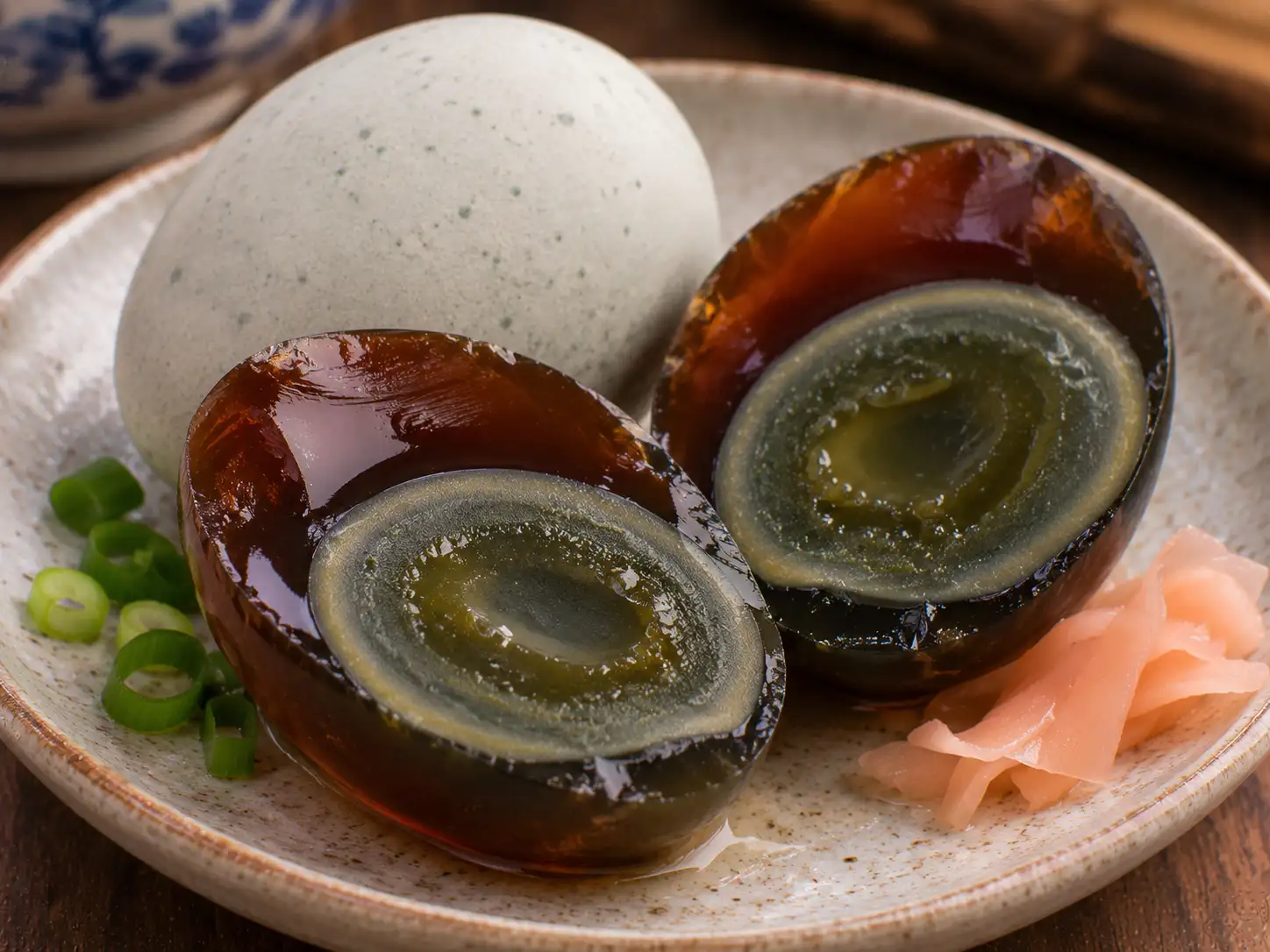
Crack open a century egg and you will find something very different from an ordinary boiled egg. Its once-clear white has transformed into a translucent, dark amber jelly, while the yolk has become greenish-gray, creamy, and intensely savory. Known in China as pídàn (皮蛋), century eggs are preserved through an alkaline curing process that dramatically changes their color, texture, and flavor. Despite their mysterious appearance and centuries-old reputation, they are not ancient or spoiled eggs. They are a distinctive Chinese delicacy enjoyed with rice porridge, chilled tofu, ginger, and other familiar ingredients.
What Are Century Eggs?
Century eggs are preserved eggs, usually duck eggs, that have been cured in a strongly alkaline environment. They are also called hundred-year eggs, thousand-year eggs, or preserved eggs, but these names are exaggerated descriptions rather than indications of their actual age.
Instead of being stored for decades or centuries, the eggs undergo a controlled curing process that generally takes weeks to months, depending on the method. The alkalinity changes the egg proteins, causing the white to form a firm, translucent gel and the yolk to develop a darker color and creamy or sometimes firmer consistency.
The finished egg has an unmistakable flavor. It is rich and savory, with earthy, sulfurous, and sometimes ammonia-like notes. Some varieties are relatively mild, while others have a much stronger aroma.
Century eggs originated in China and remain popular in Chinese cooking, particularly as appetizers, accompaniments to congee, and ingredients in savory dishes. They are also enjoyed in other parts of East and Southeast Asia.
Quick Facts
Quick Facts
- Origin: China
- Chinese name: Pídàn (皮蛋)
- Other names: Century egg, hundred-year egg, thousand-year egg
- Main ingredient: Duck eggs, although chicken and quail eggs may also be used
- Preservation method: Alkaline curing
- Appearance: Translucent amber-to-dark-brown white with a greenish-gray yolk
- Flavor: Savory, earthy, pungent, and rich in umami
- Texture: Springy, jelly-like white and creamy or firm yolk
- Common uses: Congee, tofu dishes, appetizers, and cold salads
Common Ingredients
Century eggs are unusual because the ingredients used to preserve them are just as important as the eggs themselves. Traditional and modern production methods differ, but both rely on creating a carefully controlled alkaline environment.
- Duck eggs: The most familiar base for century eggs. Their relatively large yolks become rich and intensely flavored during curing.
- Alkaline materials: Traditional methods may use wood ash and lime, while modern commercial production often relies on prepared alkaline solutions.
- Salt: Helps shape the curing environment and contributes to preservation and flavor.
- Clay: Used in some traditional methods to form a coating around the eggs.
- Tea: Appears in certain traditional curing mixtures, though it is not required in every production method.
- Rice husks: Sometimes applied to the outside of traditionally coated eggs to help keep the curing material in place and prevent sticking.
These substances are used during processing rather than served as a sauce or seasoning. Commercial producers use controlled formulations to achieve the desired texture while meeting applicable food-safety standards.
How Century Eggs Are Prepared
Making century eggs begins with fresh, intact eggs. In traditional methods, each egg is covered with a paste containing alkaline ingredients such as ash and lime, along with salt and other materials. The coated eggs are then stored under controlled conditions while the curing process takes place.
Modern producers may instead immerse the eggs in a specially formulated alkaline solution. Over time, alkaline compounds move through the porous eggshell and change the chemistry of the contents.
The most striking transformation occurs in the egg white. As its proteins react to the high-pH environment, they rearrange into a firm, translucent gel. The yolk also changes, developing darker pigments, a concentrated savory flavor, and a texture that can range from soft and creamy to firmer and crumbly.
Some century eggs develop delicate, pale markings within the dark egg white that resemble pine branches or snowflakes. These patterns are crystalline deposits formed during curing. Eggs with such markings are sometimes called sōnghuā dàn (松花蛋), meaning pine-flower eggs.
Properly cured century eggs are generally ready to eat without additional cooking. However, preparing them at home is not simply a matter of leaving eggs in an alkaline mixture. The process requires precise control of chemical conditions, hygiene, and food safety. Buying commercially prepared eggs from reputable producers is the safer choice.
History & Origins
Century eggs have been part of Chinese food culture for several hundred years. Historical records from the Ming dynasty describe methods of preserving eggs using alkaline materials, showing that the underlying technique was established long before modern food processing.
The exact invention of century eggs is uncertain. Several popular legends describe eggs being discovered after sitting in ash, lime, or other alkaline substances. Such stories help explain the food's unusual appearance, but they should not be treated as verified accounts of its origin.
As preservation techniques developed, century eggs became a familiar part of Chinese cuisine. Their concentrated flavor made them particularly suitable for rice porridge and other simple foods, where a small amount could add considerable depth.
The dish eventually spread beyond China through regional culinary connections and Chinese communities abroad. Today, century eggs are sold in Asian grocery stores around the world and appear in Chinese, Taiwanese, and some Southeast Asian dishes.
Despite their exotic-sounding English name, century eggs are everyday food for many people rather than a rare ceremonial delicacy.
Varieties & Differences
Century eggs vary according to the type of egg, curing method, and preferred texture. Their culinary uses also change considerably from one region to another.
- Duck century eggs: The classic version, with a large dark yolk and translucent, jelly-like white.
- Quail century eggs: Smaller preserved eggs sometimes served as appetizers or garnishes.
- Soft-yolk century eggs: Varieties with a creamy, rich center that contrasts with the firmer egg white.
- Firm-yolk century eggs: Versions cured to produce a more solid or crumbly yolk.
- Songhua eggs: Century eggs displaying delicate, pine-branch-like crystalline patterns within the translucent white.
- Century egg with tofu: A cold dish combining preserved egg with soft tofu, soy sauce, sesame oil, and other seasonings.
Century eggs should not be confused with salted duck eggs. Salted eggs are preserved primarily through salting, usually retaining a more recognizable egg-white appearance and developing a rich orange yolk. Century eggs, by contrast, undergo an alkaline transformation that changes both their color and structure.
How Century Eggs Are Enjoyed
One of the most familiar ways to eat century eggs is in pídàn shòuròu zhōu, a Cantonese-style rice congee made with preserved egg and lean pork. The egg is cut into small pieces and added to the soft rice porridge, where its savory flavor complements the mild grains.
Century eggs are also commonly served with chilled silken tofu. The dark preserved egg contrasts with the pale tofu, while soy sauce, sesame oil, scallions, and sometimes chili provide additional flavor.
In other preparations, century eggs are sliced and served with pickled ginger or combined with vegetables and spicy dressings. Hunan-style dishes may feature preserved egg alongside smashed chilies and eggplant, producing a stronger, more aromatic result.
For someone trying century eggs for the first time, pairing a small piece with congee or tofu can make the flavor easier to appreciate. The egg's pungency becomes part of a balanced dish rather than dominating the entire bite.
Food safety remains important. Historically, some curing practices used lead-containing compounds to influence the process, creating serious contamination risks. Modern food production has developed lead-free methods, and regulated products must comply with relevant contaminant standards. Consumers should choose reputable manufacturers, follow storage instructions, and avoid products of uncertain origin.
Did You Know?
Century eggs are not preserved for a hundred years. Their dramatic transformation usually takes weeks or months. The dark, translucent egg white forms because alkaline curing changes the arrangement of egg proteins, creating a stable gel without the ordinary boiling process used for hard-boiled eggs.
A Remarkable Example of Food Chemistry
Century eggs show how preservation can transform an everyday ingredient into something entirely different. Their translucent dark whites, creamy greenish yolks, and deep savory flavor are the result of controlled alkaline chemistry rather than age or spoilage. Whether sliced over chilled tofu, stirred into comforting rice congee, or served with ginger and seasonings, century eggs remain a distinctive and enduring part of Chinese food culture.