
Chuño
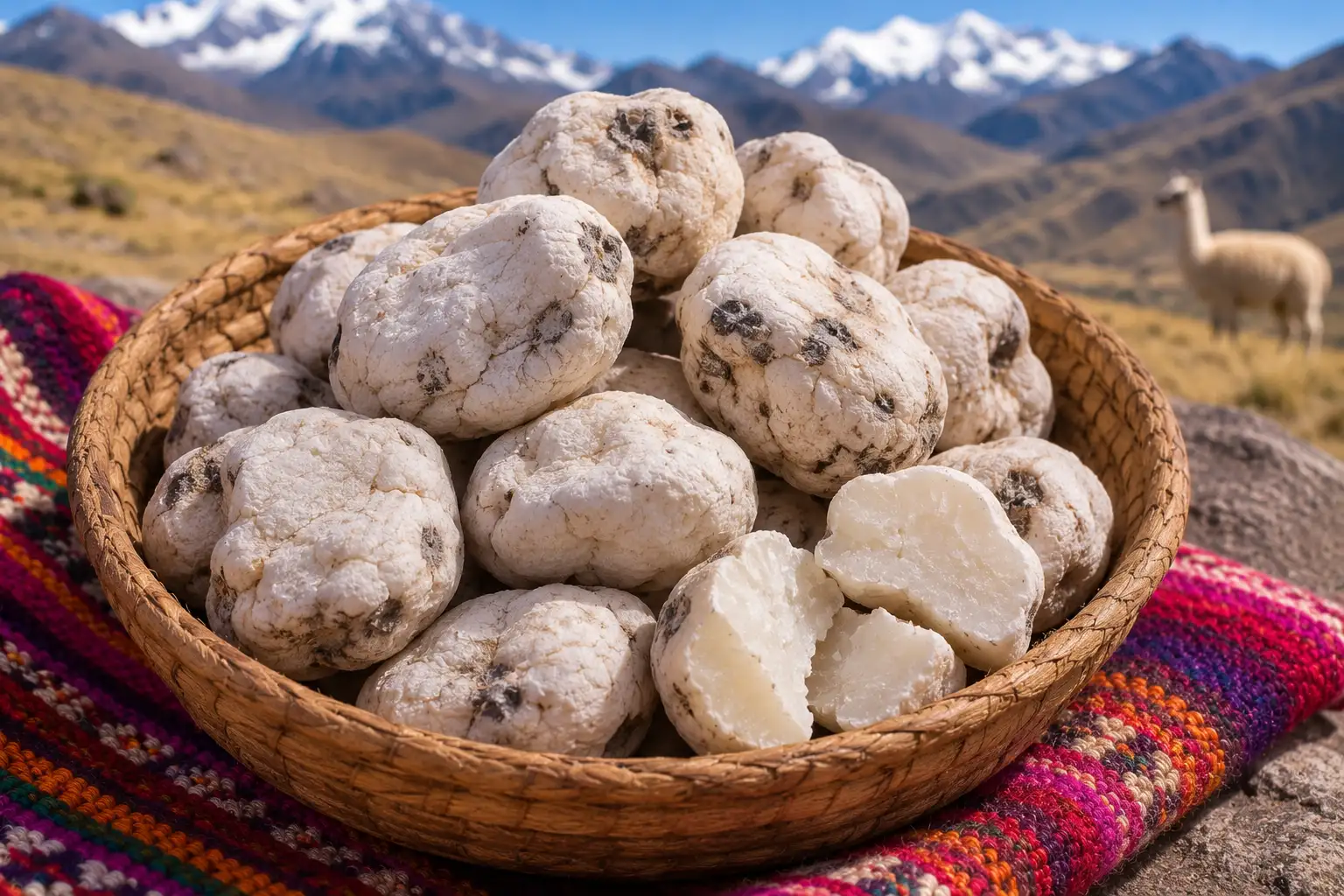
High in the Andes, freezing nights and intense sunshine have helped preserve potatoes for generations. The result is chuño, a traditional food made by exposing carefully selected potatoes to repeated freezing, thawing, and drying. These small, hardened potatoes may look like weathered stones, but they are an essential ingredient in many dishes from Peru and Bolivia. Developed and maintained by Andean communities long before modern refrigeration, chuño turns a highly perishable crop into a food that can be stored for years, providing nourishment through difficult seasons and uncertain harvests.
What Is Chuño?
Chuño is a traditional Andean preserved-potato product made through a process of natural freezing and dehydration. Its name comes from the Quechua word ch'uñu, and it is especially associated with the high-altitude regions of Peru and Bolivia.
The technique relies on the unusual climate of the Andean Altiplano, where winter nights can be cold enough to freeze potatoes and daytime sunshine helps dry them. Repeated exposure to these conditions, combined with pressing or treading, gradually removes moisture from the tubers.
The best-known form is black chuño, which is dark, wrinkled, lightweight, and very firm when dried. A related product, white chuño, commonly called tunta in Bolivia or moraya in parts of Peru, undergoes additional processing that includes prolonged soaking in water.
Chuño is not ordinarily eaten straight from its dried state. It is typically rehydrated and cooked, becoming a substantial ingredient in soups, stews, and other traditional Andean dishes.
Quick Facts
Quick Facts
- Origin: Andean highlands of Peru and Bolivia
- Traditional name: Chuño, from Quechua ch'uñu
- Main ingredient: Native Andean potatoes
- Preservation: Natural freezing, thawing, pressing, and drying
- Main varieties: Black chuño and white chuño (tunta or moraya)
- Appearance: Dark, wrinkled tubers or pale, dried potatoes
- Flavor: Earthy, concentrated, and sometimes slightly bitter
- Texture when cooked: Dense, tender, and sometimes slightly spongy
- Storage: Can last for years when properly dried and stored
- Cultural association: Quechua and Aymara agricultural traditions
Common Ingredients
Unlike a prepared dish with numerous seasonings, traditional chuño begins with one essential ingredient: potatoes. The variety and quality of those potatoes help determine the finished product.
- Native potatoes: Small, frost-tolerant varieties are commonly selected for chuño production. Different cultivars respond differently to freezing and dehydration.
- Cold night air: Naturally freezes the potatoes during the dry-season winter in suitable high-altitude locations.
- Sunlight and dry air: Help remove moisture as the potatoes thaw and dry during the day.
- Water: Especially important in white chuño production, where soaking helps produce a paler, less bitter product.
No chemical preservative is necessary in the traditional process. Its effectiveness comes from removing enough moisture to make the potatoes suitable for long-term storage.
Some bitter native potato varieties contain relatively high levels of naturally occurring glycoalkaloids, compounds that can be harmful when present in excessive amounts. Specific traditional processing methods help reduce these compounds, especially in white chuño. However, not all bitter potatoes are interchangeable, and improperly processed tubers should not be assumed safe to eat.
How Chuño Is Prepared
Traditional chuño production is closely tied to the Andean winter. Families select suitable potatoes and spread them outdoors in places where freezing night temperatures and strong daytime sunshine provide the right conditions.
During the night, the potatoes freeze. When the sun rises, they thaw and begin losing moisture. This cycle is repeated over several days, depending on the weather and the method used.
For black chuño, the softened potatoes are traditionally pressed or carefully trodden on to help expel water and loosen their skins. They are then dried further until they become hard, lightweight, and dark.
White chuño requires a different and generally longer process. The potatoes are subjected to freezing and are also immersed in water for an extended period. This soaking helps remove pigments and bitter compounds. The tubers are eventually peeled or pressed as appropriate and thoroughly dried, producing a pale, firm preserved potato.
The exact order of freezing, soaking, peeling, and drying differs between communities and regional processing traditions. The knowledge needed to choose suitable potato varieties and favorable weather conditions is an important part of the craft.
Once properly dried, chuño is stored in a dry, protected place. Before cooking, it is commonly soaked to soften the tubers and then boiled or simmered as part of a dish.
This traditional preservation method should not be improvised with unidentified or excessively bitter potatoes. Safe results depend on suitable cultivars, established processing knowledge, clean water where required, and complete drying.
History & Origins
Chuño has deep roots in Andean agricultural history. Indigenous peoples cultivated an extraordinary diversity of potatoes in the highlands, where steep terrain, frost, and changing rainfall patterns shaped farming practices.
Fresh potatoes are vulnerable to spoilage, but the development of natural freeze-drying allowed communities to preserve part of the harvest for much longer. Chuño became a reliable food reserve that could help households through periods when fresh crops were unavailable.
The technique predates Spanish colonization, although its precise invention date is uncertain. Archaeological and historical research supports the importance of preserved potatoes in pre-Hispanic Andean societies, including during the Inca period.
Under the Inca Empire, stored foods helped supply settlements, travelers, and state activities across a geographically challenging territory. Chuño was particularly valuable because its reduced moisture made it easier to store and transport than fresh potatoes.
The knowledge required to produce it has continued through Quechua and Aymara farming communities. Today, chuño remains both a household staple and a product sold in markets across the Andean highlands.
It is also an example of how Indigenous food-processing knowledge developed in close response to local environmental conditions, using seasonal frost as a resource rather than simply an agricultural hazard.
Varieties & Differences
The two principal forms of chuño are distinguished by their color, processing, and culinary characteristics.
- Black chuño: Also known as chuño negro, this version is produced through repeated natural freezing, pressing, and drying. It is dark, wrinkled, and can have an earthy or slightly bitter flavor.
- White chuño: A paler product made with additional water-based processing, often yielding a milder taste and a different texture.
- Tunta: The name widely used in Bolivia for white chuño. Its preparation includes extended soaking as part of the traditional preservation process.
- Moraya: A regional name used in parts of Peru for white freeze-dried potatoes, with local processing variations.
- Chuño flour: Dried chuño that has been ground for use in thickened preparations and other recipes.
Chuño should not be confused with papa seca, another traditional dried-potato ingredient used in Peruvian cooking. Papa seca is generally produced through drying cooked or processed potatoes, while chuño is defined by its traditional freeze-and-dehydration method.
Modern industrial freeze-dried potatoes are also different. Although both methods remove water, traditional chuño relies on outdoor frost, sunlight, and manual processing rather than specialized freezing and vacuum-drying equipment.
How Chuño Is Enjoyed
Chuño is a familiar ingredient in soups and stews across the Andean highlands. Its ability to absorb flavors makes it particularly useful in dishes containing meat, vegetables, grains, and aromatic herbs.
One of the best-known examples is chairo, a hearty soup associated with Bolivia and southern Peru. Depending on the regional recipe, it may contain chuño, fresh potatoes, vegetables, wheat or corn, and beef, lamb, or dried meat.
Chuño can also be boiled and served as an accompaniment to other foods. In some household preparations, cooked chuño is combined with eggs, onions, cheese, or seasonings to create a substantial dish.
White chuño is prized in preparations where a milder flavor or paler appearance is desired. Black chuño contributes a stronger earthy character and a distinctive dark color.
For people unfamiliar with the ingredient, its texture can be the biggest surprise. Rehydrated chuño is unlike a fluffy baked potato. Depending on the variety and cooking method, it may be dense, slightly spongy, or pleasantly chewy.
Chuño remains important to rural livelihoods and local food markets. It also provides households with a practical way to manage harvests and maintain food supplies beyond the growing season.
Did You Know?
Andean communities developed a natural potato-preservation technique that resembles freeze-drying long before modern refrigeration existed. By combining freezing nights, sunny days, and manual moisture removal, they created potatoes that could remain usable for years when properly stored.
An Ancient Food Shaped by the Andean Climate
Chuño is a remarkable example of how food traditions develop through close knowledge of the environment. What begins as a fresh potato becomes a durable ingredient through freezing, thawing, pressing, and drying. From black chuño to pale tunta, these preserved potatoes remain essential to dishes and farming traditions in Peru and Bolivia. More than a preservation technique, chuño represents generations of Quechua and Aymara agricultural knowledge and a continuing connection between food, climate, and community life.