
Crocodile Tail
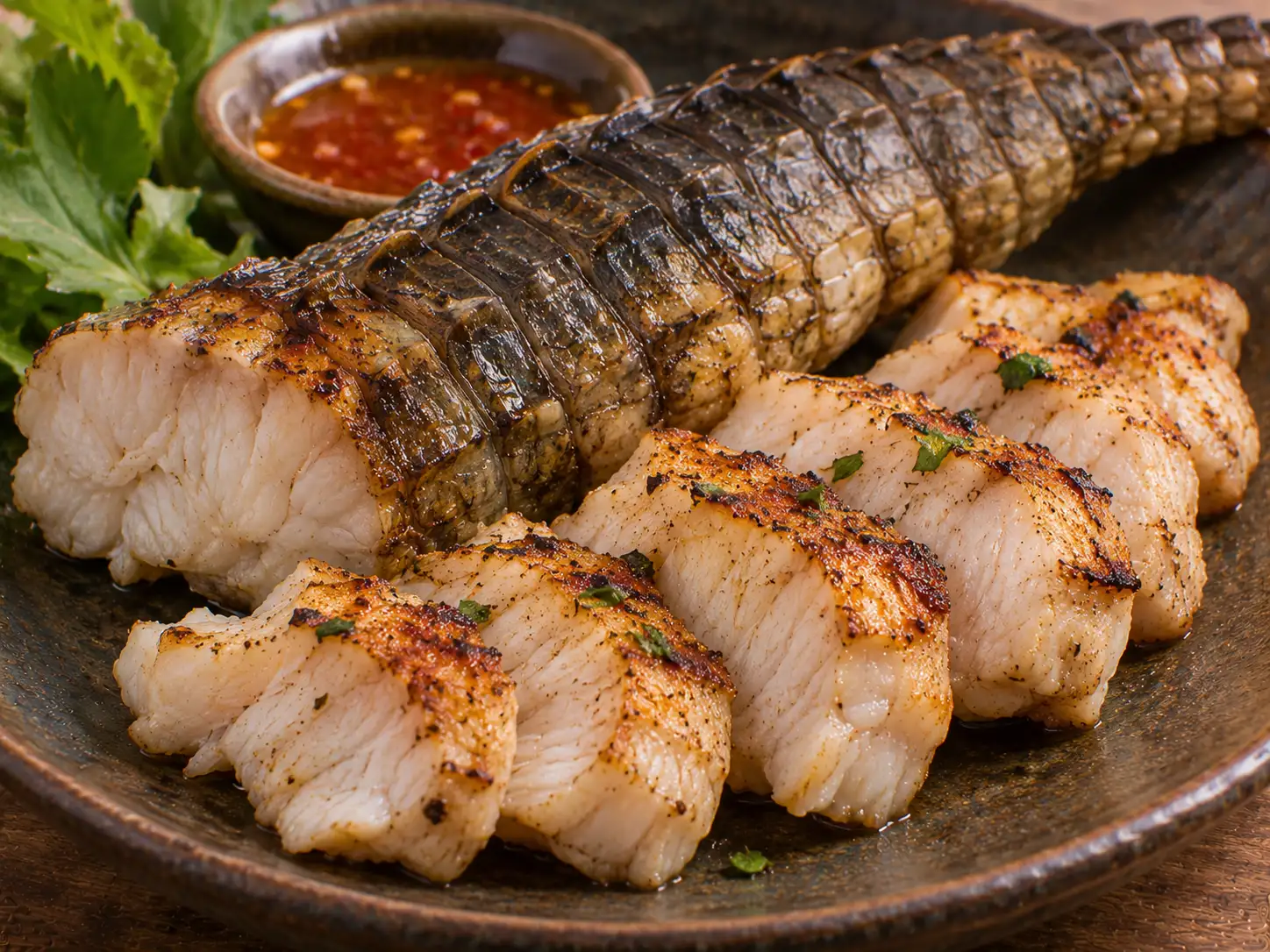
A crocodile's tail is powerful enough to propel the enormous reptile through water, but it also provides one of the animal's most sought-after cuts of meat. Crocodile tail is pale, lean, and surprisingly delicate in flavor, often compared with chicken, fish, or even calamari. In northern Australia, it appears in restaurants and specialty food markets, while crocodile meat is also produced and consumed in parts of Africa and Southeast Asia. Grilled, fried, or slowly cooked in a rich sauce, this unusual meat offers a distinctive combination of familiar flavor and unexpected texture.
What Is Crocodile Tail?
Crocodile tail is meat taken from the muscular tail of a crocodile. This part of the animal contains the powerful muscles responsible for swimming, making it an important source of usable meat. Tail fillets and tenderloins are among the cuts favored for cooking because they can be relatively tender when handled correctly.
Raw crocodile tail is generally pale white to light pink, with a lean appearance that distinguishes it from many red meats. When cooked, the flesh becomes opaque and firm. Its mild flavor is often compared with chicken or fish, although some diners notice a slightly sweet, seafood-like quality.
Unlike beef or pork, crocodile meat contains relatively little fat. This gives it a clean flavor but also means that certain cooking methods can leave it dry or rubbery if the meat is overheated.
The term crocodile tail should not be confused with alligator tail. Crocodiles and alligators belong to the same broader reptile group, but they are different animals. Their meats may be prepared similarly, yet species, habitat, and diet can influence the eating experience.
Quick Facts
Quick Facts
- Regions: Australia, parts of Africa, and Southeast Asia
- Main ingredient: Crocodile tail meat
- Animal family: Crocodylidae
- Appearance: Pale white to light pink flesh
- Flavor: Mild, sometimes compared with chicken, fish, or calamari
- Texture: Firm, lean, and potentially tender
- Popular cuts: Tail fillets, tenderloins, and tail steaks
- Cooking methods: Grilling, pan-frying, deep-frying, and slow cooking
Common Ingredients
Because crocodile tail has a relatively subtle flavor, it works well with aromatic herbs, citrus, spices, and savory marinades. The exact ingredients depend on the cuisine and preparation method.
- Crocodile tail: The central ingredient, usually sold as fillets, steaks, or smaller pieces suitable for cooking.
- Garlic: Adds savory depth without overwhelming the meat's delicate taste.
- Lemon or lime: Brings acidity and freshness to grilled or fried crocodile.
- Ginger: Common in Asian-style marinades and stir-fries, providing a warm, fragrant note.
- Chili: Adds heat to sauces, curries, and seasoned coatings.
- Herbs and spices: Coriander, pepper, paprika, and other seasonings can complement the mild meat.
- Oil or sauce: Helps add richness to an otherwise lean cut.
Some cooks prefer a simple combination of salt, pepper, and citrus. Others use more assertive flavors, including coconut milk, aromatic spice pastes, or barbecue sauces.
How Crocodile Tail Is Prepared
Crocodile tail is versatile, but choosing the right cooking method is important. The cut and the result a cook wants to achieve determine whether it is best prepared quickly or slowly.
For grilling, tail fillets may be cut into steaks or medallions and seasoned with oil, garlic, citrus, and herbs. The meat develops a lightly browned exterior while retaining its firm structure. Because it is low in fat, careful temperature control helps prevent excessive drying.
Another popular preparation is fried crocodile. Small strips or cubes are coated in seasoned flour or batter and fried until the outside becomes crisp. The contrast between the crunchy coating and pale meat makes this a common way to introduce diners to crocodile.
Some chefs take a different approach and cook crocodile slowly in a sauce. Australian Indigenous chef Nornie Bero, for example, has discussed using extended slow cooking to make crocodile tail tender. This demonstrates that the meat's texture can change considerably depending on the cut, cooking environment, and technique.
Food safety is essential. Crocodile meat can carry harmful bacteria, including Salmonella, as well as certain parasites. It should come from a reputable, legally regulated supplier and be handled hygienically and cooked thoroughly. Raw or undercooked crocodile is not a safe substitute for properly cooked meat.
History & Origins
Crocodile meat does not belong to one national cuisine or have a single documented point of origin. Crocodiles inhabit tropical regions across Africa, Asia, Australia, and the Americas, and people's relationships with these animals vary widely.
In northern Australia, crocodiles have long held cultural significance for different Aboriginal peoples. Some communities have traditions involving crocodile hunting or consumption, while others have distinct cultural restrictions, stories, or spiritual relationships with the animals. These practices should not be treated as uniform across Indigenous Australia.
Modern Australian crocodile production is strongly associated with the Northern Territory and Queensland. Commercial farming and ranching expanded as crocodile populations came under wildlife protection and regulated-use programs developed. Skins became a major commercial product, while meat provided an additional resource for the food market.
Today, crocodile meat is supplied to specialty restaurants and food businesses. It can appear on menus featuring Australian native ingredients or regional flavors, though it is not an everyday food for most Australians.
Crocodile farming also occurs in other countries, including parts of southern Africa and Southeast Asia. Commercial species differ by region, and international trade is subject to wildlife regulations. Because not all crocodile populations have the same conservation status, legal and traceable sourcing is especially important.
Varieties & Differences
Crocodile tail is an ingredient rather than one standardized recipe. Its versatility allows cooks to create preparations with very different flavors and textures.
- Grilled crocodile tail: Steaks or fillets seasoned with herbs, garlic, and citrus, often served with vegetables or salad.
- Fried crocodile bites: Small pieces coated in seasoned flour or batter and cooked until crisp, usually served with a dipping sauce.
- Crocodile skewers: Marinated cubes threaded onto skewers and grilled, sometimes with vegetables.
- Crocodile stir-fry: Thin slices combined with vegetables, ginger, garlic, and savory sauces.
- Crocodile curry: Meat simmered with aromatic spices and sometimes coconut milk, creating a strongly seasoned dish.
- Slow-cooked crocodile: Tail or other suitable cuts cooked for an extended period in a flavorful sauce to produce a softer texture.
These are cooking styles rather than fixed traditional dishes shared across every crocodile-producing region. A grilled Australian tail fillet, for instance, may be quite different from a crocodile curry prepared in Southeast Asia.
How Crocodile Tail Is Enjoyed
In Australia, crocodile tail often appears as a specialty ingredient on restaurant menus, particularly in the tropical north. It may be served as a grilled main course, a tasting plate, or an appetizer of fried pieces.
Its relatively mild taste makes it approachable for diners who might expect reptile meat to have a powerful or unfamiliar flavor. A light citrus dressing can complement the natural taste, while spicy sauces introduce a stronger contrast.
Grilled crocodile can be paired with vegetables, potatoes, or a crisp salad. Fried pieces are commonly suited to casual sharing, especially when served with a tangy dipping sauce. In sauced dishes, rice provides a useful accompaniment.
Texture plays a major role in the experience. The meat may feel firm and lightly springy, or become softer with the right slow-cooking technique. This range of textures helps explain why different cooks prefer different cuts and preparations.
Anyone purchasing crocodile meat should confirm that it is intended for human consumption and comes from a legally authorized source. Wildlife rules, inspection standards, and species protections differ between countries.
Did You Know?
A crocodile's tail is a major source of its swimming power. The same dense muscles that help the animal surge through water also provide some of its most desirable meat cuts, including tail fillets and tenderloins.
A Remarkable Cut from a Powerful Animal
Crocodile tail combines an unexpected source with a surprisingly versatile culinary character. Its pale, lean meat can be grilled, fried, or transformed through slow cooking, while its mild flavor allows a wide range of seasonings to shine. Closely connected with modern crocodile farming and regional food traditions in tropical areas, it offers an opportunity to explore a less familiar ingredient while recognizing the importance of responsible wildlife management, legal sourcing, and careful food preparation.