
Curanto
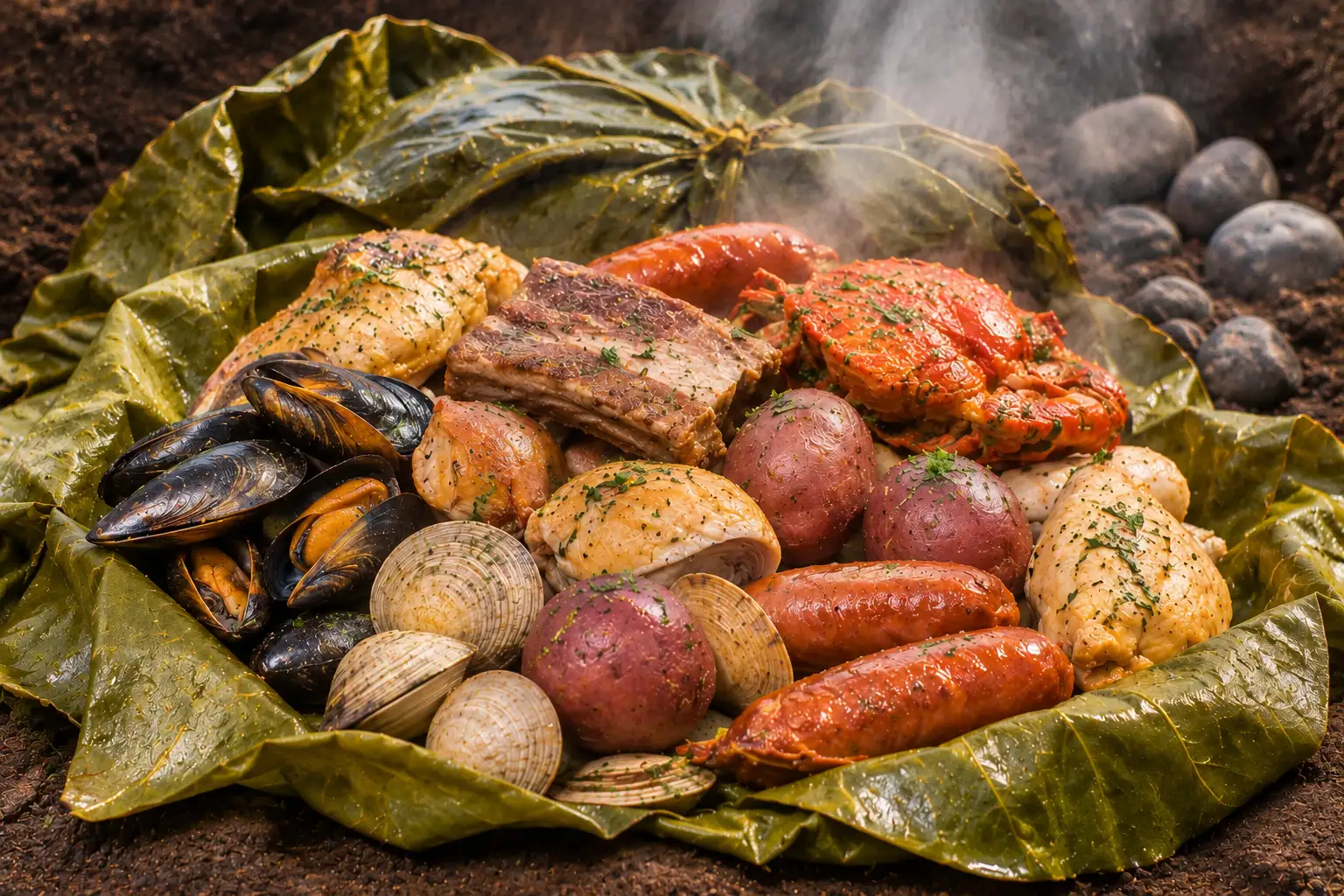
On the misty islands of southern Chile, preparing curanto is as much a community event as a way of cooking. A fire heats stones inside a pit dug into the earth, then layers of shellfish, meat, potatoes, and traditional potato dumplings are arranged over them. Large green leaves cover the ingredients, trapping steam as the entire feast cooks underground. Closely associated with the Chiloé Archipelago and the food traditions of the Mapuche-Huilliche people, curanto brings together the flavors of land and sea in one extraordinary meal.
What Is Curanto?
Curanto is a traditional Chilean dish and cooking method in which seafood, meat, potatoes, and other ingredients are cooked together using heated stones. Its best-known form is curanto en hoyo, meaning curanto in a pit, traditionally prepared outdoors in the Chiloé Archipelago.
The dish is particularly associated with Chiloé, an island region in southern Chile known for its rich maritime traditions, native potato varieties, and distinctive regional cuisine.
Curanto brings together ingredients from both the ocean and the land. Mussels, clams, and other shellfish are combined with pork, chicken, sausages, potatoes, and local potato-based preparations called milcao and chapalele.
One of its most recognizable features is the use of large leaves from the nalca plant, also known as pangue, to cover and separate the layers. The leaves help retain heat and moisture while the ingredients cook in steam generated by the hot stones and food juices.
Although curanto can be made in a large cooking pot, the earth-pit version remains an especially meaningful expression of the region's culinary heritage.
Quick Facts
Quick Facts
- Country: Chile
- Region: Chiloé Archipelago and southern Chile
- Cultural heritage: Mapuche-Huilliche and Chilote food traditions
- Traditional cooking method: Earth pit with fire-heated stones
- Main ingredients: Shellfish, pork, chicken, sausages, and potatoes
- Traditional potato preparations: Milcao and chapalele
- Cooking leaves: Nalca or pangue
- Flavor: Rich, savory, briny, and hearty
- Popular versions: Curanto en hoyo and curanto en olla
- Typical occasion: Family gatherings, festivals, and communal celebrations
Common Ingredients
Curanto is known for its abundance and variety. Rather than following one fixed recipe, families and communities use ingredients available in their area and season.
- Mussels: Commonly called choritos in Chile, they add a deep ocean flavor and release juices during cooking.
- Clams: A traditional shellfish ingredient that contributes sweetness and briny broth.
- Other shellfish: Depending on the location, curanto may include cholgas, razor clams, or other locally harvested seafood.
- Pork: Often included as ribs or other cuts, adding richness to the mixture.
- Chicken: Provides a milder meat flavor and helps make the dish especially substantial.
- Longaniza: A seasoned sausage frequently included in modern Chilote curanto.
- Potatoes: A central ingredient in Chiloé cuisine, often using varieties traditionally cultivated on the islands.
- Milcao: A potato preparation made by combining grated raw potato with cooked mashed potato. Some versions include pork cracklings.
- Chapalele: A soft potato-and-flour preparation shaped into dumplings or flat pieces.
- Nalca leaves: Large leaves traditionally used to cover the ingredients and retain steam.
The range of ingredients reflects Chiloé's agricultural and coastal environments. Potatoes come from the islands' farming traditions, while shellfish have long been central to the food practices of coastal communities.
How Curanto Is Prepared
Traditional curanto en hoyo begins with preparing an earth pit large enough for the intended gathering. Stones suitable for this type of cooking are heated with a wood fire until they can supply sustained heat.
Once the fire has done its work, the hot stones form the cooking surface. The ingredients are arranged in layers, beginning with shellfish and continuing with meats, sausages, potatoes, milcao, and chapalele, although the exact order varies among cooks.
Large nalca or pangue leaves are placed between or over the layers. The entire preparation is then covered to trap the heat and steam, traditionally using additional leaves and sections of turf or other suitable covering materials.
As the ingredients heat, liquid released by the shellfish and meats contributes to the steaming process. The leaves and covering help prevent the heat from escaping too quickly.
After sufficient cooking, the covering is carefully removed and the ingredients are shared among the people gathered. Uncovering the curanto is often one of the most anticipated moments, as clouds of fragrant steam reveal the meal underneath.
This method requires substantial experience. Heated stones can cause severe burns, and unsuitable stones may fracture when exposed to high temperatures. The cooking process must also bring meat and shellfish to safe temperatures. For these reasons, a traditional earth-pit curanto is best prepared by knowledgeable cooks using appropriate equipment and established methods.
History & Origins
Curanto has deep connections to the Indigenous food traditions of southern Chile. The Mapuche-Huilliche communities of Chiloé have maintained methods of cooking seafood and other foods using heated stones and earth ovens for generations.
Archaeological evidence from Chiloé and nearby coastal regions shows that stone-heated cooking pits have a very long history. However, ancient pit-cooking sites should not be assumed to have contained exactly the same ingredients as a modern curanto.
Over time, the dish evolved alongside changes in agriculture, livestock raising, and regional food preferences. Native potatoes and seafood remained essential, while ingredients such as domestic pork, chicken, and wheat flour became part of many contemporary preparations.
The name curanto is associated with Mapudungun, the language of the Mapuche people, and is commonly linked to a word referring to stones or a stony place.
In Chiloé, curanto became strongly connected with communal work, hospitality, and celebrations. Preparing a large pit-cooked meal requires cooperation, from gathering ingredients and fuel to arranging the layers and serving the finished food.
Today, curanto is one of the best-known symbols of Chilote gastronomy, appearing at family gatherings, local festivals, and cultural events throughout the archipelago.
Varieties & Differences
The two principal modern forms of curanto share many ingredients but use different cooking methods.
- Curanto en hoyo: The traditional earth-pit version, cooked over hot stones and covered with large leaves.
- Curanto en olla: A version prepared in a large pot rather than an underground oven. It is widely associated with the name pulmay.
- Pulmay: A pot-cooked preparation containing shellfish, meats, potatoes, and other ingredients. The resulting cooking liquid is often served as a flavorful broth.
- Seafood-focused curanto: A preparation emphasizing locally harvested shellfish, sometimes with fewer meat ingredients.
- Festival curanto: A large communal preparation organized for celebrations and cultural events.
- Regional household curanto: Family versions that vary in shellfish selection, sausages, meats, potato preparations, and seasonings.
The term curanto can also refer more broadly to related heated-stone cooking traditions in southern Chile. The famous Chilote combination of shellfish, meat, milcao, and chapalele is one particularly recognizable form.
Curanto en hoyo should not be confused with an ordinary seafood stew. Its defining feature is the method of cooking ingredients together with heat retained in stones beneath an enclosed, steaming pit.
How Curanto Is Enjoyed
Curanto is traditionally a meal for sharing. The amount of food involved makes it particularly suitable for family gatherings, community events, festivals, and other occasions when many people come together.
Once the pit is uncovered, the different ingredients are divided among diners. A typical serving may include shellfish, a piece of pork or chicken, sausage, potatoes, milcao, and chapalele.
The shellfish provide a salty ocean flavor, while the meats contribute richness. Potatoes and the traditional dough preparations absorb surrounding juices, creating a hearty combination of textures.
Milcao offers a particularly distinctive taste and consistency because it combines raw grated potato with cooked potato. Chapalele is softer and more bread-like, providing a contrast to the shellfish and meats.
Curanto is especially meaningful in Chiloé because its preparation can involve numerous people. The gathering, cooking, uncovering, and serving are all part of the experience rather than merely steps required to produce a meal.
Visitors to the region may encounter curanto at traditional restaurants or organized community events. The earth-pit version is especially associated with gatherings where there is enough space, time, and participation for the full process.
Its popularity also connects to questions of coastal sustainability. Shellfish are essential to the dish, and responsible harvesting helps protect the marine resources on which local communities and food traditions depend.
Did You Know?
Traditional curanto cooks several different foods in the same underground oven without placing them directly over an open flame. Instead, heated stones supply the energy while large nalca leaves and the covering trap steam. The result is a meal in which shellfish, meat, potatoes, and traditional dumplings cook together in their own juices.
A Communal Feast from the Islands of Chiloé
Curanto is more than a collection of seafood, meat, and potatoes. It is a traditional cooking method shaped by the coastal environment, Indigenous knowledge, and communal life of southern Chile. From the preparation of heated stones to the moment the steaming pit is uncovered, every stage reflects cooperation and a close relationship with local ingredients. Whether experienced as curanto en hoyo or the pot-cooked pulmay, this remarkable dish remains a lasting expression of Chilote identity and the rich culinary heritage of the Mapuche-Huilliche people.