
Dinuguan
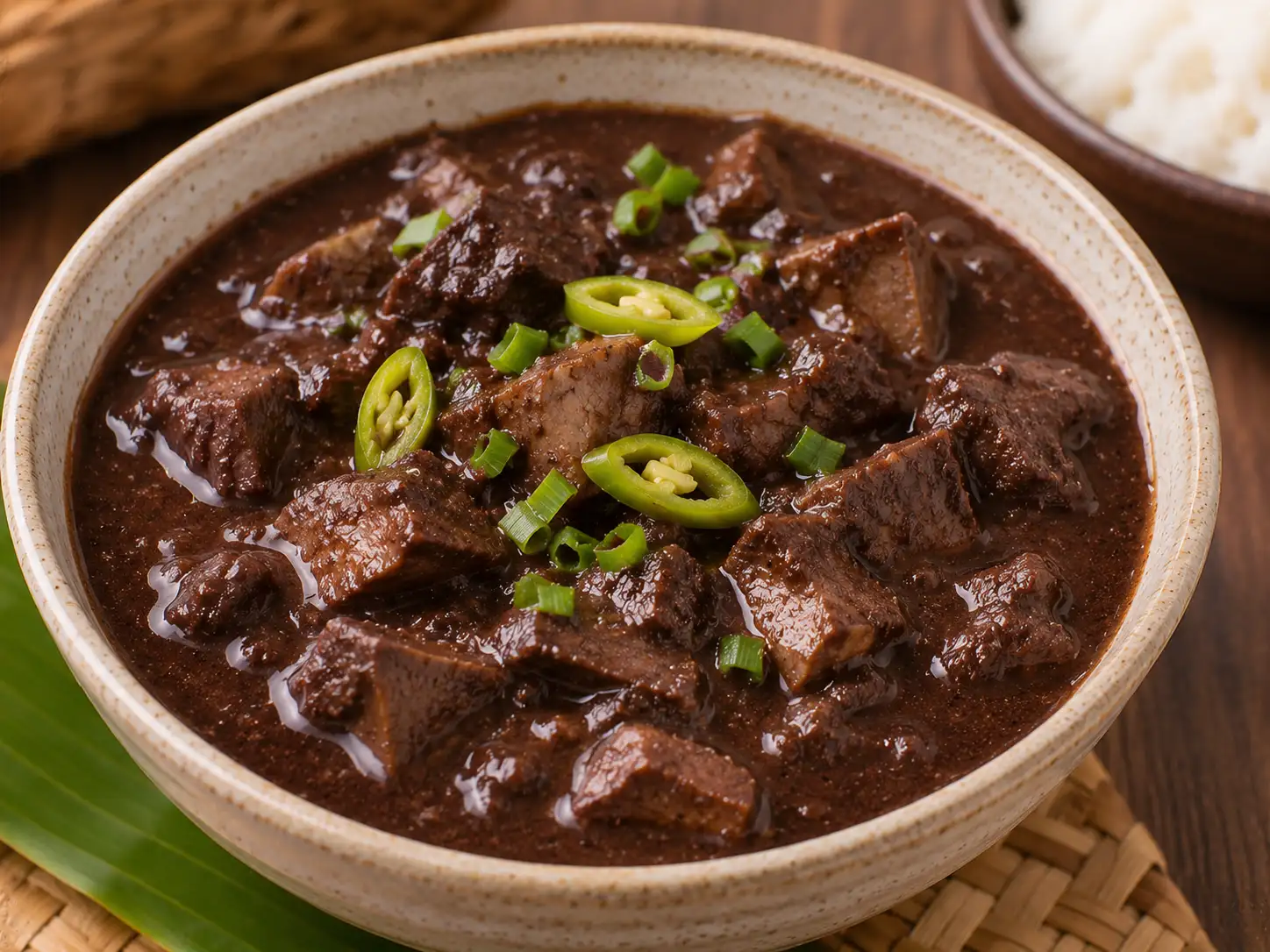
Dark, glossy, and deeply savory, dinuguan is one of the Philippines' most distinctive comfort foods. This traditional pork stew gets its almost black appearance from pig blood, which thickens into a rich sauce as it cooks. Vinegar adds a sharp, tangy balance, while garlic, onions, and chili provide layers of flavor. Often served with steamed rice or soft Filipino rice cakes called puto, dinuguan reflects a longstanding tradition of transforming humble ingredients into satisfying meals.
What Is Dinuguan?
Dinuguan is a Filipino savory stew made from pork meat, pig blood, vinegar, and aromatic seasonings. The name comes from the Tagalog word dugo, meaning blood, referring to the ingredient that gives the dish its characteristic appearance and texture.
Traditional recipes frequently include pork offal, such as intestines, heart, or other organs, although many modern versions use more familiar cuts like pork belly or shoulder. The meat is simmered in a dark, thick sauce flavored with vinegar, garlic, onions, and sometimes green chili peppers.
Dinuguan is occasionally nicknamed "chocolate meat" because its dark color resembles a rich chocolate sauce. Despite that comparison, the dish contains no chocolate and has a distinctly savory, tangy flavor.
Unlike raw blood dishes such as Vietnamese tiết canh, dinuguan is thoroughly cooked. The blood is heated as part of the stew, creating a thick, smooth gravy that coats the pork.
Quick Facts
Quick Facts
- Origin: Philippines
- Main ingredients: Pork, pig blood, vinegar, garlic, and onions
- Filipino name: Dinuguan
- English name: Pork blood stew
- Nickname: Chocolate meat
- Appearance: Dark brown to nearly black gravy
- Flavor: Savory, tangy, rich, and sometimes spicy
- Texture: Tender pork in a thick, velvety sauce
- Common accompaniments: Puto and steamed white rice
- Regional variations: Dinardaraan, tidtad, tinumis, and dugo-dugo
Common Ingredients
Dinuguan relies on the contrast between rich pork, dark blood gravy, and sharp vinegar. The proportions and seasonings vary considerably from one household or region to another.
- Pork: Pork belly, shoulder, or a mixture of meat and offal forms the foundation of the stew.
- Pig blood: The defining ingredient, responsible for the sauce's dark color and characteristic thickness.
- Vinegar: Adds acidity that cuts through the richness of the pork and balances the blood-based gravy.
- Garlic: Contributes a strong, savory aroma that is essential to many Filipino stews.
- Onions: Provide sweetness and depth as they soften during cooking.
- Green chili peppers: Often used for gentle heat, although some recipes are considerably spicier.
- Black pepper and salt: Enhance the overall seasoning, sometimes alongside fish sauce.
- Water or broth: Adjusts the consistency of the stew and helps the meat cook until tender.
Some regional versions replace part of the vinegar's sourness with tamarind or add coconut milk for a richer, milder sauce.
How Dinuguan Is Prepared
Preparation generally begins by cooking garlic and onions until fragrant. Pork pieces are added and sautéed before being simmered in water or broth until tender. Depending on the recipe, the meat may include a combination of ordinary cuts and carefully cleaned offal.
Vinegar and seasonings provide the stew's distinctive sour-savory character. The pig blood is incorporated during cooking, where its proteins thicken the surrounding liquid and gradually create the familiar dark gravy.
The mixture is cooked until the blood is thoroughly heated and the sauce reaches the desired consistency. Some cooks prefer dinuguan with enough gravy to spoon over rice, while others reduce it into a thicker coating around the meat.
Green chilies may be added to contribute heat and fragrance. The finished dish is usually served hot, allowing the dense sauce to contrast with soft rice or steamed puto.
Food safety is particularly important because the dish uses animal blood and pork. Both should come from approved, hygienically handled food sources, and the stew must be cooked thoroughly. Vinegar alone does not make raw blood or undercooked pork safe. Leftovers should be refrigerated promptly and reheated thoroughly.
History & Origins
Dinuguan is part of a broader Filipino culinary tradition that makes careful use of different portions of an animal. In communities where raising and slaughtering pigs formed part of household or communal food practices, meat, organs, and blood could all become ingredients in prepared dishes.
The precise origin of dinuguan is not documented, and no single inventor or founding date is known. Its many regional names and styles suggest a long history of local adaptation across the Philippine archipelago.
Using blood in cooking is not unique to the Philippines. Other cultures have developed blood sausages, soups, and stews, but dinuguan stands apart through its combination of vinegar, aromatics, and Filipino serving traditions.
Over time, dinuguan became familiar at family gatherings, fiestas, and everyday meals. It is also served in carinderias, small eateries offering home-style Filipino dishes.
Its continued popularity reflects the strong Filipino preference for balancing savory richness with sour flavors, a combination also found in dishes such as adobo and paksiw.
Varieties & Differences
Dinuguan is not a single fixed recipe. Across the Philippines, regional versions differ in sauce thickness, acidity, choice of meat, and preferred seasonings.
- Classic dinuguan: A saucy pork stew with pig blood, vinegar, garlic, onions, and optional chili.
- Dinardaraan: An Ilocano variation commonly cooked until relatively dry, with a concentrated sauce that clings to the meat. Some versions include crispy pork belly.
- Tidtad: A Kapampangan version associated with Pampanga, often featuring chopped pork or offal in a dark blood-based sauce.
- Tinumis: A regional preparation associated with Bulacan and Nueva Ecija, with some versions using tamarind for sourness.
- Dugo-dugo: A name used for related blood-based preparations in parts of the Visayas, including Cebu, with recipes varying locally.
- Dinuguan sa gata: A version incorporating coconut milk, which adds richness and softens the sharpness of the vinegar.
The differences can be substantial. An Ilocano dinardaraan may be almost dry, while another family's dinuguan may have abundant dark gravy. Both belong to the wider tradition of Filipino blood-based stews.
How Dinuguan Is Enjoyed
The most recognizable pairing is dinuguan with puto, a soft steamed Filipino rice cake. Puto's mild sweetness and fluffy texture provide a striking contrast to the stew's dark, tangy sauce.
This combination is especially popular as a snack or light meal, although it can be substantial enough to serve as lunch or dinner. Some diners spoon the sauce directly over puto, while others alternate bites of stew and rice cake.
Dinuguan is equally satisfying with steamed white rice. The rice absorbs the thick gravy and helps balance its strong seasoning. A small portion can add considerable flavor to an otherwise simple plate.
At fiestas and family gatherings, dinuguan may appear alongside several other dishes, giving guests a choice of flavors and textures. Its dark appearance makes it visually distinctive, but its appeal to longtime fans comes from the familiar combination of tender pork, vinegar, garlic, and savory gravy.
For those tasting dinuguan for the first time, the flavor is often more approachable than the ingredients might suggest. Properly prepared, it is a hearty pork stew with a rich, pleasantly tangy sauce rather than a dish dominated by a metallic blood taste.
Did You Know?
Dinuguan is sometimes called "chocolate meat" because its dark, glossy sauce resembles melted chocolate. The resemblance is purely visual: the gravy gets its color and texture from cooked pig blood, while vinegar and seasonings give it a savory, tangy flavor.
A Filipino Stew with a Distinctive Identity
Dinuguan demonstrates how regional cooking traditions can turn practical ingredients into a deeply flavorful dish. Its thick blood-based gravy, bright vinegar seasoning, and tender pork create a combination that is both comforting and unmistakably Filipino. From the drier dinardaraan of Ilocos to saucier versions served with puto, dinuguan continues to reflect the diversity, ingenuity, and bold flavors of Philippine cuisine.