
Escargots
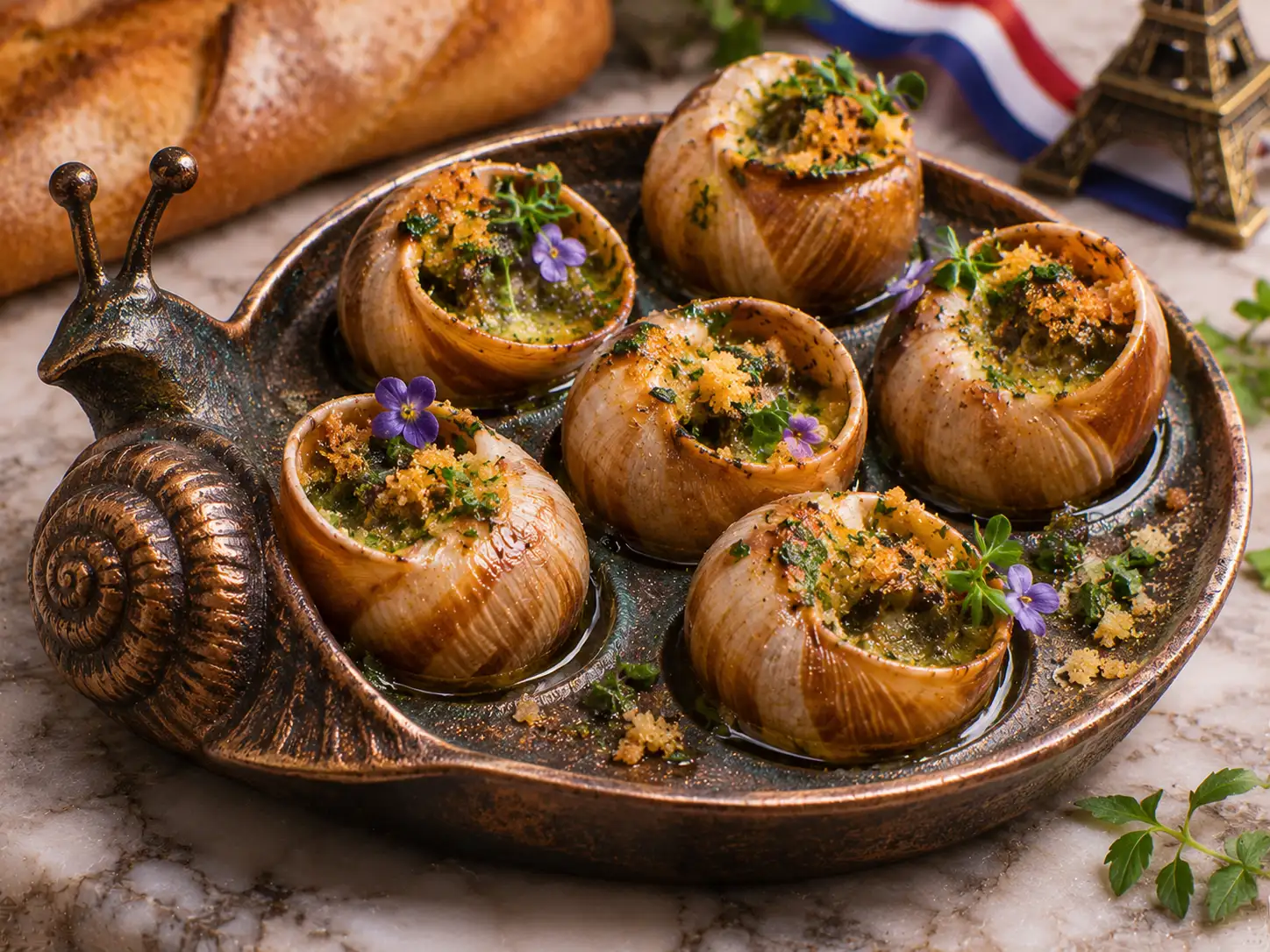
Few dishes evoke the atmosphere of a traditional French restaurant quite like escargots. Served in their shells with bubbling garlic-parsley butter, these tender land snails are a celebrated specialty of French cuisine, particularly in Burgundy. Their mild, earthy flavor and distinctive texture make them surprisingly well suited to rich, aromatic sauces. Although eating snails may seem adventurous to some diners, escargots have a culinary history stretching back to ancient times, long before they became associated with elegant French dining.
What Are Escargots?
Escargots are edible land snails prepared as food. The French word escargot simply means snail, but on restaurant menus it usually refers to a cooked snail dish, particularly one featuring butter, garlic, and parsley.
The best-known preparation is escargots à la bourguignonne, or Burgundy-style snails. In this dish, the snails are cooked until tender, placed into shells, and covered with a fragrant mixture of butter, garlic, parsley, and sometimes shallots. They are then baked until the butter becomes hot and aromatic.
Escargots have a mild, savory flavor that is sometimes described as earthy or slightly mushroom-like. Their texture is firmer and more resilient than many shellfish, but properly prepared snails should not be excessively rubbery.
Although escargots are strongly associated with Burgundy, they are enjoyed throughout France. Different regions have developed their own preparations, ranging from the familiar garlic-butter version to dishes featuring regional herbs, wine, or tomato-based sauces.
Quick Facts
Quick Facts
- Country of association: France
- Famous region: Burgundy
- Main ingredient: Edible land snails
- Classic preparation: Escargots à la bourguignonne
- Traditional seasonings: Butter, garlic, parsley, and shallots
- Flavor: Mild, earthy, and savory
- Texture: Tender with a slightly firm, springy bite
- Common serving: Hot, often in shells as an appetizer
- Popular occasions: Restaurant meals, holiday gatherings, and special dinners
Common Ingredients
The classic Burgundy preparation uses relatively few ingredients, allowing the rich herb butter to complement the delicate flavor of the snails.
- Edible land snails: The main ingredient. Traditional Burgundy snails belong to the species Helix pomatia, although other edible species are also used in French cooking.
- Butter: Provides the rich, silky sauce that surrounds each snail and carries the aromatic ingredients.
- Garlic: Adds the pungent, savory fragrance most closely associated with classic escargots.
- Fresh parsley: Gives the butter its bright green appearance and a fresh herbal note.
- Shallots: Often included for a subtle onion-like sweetness.
- Salt and pepper: Enhance the flavor of the meat and seasoned butter.
- White wine or stock: Sometimes used in the initial cooking liquid or in alternative preparations.
The garlic-parsley butter is sometimes called beurre persillé. Its balance matters: the butter should be rich, the garlic noticeable without overpowering everything else, and the parsley fresh enough to brighten the finished dish.
How Escargots Are Prepared
Preparing escargots involves more than placing snails in shells and baking them. Commercially prepared edible snails are typically cleaned and cooked before being incorporated into the final dish.
For classic escargots à la bourguignonne, the prepared snail meat is simmered in a seasoned cooking liquid until tender. The meat is then drained and placed into clean shells or into a specially designed baking dish.
Softened butter is combined with finely chopped garlic, parsley, shallots, and seasonings. A generous portion of this mixture is packed around each snail, filling the shell opening. The escargots are arranged with the openings facing upward and baked until the butter is bubbling.
The dish is served immediately, while the garlic butter is hot and fragrant. In restaurants, escargots often arrive in a metal or ceramic tray with individual recesses that hold the shells in place.
Food safety requires particular care. Wild land snails can carry parasites or contaminants, and not every snail species is suitable for consumption. Home cooks should use food-grade snails from reputable suppliers rather than collect garden snails for an improvised recipe. Snails must be appropriately processed and thoroughly cooked.
History & Origins
Humans have eaten land snails for thousands of years. Archaeological evidence of snail consumption dates to prehistoric communities, and snails were also known as food in ancient Greece and Rome.
In France, snail eating developed into a distinctive culinary tradition over many centuries. Burgundy became particularly famous for its large edible snails, especially Helix pomatia, sometimes called the Roman snail or Burgundy snail.
The modern garlic-butter preparation rose to prominence during the nineteenth century. A frequently repeated culinary story connects its popularity with the French chef Marie-Antoine Carême and a meal involving the Russian emperor Alexander I. Although versions of this account differ, the period helped establish escargots as an elegant French dish.
By the nineteenth and twentieth centuries, escargots had become a recognizable feature of French restaurant cooking. Burgundy-style snails were especially celebrated, and the preparation eventually gained international recognition as a classic of French gastronomy.
Today, the name Burgundy snail often refers to the species Helix pomatia, not necessarily to a snail harvested in Burgundy itself. Wild collection is regulated in France, and commercial suppliers may obtain snails from other European countries or use different edible species.
Varieties & Differences
Although the garlic-butter version is the most internationally recognizable, French cuisine includes several approaches to preparing edible snails.
- Escargots à la bourguignonne: The classic Burgundy preparation, with cooked snails baked in shells with garlic, parsley, and butter.
- Escargots de Bourgogne: A name associated with the species Helix pomatia. It identifies a type of snail, while à la bourguignonne describes a cooking style.
- Petit-gris: Smaller edible snails generally associated with the species Cornu aspersum, used in various preparations and commonly raised by snail farmers.
- Gros-gris: A larger form of Cornu aspersum cultivated for food, offering a meatier portion than smaller garden-snail varieties.
- Escargots à la provençale: Preparations inspired by southern French flavors, which may include tomato, garlic, olive oil, and Mediterranean herbs.
- Escargot pastries: Modern appetizers in which prepared snails and herb butter are enclosed in puff pastry rather than presented in shells.
The species influences size and texture, while the sauce or seasoning determines much of the finished dish's flavor. The distinction between the type of snail and its method of preparation is particularly important when reading French menus.
How Escargots Are Enjoyed
Escargots are commonly served as a starter, often in portions of six or twelve. When presented in their shells, diners may receive special escargot tongs to hold the hot shells and a narrow two-pronged fork to extract the meat.
The snails are usually eaten with a little of the surrounding garlic butter. Crusty French bread, especially baguette, is a natural accompaniment because it can soak up the aromatic sauce left on the plate.
In Burgundy, escargots fit naturally into a meal featuring regional wines and traditional French dishes. They are also associated with festive meals, including Christmas and New Year's celebrations, when elaborate appetizers are particularly popular.
For first-time diners, the flavor is often milder than expected. The garlic butter usually makes the strongest initial impression, followed by the snail's earthy taste and gently chewy texture. Rather than being eaten for a powerful flavor of its own, escargot is appreciated for the interaction between its texture, delicate meat, and rich sauce.
Did You Know?
The term escargots de Bourgogne refers to the Burgundy snail species, Helix pomatia, while escargots à la bourguignonne describes the classic garlic-parsley-butter preparation. Snails from other edible species can also be cooked in the Burgundy style.
A French Classic Worth Discovering
Escargots demonstrate how a modest ingredient can become a celebrated culinary specialty through careful preparation and regional tradition. Their tender, slightly springy texture, delicate flavor, and rich garlic-parsley butter have earned them a lasting place in French gastronomy. From Burgundy restaurants to festive dinner tables, escargots remain an enduring example of France's ability to transform simple ingredients into a memorable dining experience.