
Hverabrauð
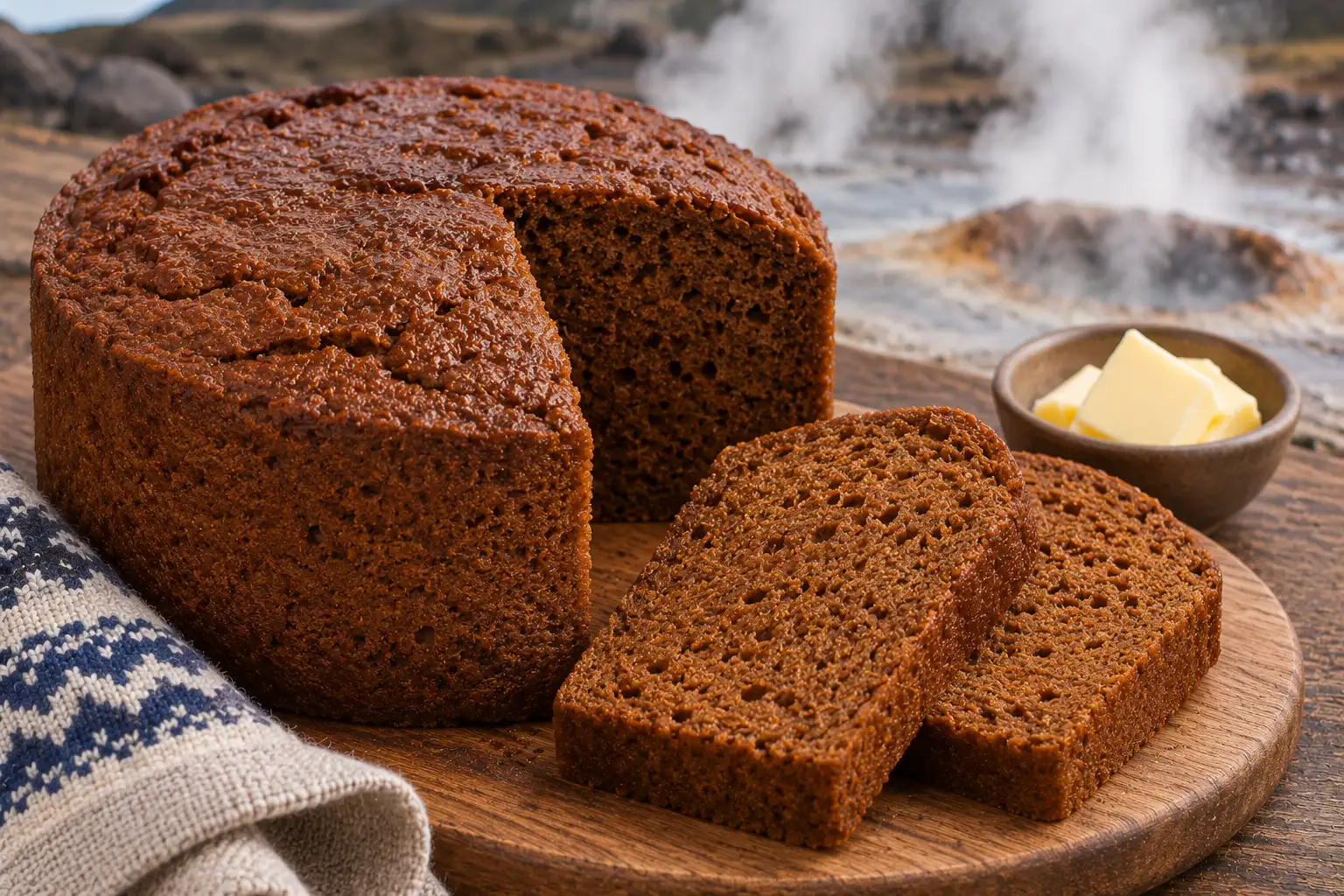
Imagine digging a metal pot out of steaming Icelandic earth and opening it to reveal a warm, dark loaf of bread. This is hverabrauð, a traditional Icelandic rye bread baked using the natural heat of the ground near geothermal springs. Its long, gentle cooking process creates a dense, moist texture and a surprisingly sweet flavor. Sometimes called hot-spring bread, geyser bread, or lava bread, hverabrauð reflects Iceland's remarkable relationship with its volcanic landscape. What began as a practical way to bake bread in areas with naturally heated ground remains a distinctive part of the country's culinary heritage.
What Is Hverabrauð?
Hverabrauð is a traditional Icelandic rye bread made by placing a sealed container of bread batter in naturally heated ground near a geothermal area. The name can be understood as "hot-spring bread," referring to the source of heat used for baking.
The bread is closely related to rúgbrauð, Iceland's familiar dark rye bread. However, the terms are not exactly interchangeable. Rúgbrauð refers broadly to rye bread, while hverabrauð specifically describes bread prepared using geothermal heat.
The finished loaf is dark brown, dense, and remarkably moist. It has a close, fine crumb with a texture that can seem almost pudding-like compared with ordinary wheat bread.
Its flavor is gently sweet, with earthy rye notes and a subtle caramel-like richness. Although it looks similar to some dark European rye breads, it is often sweeter and contains little or no noticeable sourness.
Hverabrauð is particularly associated with geothermal areas such as Laugarvatn in southern Iceland, where the traditional technique remains in use.
Quick Facts
Quick Facts
- Country: Iceland
- Icelandic name: Hverabrauð
- Meaning: Hot-spring bread
- Related bread: Rúgbrauð, Icelandic rye bread
- Main ingredient: Rye flour
- Other common ingredients: Wheat flour, sugar, milk or buttermilk, salt, and baking powder or baking soda
- Traditional cooking method: Slow baking in a covered container buried in geothermally heated ground
- Typical geothermal baking time: Approximately 24 hours, depending on the location and method
- Appearance: Dark brown loaf with a fine, dense crumb
- Flavor: Mildly sweet, earthy, and rich
- Traditional accompaniments: Butter, smoked fish, and other savory toppings
Common Ingredients
Hverabrauð is usually made from simple pantry ingredients. The unusual cooking method, rather than an exotic ingredient, gives the bread much of its distinctive character.
- Rye flour: The defining ingredient, contributing the loaf's dark color, earthy flavor, and dense texture.
- Wheat flour: Included in many recipes to modify the texture and help balance the rye.
- Sugar: Often added generously by ordinary bread standards, contributing to the characteristic sweetness.
- Milk or buttermilk: Supplies moisture and richness. Some recipes use water instead.
- Golden syrup: An optional ingredient that adds sweetness and a deeper flavor.
- Baking powder or baking soda: Common modern leavening ingredients that provide a modest rise.
- Salt: Balances the sweetness and grain flavor.
Recipes vary considerably between households and bakers. Some use a higher proportion of rye, while others include more wheat flour, different sweeteners, or alternative liquids.
Despite the nickname "lava bread," actual lava is not an ingredient. The name refers to Iceland's volcanic and geothermal environment.
How Hverabrauð Is Prepared
Traditional hverabrauð begins with a thick, moist rye batter or soft dough. The flour, sweetener, liquid, and leavening ingredients are mixed until evenly combined.
Unlike many yeast-raised wheat breads, modern Icelandic rúgbrauð recipes often require little or no kneading. The goal is a soft, dense loaf rather than a light bread with large air pockets.
The mixture is transferred into a suitable heat-resistant container, which is covered to protect the batter from soil, steam, and water.
In geothermal areas, a hole is prepared in naturally hot ground. The sealed container is lowered into the hole and buried so that heat from the surrounding earth can cook the bread slowly.
At Laugarvatn, one of the best-known places where this method is demonstrated, rye bread is traditionally left underground for approximately 24 hours.
During this long cooking period, moisture remains largely trapped inside the container. The bread develops its close, tender crumb without forming the thick, dry crust commonly associated with oven-baked loaves.
When the container is removed, the bread is allowed to cool enough for safe handling. It can then be sliced and served, often while still slightly warm.
Safety consideration: Geothermal ground can contain dangerously hot water, steam, and unstable surfaces. Natural hot-spring areas are not suitable for casual digging or experimentation. Traditional geothermal baking should be carried out only in designated locations with appropriate knowledge, permissions, and equipment. A conventional oven can reproduce a similar bread texture without requiring access to geothermal heat.
History & Origins
Iceland's food traditions developed under demanding environmental conditions. The country's northern climate limited grain cultivation, while timber and other cooking fuels were often scarce.
For households living near geothermal activity, naturally heated ground offered an unusual advantage. Hot springs and steam-rich soil could provide sustained warmth without requiring a continuous supply of firewood.
Over time, geothermal cooking became associated with certain Icelandic communities. People used naturally heated areas to cook food, and rye bread became one of the most recognizable examples.
The precise date when geothermal rye-bread baking began is uncertain. Although the technique has a longstanding history, it would be misleading to assign it a specific Viking Age origin without clear documentary evidence.
Rye became an important part of Icelandic baking through imported grain and changing food supplies. Traditional recipes evolved over time, incorporating ingredients such as sugar and modern chemical leavening agents.
Today, the practice remains closely identified with Laugarvatn and other geothermal areas. It is celebrated both as a culinary tradition and as a striking example of how Icelanders have used the natural resources available in their environment.
Varieties & Differences
Hverabrauð belongs to a wider family of Icelandic breads, but several distinctions are important.
- Traditional geothermal hverabrauð: Rye bread baked slowly in a sealed container buried in naturally heated ground.
- Oven-baked rúgbrauð: A similar dark, sweet rye bread prepared in a conventional oven, often using a covered pan and relatively low heat.
- Whole-rye versions: Recipes emphasizing rye flour for a denser crumb and stronger grain flavor.
- Mixed-flour versions: Breads combining rye and wheat flour for a slightly softer or less compact texture.
- Syrup-sweetened rye bread: Variations using golden syrup or another sweetener to create additional richness.
- Flatbrauð: A separate traditional Icelandic flatbread, usually thin and cooked on a hot surface rather than slowly baked underground.
- Laufabrauð: Icelandic decorative leaf bread, traditionally associated with Christmas and prepared very differently from geothermal rye bread.
Hverabrauð is also sometimes nicknamed þrumari, or thunder bread, a humorous reference to the digestive effects that some people associate with eating fiber-rich rye bread.
Not every Icelandic rye loaf is geothermally baked. Many modern bakeries produce rúgbrauð using conventional equipment, while the name hverabrauð more specifically highlights the hot-ground cooking method.
How Hverabrauð Is Enjoyed
Hverabrauð is commonly served in thick or moderately thin slices with butter. The bread's natural sweetness contrasts pleasantly with salty toppings.
Smoked fish is a particularly popular pairing. At Laugarvatn, freshly baked geothermal rye bread is served with local trout, demonstrating the appeal of combining the sweet, dense loaf with rich, savory seafood.
Other Icelandic rye-bread accompaniments include smoked salmon, cheese, and traditional spreads. The bread can be eaten at breakfast, as part of a light meal, or alongside fish dishes.
Its texture is one of its most recognizable qualities. The crumb is dense, compact, and moist, with very small air pockets. A slice may feel considerably heavier than an equivalent piece of ordinary white bread.
Because the bread is often sweetened, it can also appeal to people who enjoy darker, mildly sweet baked goods. However, it is generally served as a bread rather than a dessert.
For visitors to Iceland, watching a loaf emerge from warm geothermal earth offers a memorable connection between food and landscape. The process highlights the country's volcanic character without requiring any unusual ingredients in the finished bread.
Why Geothermal Baking Matters
The most extraordinary feature of hverabrauð is its use of a naturally occurring heat source. Iceland sits in a geologically active region where underground heat creates hot springs, steam vents, and geothermally warmed ground.
In suitable locations, this heat can be used for cooking as well as bathing, heating buildings, and other purposes.
Geothermal baking demonstrates an older form of resourcefulness: making use of local environmental conditions to meet everyday needs. The slow cooking process creates a distinctive bread while avoiding the need for a conventional oven at the baking site.
However, geothermal bread production has never been equally available throughout Iceland. Only places with accessible, suitably heated ground could support the traditional underground method.
Modern interest in hverabrauð has helped preserve knowledge of this practice while introducing it to people who may otherwise encounter Icelandic rye bread only as a bakery product.
Did You Know?
Traditional hverabrauð can spend approximately 24 hours buried in warm geothermal ground before it is ready to eat. The slow, enclosed cooking process produces a dark, moist, surprisingly sweet rye bread without the need for a conventional oven.
A Bread Shaped by Iceland's Volcanic Landscape
Hverabrauð is a distinctive example of how geography can shape food traditions. Its simple rye-based ingredients become something special through a slow baking process powered by the natural heat beneath Iceland's surface. Dense, moist, and gently sweet, the finished bread is delicious with butter or smoked fish and offers a memorable connection to the country's culinary past. Whether baked underground near a hot spring or recreated in a modern oven, hverabrauð remains a celebration of Icelandic ingenuity, traditional baking, and the remarkable relationship between food and the land.