
Iron Eggs
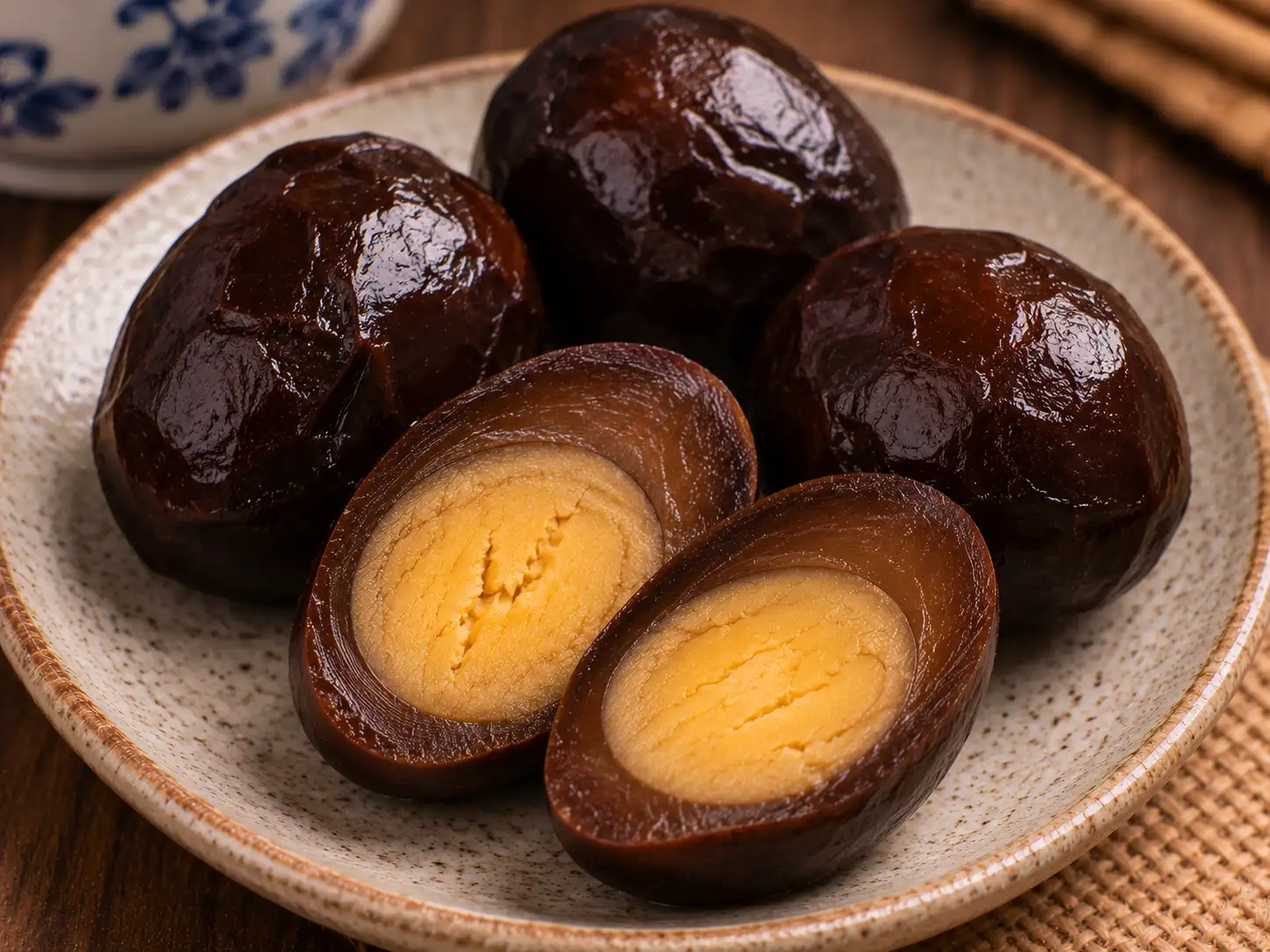
Small, nearly black, and surprisingly chewy, iron eggs are one of Taiwan's most distinctive traditional snacks. Known as tiědàn (鐵蛋), these intensely flavored eggs are repeatedly simmered in a seasoned soy sauce mixture and dried until they shrink, darken, and develop an unusually firm texture. The specialty is closely associated with Tamsui, a historic riverside district of New Taipei City, where visitors encounter bags of iron eggs in souvenir shops and food stalls. Their dramatic appearance comes not from unusual ingredients, but from a patient process that transforms an ordinary egg into something entirely different.
What Are Iron Eggs?
Iron eggs are a Taiwanese specialty made from hard-boiled eggs that undergo repeated cycles of simmering and drying. Chicken and quail eggs are the most familiar varieties, although recipes and commercial products can differ.
The finished eggs are smaller than they were at the beginning, with a deep brown or almost black exterior. Their whites become dense, springy, and chewy, while the yolks develop a concentrated, savory flavor.
The name refers to their dark color and remarkable firmness rather than the presence of iron as an added ingredient. Despite their tough-looking appearance, iron eggs are edible snacks with a distinctive combination of sweetness, saltiness, and aromatic spices.
They are especially famous in Tamsui, where they have become a signature local souvenir. Packaged iron eggs are also sold elsewhere in Taiwan, making them a recognizable part of the island's snack culture.
Quick Facts
Quick Facts
- Origin: Tamsui, New Taipei City, Taiwan
- Chinese name: Tiědàn (鐵蛋)
- Main ingredient: Chicken or quail eggs
- Key seasonings: Soy sauce, sugar, and aromatic spices
- Preparation: Repeated simmering and drying
- Appearance: Small, glossy, dark brown to nearly black eggs
- Flavor: Concentrated, savory, salty, and slightly sweet
- Texture: Dense, rubbery, and distinctly chewy
- Common use: Ready-to-eat snack or Taiwanese souvenir
Common Ingredients
Iron eggs begin with familiar ingredients, but their prolonged preparation produces a flavor and texture unlike an ordinary boiled egg.
- Chicken or quail eggs: The foundation of the snack. Quail eggs create small, bite-sized pieces, while chicken eggs produce larger portions.
- Soy sauce: Provides saltiness, umami, and much of the dark color that develops during repeated cooking.
- Sugar or maltose: Balances the salty broth and contributes a subtle sweetness.
- Star anise: Adds a warm, licorice-like aroma to many traditional seasoning mixtures.
- Cinnamon and other spices: May be included to give the eggs a deeper, more complex fragrance.
- Garlic and chili: Used in some variations for extra savory flavor or heat.
- Tea: Sometimes incorporated into the braising liquid, although it is not essential to every recipe.
Individual shops often have their own seasoning blends. Some emphasize sweetness, others have a stronger soy sauce flavor, and spicy versions introduce a noticeable kick.
How Iron Eggs Are Prepared
The transformation begins with ordinary eggs that are boiled and prepared for seasoning. In a common method, the shells are removed before the eggs are placed into a liquid containing soy sauce, sugar, and spices.
The eggs are gently simmered in this aromatic broth, then removed and allowed to dry. They are returned to the liquid for another simmering period before being dried again. This cycle is repeated multiple times, sometimes over several days.
Each round gradually reduces moisture in the eggs. Their surfaces become darker, the whites grow firmer, and the flavors become increasingly concentrated. The eggs also shrink, sometimes noticeably compared with their original size.
The process produces a texture that is difficult to achieve through boiling alone. Where an ordinary hard-boiled egg has a soft, relatively delicate white, an iron egg offers a substantial chew and a tightly packed interior.
Modern commercial producers may use controlled drying equipment to achieve consistent results. Finished products are often vacuum-packed or otherwise packaged for sale.
Because repeated heating and cooling can create food-safety risks if handled incorrectly, homemade versions require careful temperature control and hygienic storage. Commercially packaged iron eggs should be stored according to their labels rather than assumed to be shelf-stable indefinitely.
History & Origins
Iron eggs are strongly connected with Tamsui, a riverside district near the mouth of the Tamsui River in northern Taiwan. The area is known for its waterfront, historic streets, and distinctive local snacks.
A popular origin story describes a food vendor who repeatedly returned unsold soy-braised eggs to the cooking pot. Between heating sessions, the eggs dried in the coastal air. Over time, they became smaller, darker, and chewier than ordinary braised eggs.
Instead of considering the eggs ruined, customers reportedly enjoyed their concentrated flavor and unusual texture. The repeated cooking process eventually became an intentional method for producing the snack.
The story is closely linked with the famous A-Po Iron Eggs, or Grandma's Iron Eggs, business in Tamsui. Accounts differ about the precise inventor and dates, so the accidental discovery is best understood as a widely repeated local history rather than an entirely settled origin story.
By the late twentieth century, iron eggs had become a well-known Tamsui specialty. Tourism helped spread their reputation, and bags of the dark, glossy eggs became popular gifts for visitors returning home.
Varieties & Differences
Although the traditional process remains recognizable, iron eggs are available in different sizes and flavors.
- Chicken iron eggs: Larger eggs with substantial, chewy whites and rich yolks.
- Quail iron eggs: Small, bite-sized versions that are especially convenient for snacking.
- Original soy-flavored iron eggs: The classic variety, emphasizing soy sauce, sweetness, and aromatic spices.
- Spicy iron eggs: Versions seasoned with chili or pepper for additional heat.
- Tea-flavored iron eggs: Variations that use tea as part of the seasoning mixture.
Iron eggs are sometimes confused with Taiwanese tea eggs or Chinese century eggs, but the three foods are quite different.
Tea eggs are commonly simmered or steeped in a mixture of tea, soy sauce, and spices, often with cracked shells that create a marbled appearance. They generally remain relatively tender. Iron eggs, by contrast, undergo repeated cooking and drying that makes them much denser and chewier.
Century eggs are preserved through alkaline curing, which transforms their whites into a translucent gel and darkens their yolks. Iron eggs develop their color and firmness through seasoning, heating, and moisture loss rather than alkaline preservation.
How Iron Eggs Are Enjoyed
In Tamsui, iron eggs are a popular snack for visitors exploring the district's old streets and waterfront. They are frequently sold in sealed packages that make them convenient to carry home as souvenirs.
Unlike freshly boiled eggs, iron eggs are generally enjoyed at room temperature as a ready-to-eat snack, provided the product has been safely packaged and stored. Their compact size makes them easy to share, particularly the quail-egg versions.
The flavor is bold and concentrated. Soy sauce gives a savory foundation, sugar contributes sweetness, and spices create a lingering aroma. The dense whites require more chewing than ordinary eggs, making texture a central part of the experience.
Some people enjoy iron eggs alongside tea, while others serve them with a casual meal or as a savory accompaniment to drinks. Their intense seasoning means that a small portion can provide plenty of flavor.
For first-time tasters, quail iron eggs offer an approachable introduction. Their small size makes it easy to experience the combination of dark, springy white and richly seasoned yolk in a single bite.
Did You Know?
Iron eggs get their remarkable chewiness from losing moisture through repeated cooking and drying. As the eggs shrink, their texture becomes denser and their seasoning more concentrated. No actual iron is added to give them their famous name.
A Small Egg with a Big Taiwanese Identity
Iron eggs demonstrate how repetition and patience can completely transform a familiar ingredient. What begins as an ordinary chicken or quail egg becomes a compact, deeply flavored snack with a texture all its own. Closely associated with Tamsui's food culture and riverside tourism, iron eggs remain one of Taiwan's most memorable edible souvenirs—a simple food made extraordinary through an unusual cooking technique.