
Kaffeost
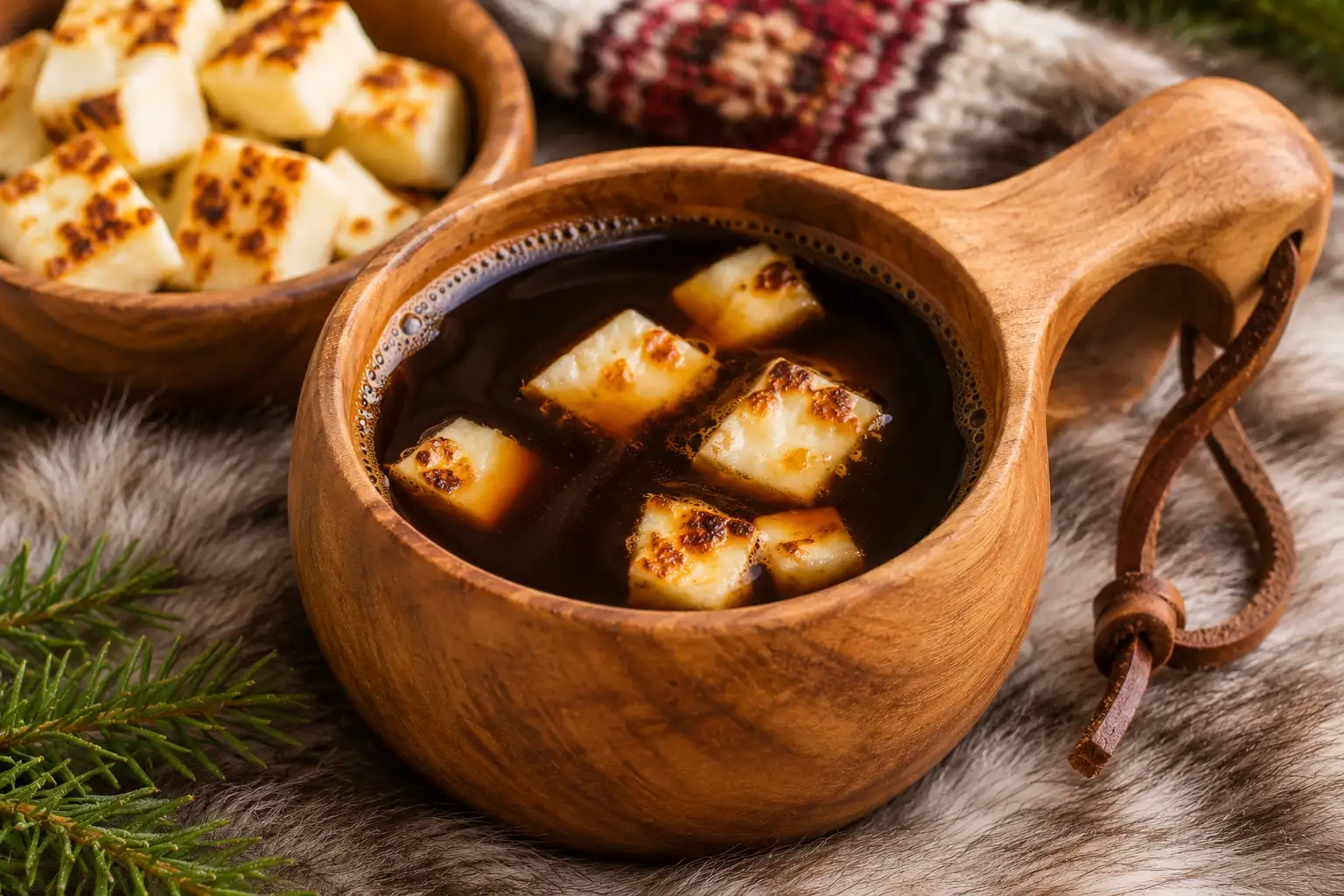
Imagine ordering a cup of coffee and discovering small cubes of cheese resting at the bottom. In northern Finland and Sweden, this unusual combination is a longstanding tradition known as kaffeost, or coffee cheese. Instead of melting into the drink, the mild, springy cheese warms and softens as it absorbs the coffee's flavor. Once the coffee is finished, the remaining pieces can be eaten with a spoon. Closely connected with Sámi food traditions and the everyday hospitality of northern Scandinavia, kaffeost turns an ordinary coffee break into a distinctive culinary experience.
What Is Kaffeost?
Kaffeost is both a Swedish name for a traditional northern cheese and a way of enjoying that cheese in hot coffee. The word combines kaffe, meaning coffee, with ost, meaning cheese.
The cheese is fresh, mild, and relatively firm, with a springy texture that allows it to retain its shape when placed in hot liquid. Unlike cheeses such as cheddar or mozzarella, it does not readily melt into a smooth sauce. Instead, it becomes warmer and softer while remaining in recognizable pieces.
In northern Sweden, especially Tornedalen and surrounding areas, kaffeost is an established local specialty. The related Finnish cheese leipäjuusto, meaning bread cheese, is also commonly enjoyed with coffee, particularly in northern Finland.
The custom is associated with Sámi communities and other northern residents whose food traditions developed around dairy production, preservation, and hospitality. Although the basic idea is simple, the practice has deep regional roots.
Quick Facts
Quick Facts
- Region: Northern Sweden and Finland
- Swedish name: Kaffeost
- Meänkieli name: Kahvijuusto
- Related Finnish cheese: Leipäjuusto
- Main ingredients: Coffee and mild fresh cheese
- Traditional milk sources: Cow, goat, and historically reindeer milk
- Flavor: Mild, milky, lightly toasted, and coffee-infused
- Texture: Firm, springy, and slightly squeaky
- Serving style: Small cheese pieces placed in hot coffee
- Cultural role: Hospitality, coffee breaks, and northern food traditions
Common Ingredients
Preparing a cup of kaffeost requires only two main components, although making the cheese itself involves a separate dairy-processing tradition.
- Kaffeost or leipäjuusto: A mild fresh cheese with a firm, elastic consistency that can withstand hot coffee without dissolving.
- Freshly brewed coffee: Usually served hot and often black, allowing the cheese to absorb the roasted coffee flavor.
- Cow's milk: A common ingredient in modern versions of the cheese.
- Goat's milk: Used in some northern Swedish cheese-making traditions.
- Reindeer milk: Historically important in certain Sámi dairy traditions, although reindeer-milk cheese is much less common today.
- Coagulating ingredients: Rennet or another suitable coagulant is used to separate milk into curds and whey during cheese-making.
The cheese is typically only lightly salted, if at all. Its restrained flavor allows the coffee to remain prominent while the dairy contributes a soft, creamy contrast.
Finnish leipäjuusto is often lightly baked or browned, producing golden patches on its surface. Traditional Swedish kaffeost can also develop a dry surface through baking, drying, or smoking, depending on the producer.
How Kaffeost Is Prepared
The first step is preparing a suitable cheese. In traditional cheese-making, milk is warmed and coagulated, allowing curds to separate from the liquid whey. The curds are collected and shaped into a firm cheese.
Depending on the regional method, the cheese may be pressed, dried, baked, or lightly smoked. These processes help establish the surface texture while preserving the cheese's mild flavor.
For the coffee drink itself, the preparation is remarkably straightforward. The finished cheese is cut into small cubes or bite-sized pieces and placed in a cup. Hot, freshly brewed coffee is poured over the cheese.
The cheese warms in the liquid and absorbs some of the coffee's aroma. Because it retains its shape, it remains at the bottom of the cup rather than melting away.
The coffee is sipped normally, sometimes with a spoon used to retrieve a piece of cheese. Once the liquid has been consumed, the softened pieces are eaten.
Some people prefer to eat the cheese between sips instead of waiting until the cup is empty. Either way, the appeal comes from the contrast between bitter coffee and mild dairy.
For food safety, the cheese should be produced from appropriately handled milk and stored according to its packaging. Commercial pasteurized-milk versions are a practical option for people unfamiliar with traditional cheese-making.
History & Origins
Kaffeost belongs to the food traditions of northern Scandinavia, where dairy products have long played an important role in household life. Cheese-making helped families make use of available milk and produce foods that could be kept or transported more conveniently.
The custom has especially strong associations with Sámi communities, the Indigenous peoples of Sápmi, whose traditional territories extend across northern Norway, Sweden, Finland, and part of Russia.
Historically, reindeer milk was one source of dairy in some Sámi communities, while goats and cows also became important to northern dairy production. Regular reindeer milking declined substantially in Sweden during the early twentieth century, making modern reindeer-milk kaffeost relatively uncommon.
As coffee became established in northern households, placing pieces of firm cheese into the hot drink developed into a familiar way of serving the two together. The exact date when the practice began is uncertain, and it should not be attributed to a single inventor.
In Tornedalen, the border region between Sweden and Finland, coffee cheese is also known by the Meänkieli name kahvijuusto. The tradition reflects the intertwined histories of different northern communities and their shared appreciation for coffee and dairy foods.
Today, kaffeost remains a recognizable regional specialty. Local cheesemakers continue to produce it, and the custom is highlighted in northern Scandinavian food tourism.
Varieties & Differences
Although the combination of coffee and cheese is consistent, several types of cheese and local practices are associated with the tradition.
- Swedish kaffeost: A northern Swedish fresh cheese made from cow's, goat's, or occasionally reindeer's milk, traditionally intended to be cut into pieces and eaten with coffee.
- Tornedalen kahvijuusto: Coffee cheese associated with the Tornedalen region and its Meänkieli-speaking communities.
- Finnish leipäjuusto: A mild, firm cheese often marked with browned patches from baking. It can be eaten with coffee or served separately.
- Reindeer-milk coffee cheese: A historically significant but uncommon version associated with certain northern dairy traditions.
- Modern cow's-milk versions: Readily available cheeses that reproduce the characteristic firm texture without requiring less common milk sources.
Leipäjuusto has uses beyond coffee. In Finland, it is also enjoyed warm with cloudberry jam, creating a sweet dessert that highlights its gentle dairy flavor.
Kaffeost should not be confused with adding ordinary melting cheese to coffee. The traditional cheeses are chosen specifically because their structure allows them to soften without dissolving into the drink.
How Kaffeost Is Enjoyed
Kaffeost is traditionally enjoyed during a coffee break, often in a home or social setting. Offering coffee and cheese can be an expression of hospitality, particularly in northern communities where sharing food and hot drinks is part of everyday life.
One of the most distinctive aspects is the texture. When fresh, the cheese may squeak gently against the teeth. After sitting in hot coffee, it becomes softer and develops a delicate roasted flavor from the liquid.
The taste is usually less strange than the combination might suggest. The coffee remains recognizably coffee, while the cheese contributes a mild dairy flavor rather than a strong, salty cheesiness.
In some settings, kaffeost is served in a traditional wooden drinking cup, known in Finnish as a kuksa. These carved cups are associated with northern outdoor and handicraft traditions, although ordinary ceramic mugs are also used.
For first-time tasters, the experience is partly about discovering how the cheese changes as it sits in the coffee. Its firm, slightly squeaky texture becomes warm and tender, while the coffee gradually takes on a subtle dairy note.
Unlike a latte or cappuccino, the drink does not depend on milk foam or dissolved dairy. The cheese remains a separate food to be eaten alongside the coffee, making the experience both a beverage and a small snack.
Did You Know?
Traditional kaffeost is designed to stay in pieces when placed in hot coffee. Instead of melting away, it warms and softens while absorbing the coffee's flavor. This is why the cheese's firm, springy texture is just as important as its mild taste.
A Northern Coffee Tradition Worth Discovering
Kaffeost turns two familiar ingredients into an unexpected combination. Its warm coffee, mild cheese, and distinctive squeaky texture reflect the practical dairy traditions and hospitality of northern Finland and Sweden. Closely associated with Sámi and Tornedalen food cultures, it offers a glimpse into regional life where a cup of coffee can also become a simple, satisfying meal. For those accustomed to cream or milk in their coffee, kaffeost provides an entirely different way to enjoy dairy and the rich aroma of roasted beans.