
Kangaroo Steak
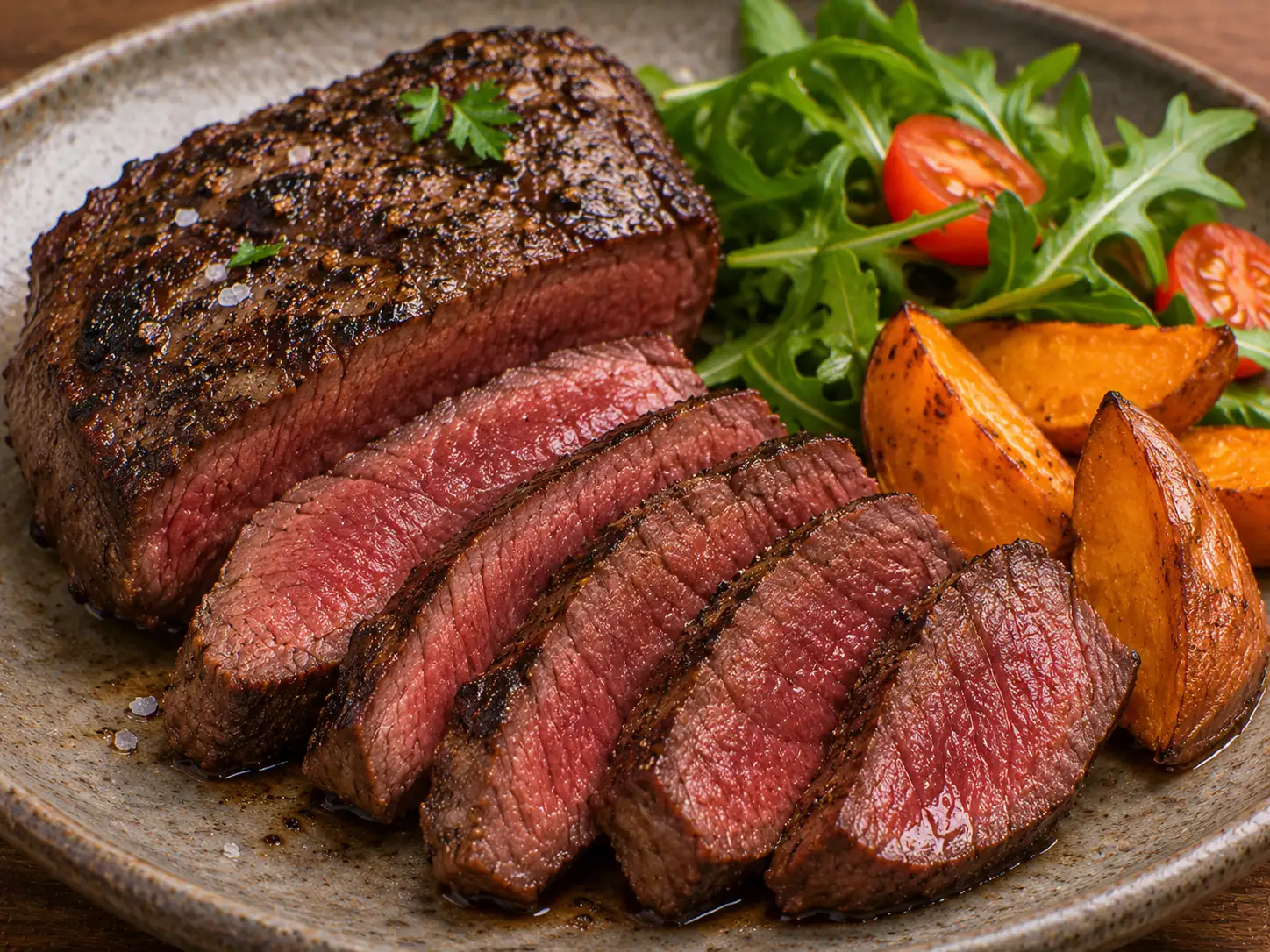
Deep red, remarkably lean, and rich in flavor, kangaroo steak is a distinctive part of Australian cuisine. Unlike the familiar steaks cut from cattle, this meat comes from an animal native to Australia and has a history that reaches back thousands of years. Kangaroo has long been an important food for many Aboriginal communities, while modern chefs appreciate its bold, game-like character and versatility. Whether seared in a hot pan, grilled over flames, or served with native Australian herbs, kangaroo steak offers a different experience from conventional beef.
What Is Kangaroo Steak?
Kangaroo steak is a cut of red meat taken from a kangaroo, usually from the loin, rump, or leg. Kangaroos are marsupials native to Australia, and several abundant species are legally harvested for commercial meat production under regulated management programs.
The meat is known for its deep red color, fine muscle structure, and extremely low fat content. Its flavor is often described as richer and more game-like than beef, with earthy notes that distinguish it from farm-raised red meats.
Because kangaroo meat contains little intramuscular fat, it behaves differently during cooking. A well-prepared steak can be tender and flavorful, but excessive heat or prolonged cooking can make some cuts dry and chewy.
Although kangaroo steak may seem unusual to visitors, it is available in Australian supermarkets, specialty butcher shops, and restaurants. It is one of several ways kangaroo meat is prepared, alongside sausages, burgers, stews, and slow-cooked dishes.
Quick Facts
Quick Facts
- Origin: Australia
- Main ingredient: Kangaroo meat
- Meat type: Lean red meat
- Appearance: Deep red, with very little visible fat
- Flavor: Rich, earthy, and slightly game-like
- Texture: Firm and potentially tender when carefully prepared
- Popular cuts: Loin fillet, rump, and leg steaks
- Common cooking methods: Pan-searing, grilling, and barbecuing
- Traditional significance: An important food for many Aboriginal Australian communities
Common Ingredients
Kangaroo steak has enough natural flavor to stand on its own, but its leanness makes it particularly suitable for marinades, aromatic seasonings, and sauces that contribute moisture or richness.
- Kangaroo steak: The main ingredient, usually sold as a trimmed fillet or steak cut from the rump or leg.
- Olive oil: Helps the meat brown during cooking and prevents sticking.
- Garlic: Adds a savory aroma that complements the meat's earthy flavor.
- Black pepper and salt: Simple seasonings that enhance the natural character of kangaroo.
- Rosemary or thyme: Herbs commonly paired with rich red meats.
- Native Australian herbs: Lemon myrtle, saltbush, or other native seasonings may be used in contemporary Australian recipes.
- Red wine or balsamic vinegar: Ingredients sometimes used in marinades and sauces to balance the meat's distinctive flavor.
Some preparations are deliberately minimal, using only a little oil, salt, and pepper. Others incorporate garlic butter, onion gravy, fruit-based sauces, or native Australian ingredients for a more elaborate dish.
How Kangaroo Steak Is Prepared
Kangaroo steak is commonly prepared by pan-searing or grilling. The meat is trimmed, seasoned, and placed on a hot cooking surface to develop a browned exterior. Because it has very little fat, cooks pay particular attention to temperature and cooking time.
Loin and rump cuts are especially suited to steak-style preparations. Many chefs favor relatively brief cooking to preserve tenderness, followed by a resting period that allows the juices to redistribute. However, the appropriate method depends on the thickness and cut of meat.
A marinade may be used to introduce flavor before cooking. Garlic, rosemary, olive oil, and red wine are familiar combinations, while recipes featuring soy sauce, ginger, or native herbs offer different flavor profiles.
After cooking, the steak is often sliced across the grain. This shortens the muscle fibers and can make the meat easier to chew. It may then be served with roasted vegetables, potatoes, salad, or a savory sauce.
Food safety is important because commercial kangaroo meat generally comes from wild-harvested animals. It should be purchased from approved suppliers, refrigerated correctly, and prepared with clean utensils and surfaces. Australian food-safety guidance identifies 63°C as a recommended internal temperature for whole kangaroo steaks, while minced or otherwise processed meat requires more thorough cooking. Follow current local guidance and the product's instructions.
History & Origins
Kangaroo meat has been part of Australian food traditions for thousands of years. For many Aboriginal peoples, kangaroos have provided food as well as materials for clothing, tools, and other purposes. Hunting practices, preparation methods, and cultural meanings differ across communities and regions.
Traditionally, kangaroo could be cooked using fire, hot coals, or earth-based cooking methods. Knowledge of animal behavior, seasonal conditions, and the landscape helped people locate and harvest kangaroos as part of broader food systems.
European colonization changed Australia's food economy, and imported livestock such as cattle and sheep became central to mainstream meat production. Although kangaroo continued to be eaten, its commercial sale for human consumption was restricted in some Australian states for much of the twentieth century.
Modern commercial kangaroo harvesting developed during the twentieth century. Today, harvesting is managed under state and federal regulations, with population monitoring, approved species, and annual quotas forming part of the system.
The industry remains debated. Supporters emphasize the use of native animals and the potential environmental advantages of wild-harvested meat, while critics raise concerns about animal welfare, harvesting practices, and how populations are managed. Responsible sourcing therefore involves more than simply choosing an Australian product.
Varieties & Differences
Kangaroo steak is not a single standardized recipe. Different cuts, marinades, and cooking techniques create varied dishes.
- Grilled kangaroo steak: A fillet or rump steak cooked over a grill, often with herbs and a simple sauce.
- Pan-seared kangaroo fillet: A tender cut browned in a hot pan and typically served sliced.
- Red wine-marinated kangaroo: Steak flavored with wine, garlic, and herbs before grilling or pan-frying.
- Kangaroo with native herbs: A contemporary Australian preparation incorporating ingredients such as lemon myrtle or saltbush.
- Pepper-crusted kangaroo: Steak coated with cracked pepper or other seasonings for a more pronounced crust.
- Kangaroo steak with onion gravy: A hearty version served with savory gravy and vegetables.
The cut also affects the eating experience. A loin fillet generally suits quick steak-style cooking, while some leg cuts may benefit from marinating or alternative preparation methods. Kangaroo is usually more intensely flavored and less fatty than conventional beef steak.
How Kangaroo Steak Is Enjoyed
Kangaroo steak can be served much like other red-meat dishes. A restaurant may present it as a sliced fillet with roasted vegetables, mashed potatoes, and a red wine reduction. At home, it can be cooked on a barbecue or in a frying pan and paired with a simple salad.
Rich sauces and herbs work particularly well with its earthy flavor. Onion gravy adds sweetness and moisture, while pepper-based sauces introduce warmth. Native Australian ingredients, including lemon myrtle and saltbush, can connect contemporary preparations with flavors found in the Australian landscape.
Its nutritional profile is another reason some consumers choose kangaroo. The meat is high in protein and typically contains very little fat, while also supplying nutrients such as iron and zinc. Exact nutritional values depend on the cut and preparation.
For someone tasting kangaroo steak for the first time, the biggest difference from beef may be the combination of strong flavor and very low fat content. A carefully prepared steak is rich without being heavily marbled, making it appealing to diners who enjoy venison or other lean red meats.
Did You Know?
Commercial kangaroo meat is generally obtained from wild animals rather than conventional livestock farms. In Australia, licensed harvesting operates under government-approved management systems that use population surveys and quotas to regulate the number of animals taken.
A Distinctive Taste of Australia
Kangaroo steak brings together an ancient food tradition and a modern approach to cooking native Australian ingredients. Its deep red color, lean texture, and robust flavor set it apart from familiar beef or lamb, while simple seasonings and careful cooking allow its character to stand out. From its longstanding place in Aboriginal foodways to its appearance on contemporary restaurant menus, kangaroo steak remains a distinctive and sometimes debated part of Australia's culinary landscape.