
Kanji
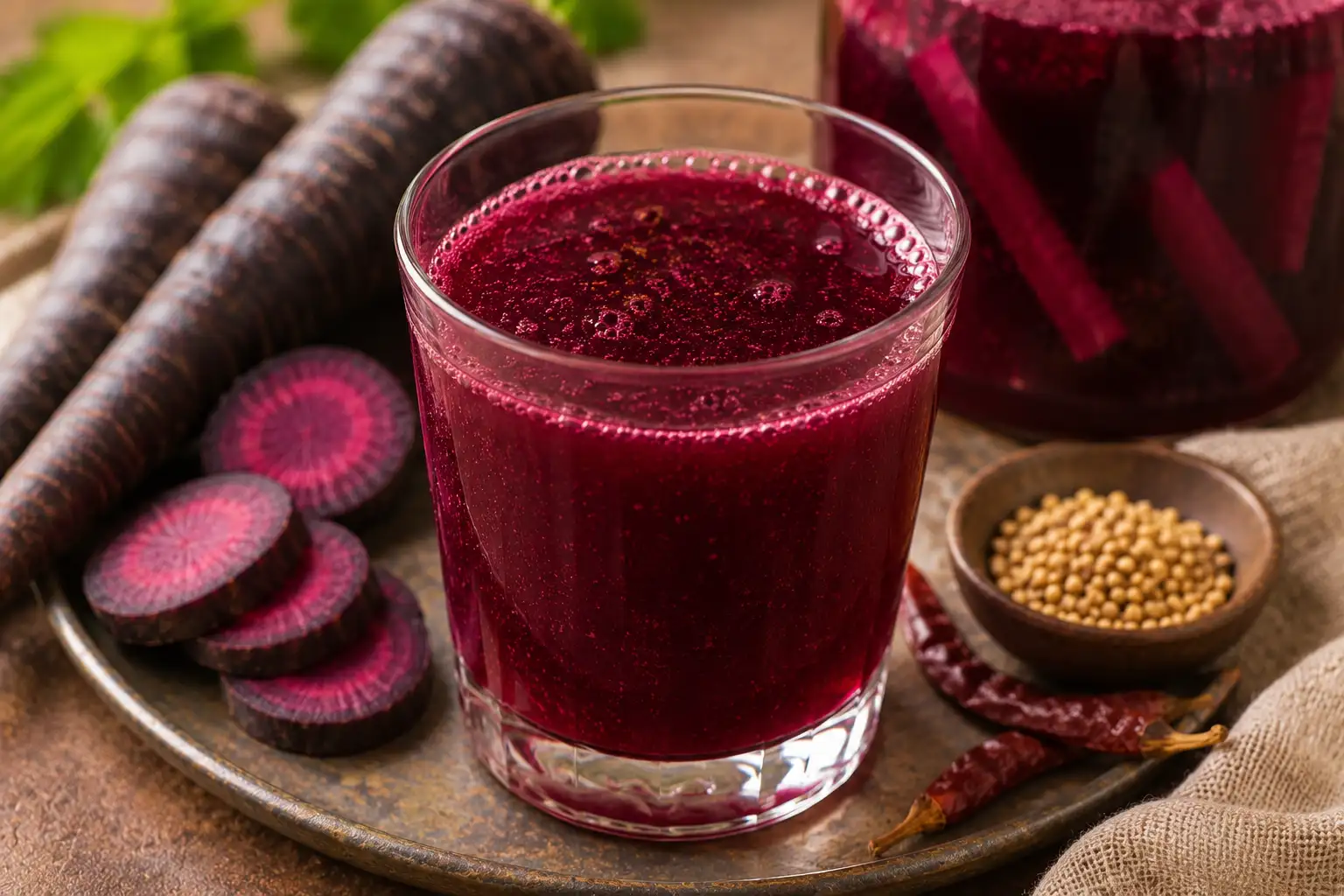
Deep purple, refreshingly sour, and pleasantly spicy, kanji is a traditional fermented drink with a distinctive place in North Indian food culture. Made by fermenting black carrots in water with crushed mustard seeds, salt, and sometimes chili, the beverage develops a tangy flavor through the activity of naturally occurring microorganisms. Often prepared during the cooler months and served around the spring festival of Holi, kanji offers a striking alternative to sweet fruit juices and dairy-based drinks. Its vivid color, sharp mustard aroma, and lively acidity make it one of India's most recognizable traditional fermented beverages.
What Is Kanji?
Kanji, also called gajar ki kanji or kaali gajar ki kanji, is a traditional North Indian beverage made through lactic acid fermentation. Its most characteristic ingredient is the black carrot, a deeply pigmented variety of carrot that gives the drink its rich purple-red color.
Despite the name, black carrots are not truly black inside. Their roots contain high concentrations of natural pigments called anthocyanins, which produce shades ranging from dark purple to burgundy. As the carrots soak and ferment, these pigments color the surrounding liquid.
Kanji has a sour, salty, slightly pungent taste, with mustard seeds contributing a sharp, earthy spiciness. The drink may also contain chili, giving it a gentle or pronounced heat depending on the recipe.
It is especially associated with Punjab, Delhi, Uttar Pradesh, Rajasthan, and other parts of northern India. Traditional recipes differ between households, but the combination of carrots, mustard seeds, salt, and fermentation remains central to its identity.
Quick Facts
Quick Facts
- Origin: Northern India
- Other names: Gajar ki kanji and kaali gajar ki kanji
- Main ingredients: Black carrots, water, mustard seeds, and salt
- Optional ingredients: Beetroot, red chili, and black salt
- Fermentation: Primarily lactic acid fermentation
- Appearance: Deep purple, burgundy, or reddish-purple liquid
- Flavor: Tangy, salty, earthy, and mildly spicy
- Typical fermentation period: Several days, depending on conditions
- Traditional season: Winter and early spring
- Cultural association: Home cooking and Holi celebrations
Common Ingredients
Kanji uses a small number of ingredients, but each plays an important role in developing its distinctive color and flavor.
- Black carrots: The traditional foundation of the drink. Their deep purple pigments give kanji its recognizable appearance.
- Mustard seeds: Usually crushed or coarsely ground, they provide the pungent, peppery flavor that distinguishes kanji from ordinary fermented vegetable juice.
- Water: Creates the liquid in which the vegetables and seasonings ferment.
- Salt: Contributes flavor and helps shape the fermentation environment.
- Red chili powder: An optional seasoning that adds warmth and heat.
- Black salt: Sometimes used for its distinctive mineral-like and sulfurous flavor.
- Beetroot: Frequently added to variations made without black carrots or to intensify the drink's red color.
Unlike many commercial soft drinks, traditional kanji is not defined by added sugar. Its characteristic sourness develops naturally as microorganisms transform sugars present in the vegetables into organic acids.
How Kanji Is Prepared
Traditional kanji begins with fresh carrots that are washed and cut into pieces or strips. The vegetables are combined with water, crushed mustard seeds, salt, and any additional seasonings in a clean vessel.
The mixture is then allowed to ferment under suitable conditions. In traditional household preparations, the container may be placed in a warm location for several days, allowing naturally occurring lactic acid bacteria to become active.
As fermentation progresses, these bacteria metabolize sugars from the carrots and produce lactic acid. The increasing acidity creates the beverage's pleasantly sour taste, while pigments from the carrots gradually turn the liquid a deep purple-red.
The finished drink is commonly strained or poured directly into glasses, sometimes with pieces of fermented carrot included. It is often served cool, emphasizing its sharp, refreshing quality.
Although traditional kanji is made through spontaneous fermentation, this process requires careful attention to cleanliness and suitable fermentation conditions. An unpleasant smell, visible mold, or unexpected spoilage is not something to overlook. Research on traditional kanji has identified contamination concerns in some naturally fermented samples, while controlled fermentation methods are being studied to improve consistency and microbiological safety.
Anyone making fermented vegetables or drinks at home should use a tested, food-safe method rather than relying on appearance or sour taste alone as proof of safety.
History & Origins
Kanji is rooted in the traditional foodways of northern India, where seasonal vegetables have long been transformed through pickling and fermentation. Black carrots are particularly associated with the cooler months, helping explain the drink's winter and early-spring popularity.
The precise origin of kanji is uncertain. No single inventor or documented founding date is generally recognized. Instead, the beverage developed within household traditions in which fermentation offered a way to transform available vegetables into a flavorful drink.
Kanji is especially connected with Holi, the Hindu spring festival known for its colorful celebrations. In some North Indian households, the drink is prepared ahead of the occasion and offered to guests as a tangy refreshment.
Its strong color fits naturally with Holi's visual atmosphere, although the association is cultural rather than evidence that the drink was invented specifically for the festival.
Today, kanji continues to be prepared in homes and is increasingly discussed in connection with the wider interest in traditional fermented foods. Its history remains closely tied to family recipes and seasonal ingredients rather than industrial beverage production.
Varieties & Differences
Black-carrot kanji is the best-known version, but households prepare several variations depending on the vegetables available and local preferences.
- Black-carrot kanji: The classic preparation using deeply pigmented carrots, crushed mustard seeds, salt, and water.
- Carrot-and-beetroot kanji: A variation combining carrots with beetroot for a brighter red color and slightly different earthy flavor.
- Red-carrot kanji: A version made with red carrots when black carrots are unavailable, sometimes with beetroot added for color.
- Spicy kanji: A more strongly seasoned drink featuring additional chili or pungent mustard.
- Kanji vada: A related North Indian preparation in which fried lentil dumplings are soaked in fermented kanji, creating a tangy, savory snack.
Kanji should not be confused with kanji in South Indian food terminology, where the word may refer to rice gruel or rice-based preparations. The North Indian fermented carrot drink is a distinct food with its own ingredients and traditions.
How Kanji Is Enjoyed
Kanji is commonly served as a refreshing drink during winter's transition into spring. Its sourness and mustard aroma make it very different from sweet beverages such as lassi or fruit sherbet.
It may be offered to guests during family gatherings or Holi celebrations, often in small glasses. Some people enjoy the fermented carrot pieces as well as the liquid, giving the experience a crunchy, lightly pickled element.
Kanji vada offers another way to enjoy the beverage. In this preparation, lentil dumplings absorb the fermented liquid and become soft and tangy, combining the drink's sharpness with a more substantial snack.
Kanji has also attracted attention because lactic acid bacteria can be present in traditionally fermented batches. However, calling every serving a proven probiotic drink would be misleading. The types and quantities of live microorganisms vary with the preparation method, storage, and whether the product has been heat-treated.
Studies have explored black-carrot kanji's fermentation microbiology and naturally occurring plant compounds, but these findings do not establish that drinking kanji treats digestive problems or other medical conditions. Its most dependable appeal remains its distinctive flavor and culinary tradition.
Did You Know?
Kanji's striking purple-red color comes primarily from anthocyanins in black carrots. These are natural plant pigments also found in foods such as blueberries and purple cabbage. During fermentation, the pigments spread into the water, giving the drink its recognizable jewel-like appearance.
A Tangy Taste of North Indian Tradition
Kanji brings together seasonal vegetables, mustard seeds, and natural fermentation to create a drink that is earthy, spicy, sour, and vividly colored. Its place in North Indian household cooking and Holi celebrations gives it a cultural identity beyond its ingredients. Whether made with traditional black carrots or a variation using beetroot, kanji remains a memorable example of India's diverse fermented-food traditions and the remarkable flavors that can develop from simple ingredients.