
Kava
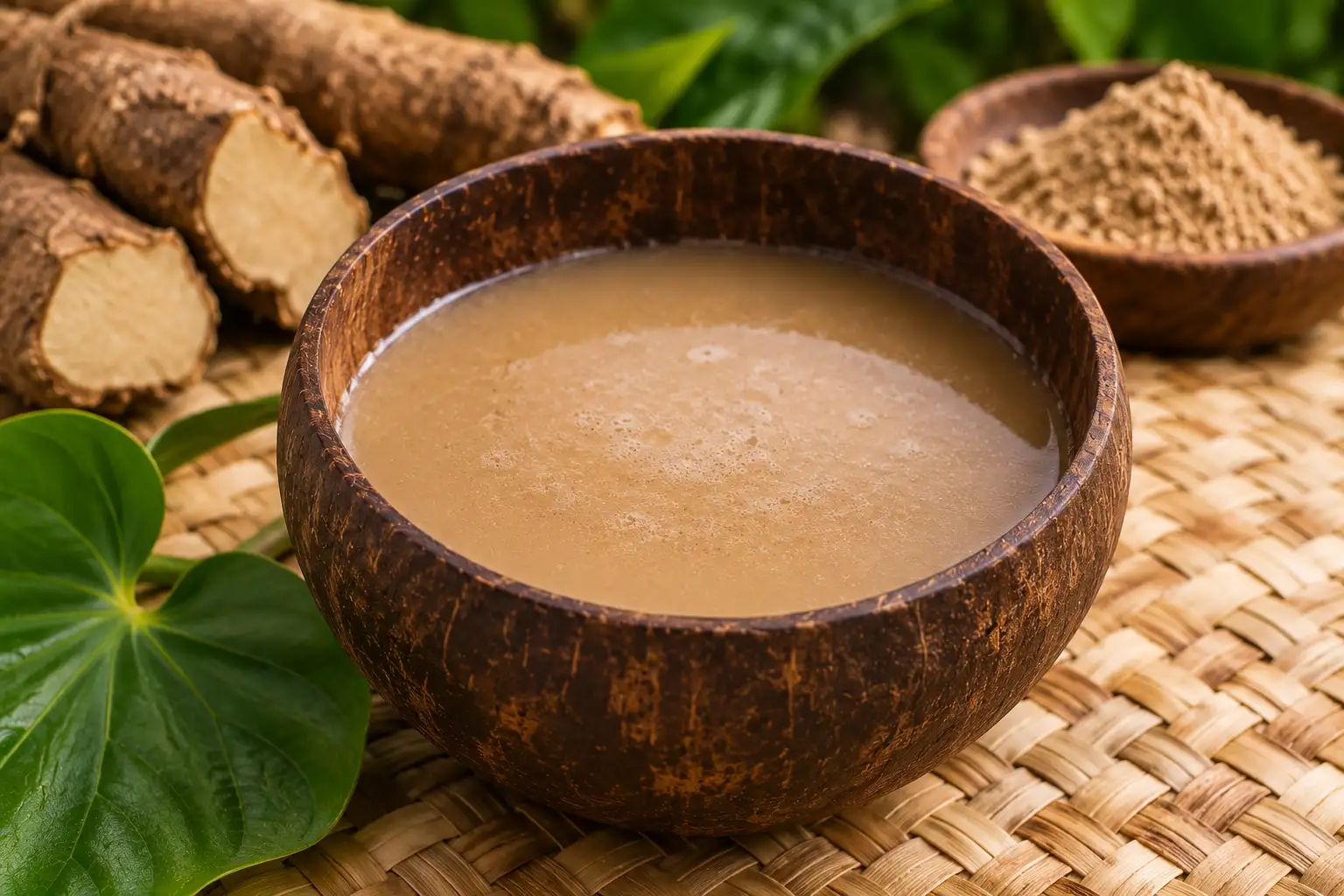
Earthy, cloudy, and slightly bitter, kava is a traditional drink with a remarkable place in Pacific Island culture. Made by mixing water with the prepared roots and underground stems of a tropical pepper-family plant, kava is known for its distinctive taste and calming effects. In Fiji, Tonga, Samoa, Vanuatu, and other Pacific communities, sharing kava can mark an important ceremony, welcome visitors, or bring friends together for conversation. Although the drink may look like muddy water to newcomers, its importance reaches far beyond flavor, reflecting centuries of social customs, cultural identity, and community relationships.
What Is Kava?
Kava is a traditional nonalcoholic beverage prepared from the underground parts of Piper methysticum, a tropical shrub belonging to the pepper family, Piperaceae. It is produced by mixing prepared kava roots and rhizomes with water, then separating the plant fibers from the liquid.
The finished drink is usually cloudy and beige, light brown, or grayish-brown. It has an earthy, woody flavor, sometimes accompanied by peppery or bitter notes. A temporary tingling or numbing sensation around the mouth is another recognizable characteristic.
Kava contains naturally occurring compounds called kavalactones, which affect the nervous system and are responsible for many of the drink's relaxing and sedating effects. Although kava contains no alcohol in its traditional water-based form, it is psychoactive and can impair alertness or coordination.
Its names differ across the Pacific. In Fiji, it is commonly called yaqona; in Samoa, 'ava; in Hawaiʻi, 'awa; and in Pohnpei, sakau. These names reflect related but distinct cultural traditions rather than one universal way of preparing or serving the drink.
Quick Facts
Quick Facts
- Region: Pacific Islands, including Vanuatu, Fiji, Tonga, Samoa, Hawaiʻi, and parts of Micronesia
- Scientific name: Piper methysticum
- Plant family: Piperaceae, the pepper family
- Main ingredients: Kava roots or rhizomes and water
- Appearance: Cloudy beige to earthy brown liquid
- Flavor: Earthy, woody, bitter, and sometimes peppery
- Distinctive sensation: Mild mouth tingling or numbness
- Active compounds: Kavalactones
- Traditional role: Ceremonies, hospitality, social gatherings, and community discussions
- Important caution: Psychoactive effects, drug interactions, and potential liver injury
Common Ingredients
Traditional kava is usually much simpler than a flavored tea or cocktail. Its recognizable character comes primarily from the plant material and the way it is mixed with water.
- Kava roots: The roots of Piper methysticum contain kavalactones and contribute the drink's characteristic earthy flavor.
- Kava rhizomes: The underground stems of the plant are also used in traditional beverage preparation.
- Water: The principal liquid used to extract and suspend compounds from the prepared plant material.
- Fresh or dried kava: Depending on local tradition, kava may be processed while fresh or dried and ground before use.
- Optional modern additions: Commercial kava drinks may contain coconut milk, fruit juice, or sweeteners, although these are not essential to traditional preparations.
Not all parts of the kava plant are considered suitable for beverage production. International food standards emphasize selected parts of appropriate kava cultivars, particularly roots and peeled rhizomes. The plant variety, growing conditions, and processing method all influence the resulting drink.
How Kava Is Prepared
Traditional preparation generally begins with mature kava plants. Suitable roots and underground stems are harvested, cleaned, and processed into smaller pieces or a ground material.
Fresh kava may be pounded or grated, while dried kava is commonly ground into a coarse or fine powder. The prepared material is mixed with water and worked thoroughly so that the liquid takes on the plant's flavor and active compounds.
The mixture is then strained or squeezed through a suitable filter to remove coarse plant fibers. The finished beverage is opaque and slightly thick, with fine suspended particles contributing to its characteristic appearance.
In Fiji, the drink may be prepared in a communal wooden bowl known as a tanoa and served in coconut-shell cups called bilo. In Vanuatu, fresh kava is especially prominent, and preparation styles differ between islands and communities.
Traditional methods have changed over time. Historical accounts describe chewing plant material as part of preparation in certain Pacific societies, while pounding, grinding, and mechanical processing are common alternatives.
Preparing kava safely requires appropriate plant identification, suitable beverage-grade material, clean water, and hygienic handling. Products made from unidentified cultivars or unsuitable plant parts may pose additional risks.
History & Origins
Kava has been cultivated and consumed in the Pacific for many centuries. Botanical and ethnographic research places its likely domestication in northern Vanuatu, although the precise details of its earliest cultivation remain uncertain.
As Pacific peoples traveled and settled across the ocean, they carried useful plants and cultural practices with them. Kava became established in many island societies, developing different ceremonial and social meanings.
In Fiji, yaqona became closely associated with formal gatherings, hospitality, and the presentation of respect. Traditional ceremonies may involve prescribed seating arrangements, speeches, and an established order of serving.
In Tonga and Samoa, kava ceremonies have important social and cultural roles, with customs surrounding preparation and distribution reflecting local relationships and responsibilities.
In Vanuatu, kava is also widely consumed in everyday social settings. Informal establishments known as nakamals provide places where people gather to drink kava, talk, and spend time together.
These practices are not identical across the Pacific. Each community has its own terminology, protocols, and historical relationship with the plant. Kava is therefore best understood as a family of connected traditions rather than a single standardized ceremony.
Varieties & Differences
Kava varies according to the cultivar, preparation method, location, and social setting.
- Fijian yaqona: Often prepared from dried, ground kava and water, with an important role in ceremonies and social gatherings.
- Vanuatu kava: Frequently prepared from fresh plant material, with local cultivars and traditions producing different flavor and strength profiles.
- Tongan kava: Traditionally associated with structured ceremonies and communal gatherings, including occasions involving chiefly or community relationships.
- Samoan 'ava: A ceremonial drink prepared and served according to established Samoan cultural protocols.
- Hawaiian 'awa: A related traditional beverage with its own cultural history and named plant varieties.
- Pohnpeian sakau: A Micronesian preparation associated with Pohnpei, where fresh kava is traditionally pounded and processed.
- Commercial kava beverages: Modern products sold in cafés or kava bars, sometimes flavored or prepared differently from traditional Pacific drinks.
Kava cultivars also differ chemically. Varieties commonly described as noble kava are preferred for traditional beverage production under established regional standards. Other varieties may have different effects and are not necessarily appropriate substitutes.
How Kava Is Enjoyed
Kava is generally consumed in small bowls or cups, often in a shared setting. Its flavor is not typically sweet or refreshing in the manner of fruit juice. Instead, the drink is valued for its cultural role, earthy taste, and noticeable effects.
In some communities, kava is served during welcoming ceremonies, weddings, funerals, community discussions, and other significant occasions. The act of presenting and receiving a cup may communicate respect, gratitude, or belonging.
Outside formal ceremonies, kava can also be an everyday social beverage. In parts of Vanuatu and Fiji, people gather in the evening to share kava and conversation.
The experience varies depending on the amount consumed and the preparation. Some drinkers report relaxation and a feeling of calm, while larger amounts may cause drowsiness, dizziness, or impaired coordination.
Although these effects have contributed to kava's reputation as a relaxing beverage, it should not be considered harmless simply because it is traditional or plant-based.
Health Effects & Safety Considerations
Kava contains psychoactive kavalactones, and its effects on the body have been investigated in clinical research. Some studies suggest that certain kava preparations may reduce symptoms of anxiety, but findings depend on the product and study design. Kava is not an established substitute for medical treatment.
More importantly, kava has been associated with rare but sometimes severe cases of liver injury, including liver failure. Initial concerns involved concentrated medicinal extracts, but cases have also been reported with water-based preparations. The precise causes and relative risks of different products remain under investigation.
Kava can interact with medications and other substances that affect the nervous system. Combining it with alcohol, sedatives, or certain prescription medicines can increase risks. Because it may cause drowsiness and reduce coordination, people should not drive or operate machinery after consuming it.
Health authorities also advise avoiding kava during pregnancy and breastfeeding. People with liver disease or those taking medications should seek medical guidance before considering kava products.
Traditional water-based kava and concentrated supplement extracts are not equivalent products. However, neither should be assumed completely risk-free, and product quality, plant variety, and frequency of consumption all matter.
Did You Know?
Kava belongs to the same botanical family as black pepper, but it is not made from peppercorns. The drink comes from the underground roots and rhizomes of Piper methysticum. Its natural kavalactones are responsible for the distinctive mouth-numbing sensation and calming effects associated with the beverage.
A Pacific Tradition Rooted in Community
Kava is much more than an earthy drink. Across the Pacific, it has helped shape ceremonies, hospitality, social relationships, and everyday gatherings for generations. From Fijian yaqona ceremonies to Vanuatu's nakamals, its preparation and sharing reflect the diversity of Pacific Island cultures. Understanding kava requires appreciating both its deep cultural importance and the modern health considerations surrounding its psychoactive compounds. Its story is one of plants, people, tradition, and the enduring value of gathering together.