
Kocho
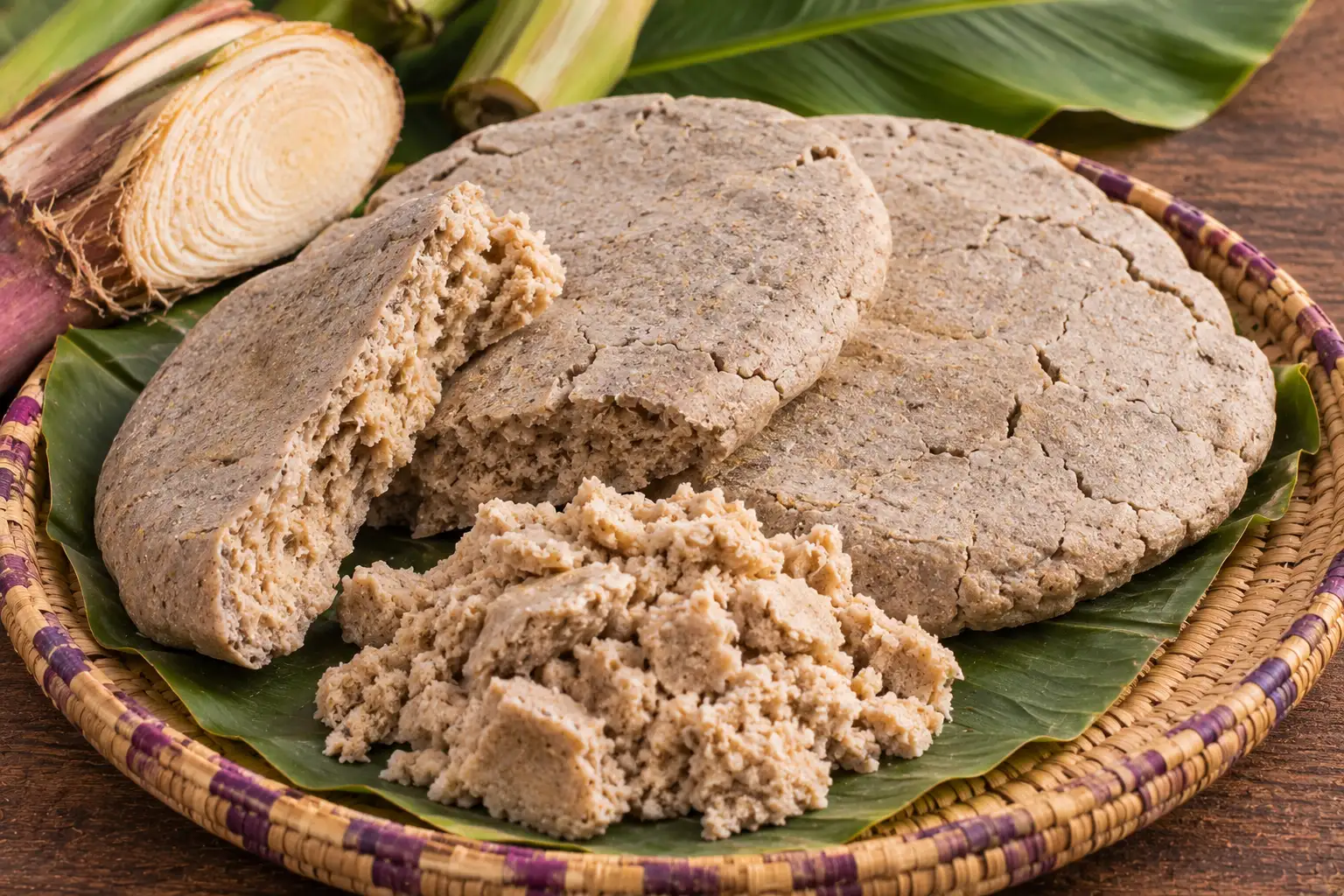
In the highlands of southern Ethiopia, a giant banana-like plant provides one of the region's most important traditional foods. Known as enset, or sometimes the false banana, this remarkable crop is processed into kocho, a fermented, starch-rich food that can be baked into a dense flatbread and served with savory dishes. Unlike ordinary bread, kocho is not made from wheat flour or ripe fruit. Its preparation begins with the plant's fleshy underground corm and leaf sheaths, which are scraped, crushed, and fermented through a process requiring considerable skill. For communities across southern Ethiopia, kocho represents far more than an unusual food: it is an important part of agricultural knowledge, daily meals, and food security.
What Is Kocho?
Kocho is a traditional Ethiopian fermented food made from the starchy parts of the enset plant (Ensete ventricosum). Enset belongs to the banana family, Musaceae, but it is cultivated mainly for its pseudostem and underground corm rather than for edible bananas.
The pseudostem is the thick, trunk-like structure formed by tightly overlapping leaf sheaths. The corm is the large, starchy base of the plant, located at or below ground level.
To make kocho, these parts are scraped or pulverized into a moist mass and allowed to ferment. The resulting material can be prepared as a flatbread or incorporated into other traditional foods.
Kocho is especially important in southern, central, and southwestern Ethiopia. It is strongly associated with Gurage food traditions and is also prepared among other enset-growing communities, including Hadiya, Sidama, Wolaita, and Dorze populations, with differences in processing and serving practices.
Cooked kocho generally has a dense, slightly chewy texture and a distinctive fermented aroma. Its flavor is mildly sour and earthy, making it particularly well suited to rich, highly seasoned accompaniments.
Quick Facts
Quick Facts
- Country: Ethiopia
- Primary region: Southern, central, and southwestern Ethiopian highlands
- Main plant: Enset (Ensete ventricosum)
- Plant family: Musaceae, the banana family
- Edible parts used: Scraped pseudostem and processed corm
- Traditional process: Crushing, fermentation, and cooking
- Common finished form: Dense flatbread
- Flavor: Earthy, mildly sour, and fermented
- Texture: Dense, tender, and somewhat chewy when cooked
- Related enset foods: Bulla and amicho
- Cultural importance: Staple food, agricultural heritage, and household food reserves
Common Ingredients
Kocho differs from many breads because its defining ingredients come from a plant that does not produce the familiar flour of cereal grains.
- Enset pseudostem: The fleshy inner portions of the plant's overlapping leaf sheaths are scraped to collect fibrous, starch-containing material.
- Enset corm: The underground stem base is peeled, crushed, or grated and mixed with the scraped pseudostem.
- Fermentation microorganisms: Naturally occurring lactic acid bacteria and yeasts play important roles in transforming the plant material.
- Traditional fermentation starters: Some regional methods use material prepared from previously processed enset or specially fermented plant mixtures.
- Enset leaves: Used to wrap, cover, or line the material during fermentation and sometimes during cooking.
- Water: Used as needed during processing and preparation.
The basic fermented kocho mass is primarily a product of enset rather than wheat or other grains. However, household recipes and cooking methods may vary, and additional ingredients can be used when preparing the finished meal.
How Kocho Is Prepared
Traditional kocho production begins with a mature enset plant. Harvesting and processing require substantial labor, as the pseudostem must be separated into leaf sheaths and the corm prepared for scraping or crushing.
The inner portions of the leaf sheaths are scraped to release a moist, starchy pulp. The corm is also crushed or grated, producing material that can be combined with the scraped pseudostem.
This mass is worked together and prepared for fermentation. Depending on the community, it may initially be covered with enset leaves before being transferred into a fermentation pit lined with plant material.
In many traditional systems, the mass is enclosed underground and allowed to ferment for an extended period. Producers may periodically open the pit, mix or turn the contents, and replace the leaf covering.
Lactic acid bacteria contribute to the development of acidity, while yeasts and other microorganisms influence aroma, texture, and the overall fermentation process.
The duration varies considerably. Some methods produce usable kocho after several weeks, while other household systems involve fermentation and storage over much longer periods. Climate, enset variety, processing technique, and the desired final characteristics all affect the result.
Once the material is ready, a portion can be removed and prepared for cooking. It is commonly shaped into a relatively thin cake or flatbread and baked over a hot cooking surface, often wrapped in enset leaves.
The finished bread is served hot or warm with savory accompaniments.
Food-safety consideration: Traditional kocho fermentation depends on specialized knowledge, appropriate plant material, clean processing conditions, and correct storage. Research has identified both beneficial fermentation organisms and potentially harmful contaminants in kocho production. Spontaneous fermentation should not be assumed safe simply because the food smells sour or has been stored for a long time.
History & Origins
Kocho belongs to an agricultural system that has developed over many generations in Ethiopia's southern highlands. Enset is an Indigenous African crop whose cultivation is closely integrated with household gardens, livestock, soil management, and local food traditions.
Unlike cereal crops that are harvested at a particular grain-ripening stage, enset plants can remain in the field for years before being processed. This allows farmers to manage food supplies by choosing when to harvest mature plants.
The precise beginning of kocho fermentation is not documented. However, enset cultivation and processing are longstanding components of southern Ethiopian agricultural history, maintained through detailed knowledge of planting, harvesting, and preservation.
In Gurage communities, kocho is especially well known as a major staple food and as an accompaniment to dishes such as kitfo, a seasoned minced-beef specialty.
Other enset-growing communities have developed their own processing techniques, local names, fermentation practices, and serving traditions. The history of kocho is therefore better understood as a set of related regional foodways than as one recipe invented in a single place.
Today, enset remains an important food-security crop. Research has highlighted its ability to provide substantial amounts of starch and its potential importance in farming systems facing variable weather and food shortages.
Varieties & Differences
Enset provides several distinct foods, and understanding these differences is important when describing Ethiopian cuisine.
- Traditional kocho: The fermented mass made from scraped pseudostem and processed corm, often cooked as a flatbread.
- Gurage-style kocho: A well-known regional preparation associated with Gurage food culture and often served with kitfo or other savory foods.
- Regional kocho preparations: Variations among Sidama, Hadiya, Wolaita, Dorze, and other enset-growing communities, reflecting differences in fermentation and cooking techniques.
- Bulla: A refined, starch-rich product separated from liquid released during enset processing. It is often used in porridges and other soft preparations rather than made in exactly the same way as kocho.
- Amicho: Prepared from selected tender enset corms that are boiled and eaten, rather than undergoing the prolonged fermentation used for kocho.
Kocho should not be confused with injera, Ethiopia's famous fermented flatbread commonly made from teff or other cereal flours. Although both foods involve fermentation, their principal ingredients, textures, and preparation methods are different.
Kocho is also not banana bread. Despite enset's resemblance to a banana plant, the food is prepared from the starchy structures of the plant, not from ripe banana-like fruit.
How Kocho Is Enjoyed
Kocho is usually eaten as part of a savory meal. Its mild acidity and earthy flavor complement richly seasoned foods, making it a useful base or accompaniment rather than a heavily flavored dish on its own.
One familiar combination is kocho with kitfo, particularly in Gurage culinary traditions. The dense bread provides a contrasting texture alongside the tender, seasoned meat.
Kocho may also be served with cooked vegetables, legumes, cheese, or other local foods, depending on household and regional practices.
Its texture is distinctive. A properly prepared piece can be dense and pliable rather than airy and porous like wheat bread. The flavor reflects fermentation, with a gentle sourness that becomes more noticeable in some preparations.
Beyond its role at the table, kocho is significant because fermentation and storage can help families manage the availability of food over time.
The enset plant also produces useful fibers and materials, contributing to household livelihoods beyond food alone. Its broad usefulness has led researchers to describe it as an especially important multipurpose crop for Ethiopia.
Enset, Food Security & Traditional Knowledge
One reason kocho receives attention from agricultural researchers is its connection to the resilience of enset-based farming systems.
Enset is a perennial crop that can remain in the ground while farmers decide when to harvest it. This flexibility offers an important advantage when seasonal crops perform poorly or households need additional food reserves.
The plant also produces substantial quantities of starch. However, kocho is predominantly a carbohydrate-rich food and is not a complete source of all essential nutrients. Balanced meals benefit from additional protein-rich foods, vegetables, and other dietary components.
Processing enset requires considerable labor and expertise. In many communities, women have traditionally played central roles in harvesting, scraping, fermentation, and food preparation, although responsibilities vary by household and region.
Improving hygienic processing methods and reducing the physical demands of production are important areas of ongoing research. These efforts can help support food safety while respecting the knowledge and preferences of communities that have maintained enset agriculture for generations.
Did You Know?
Enset looks remarkably similar to a banana plant, but its primary food value comes from its starchy pseudostem and underground corm rather than edible fruit. When these parts are scraped, crushed, and fermented, they produce kocho, a traditional food that can be cooked into a dense, slightly sour flatbread.
A Fermented Staple Rooted in Ethiopian Agriculture
Kocho demonstrates how traditional food knowledge can transform a large, fibrous plant into a dependable staple. Its production requires careful harvesting, scraping, fermentation, and cooking, with each step reflecting generations of experience in southern Ethiopia. Closely linked to Gurage and other enset-growing communities, kocho remains important for its flavor, cultural meaning, and role in household food supplies. More than an unusual fermented bread, it is a living example of the ingenuity and diversity of Ethiopian food traditions.