
Kumis
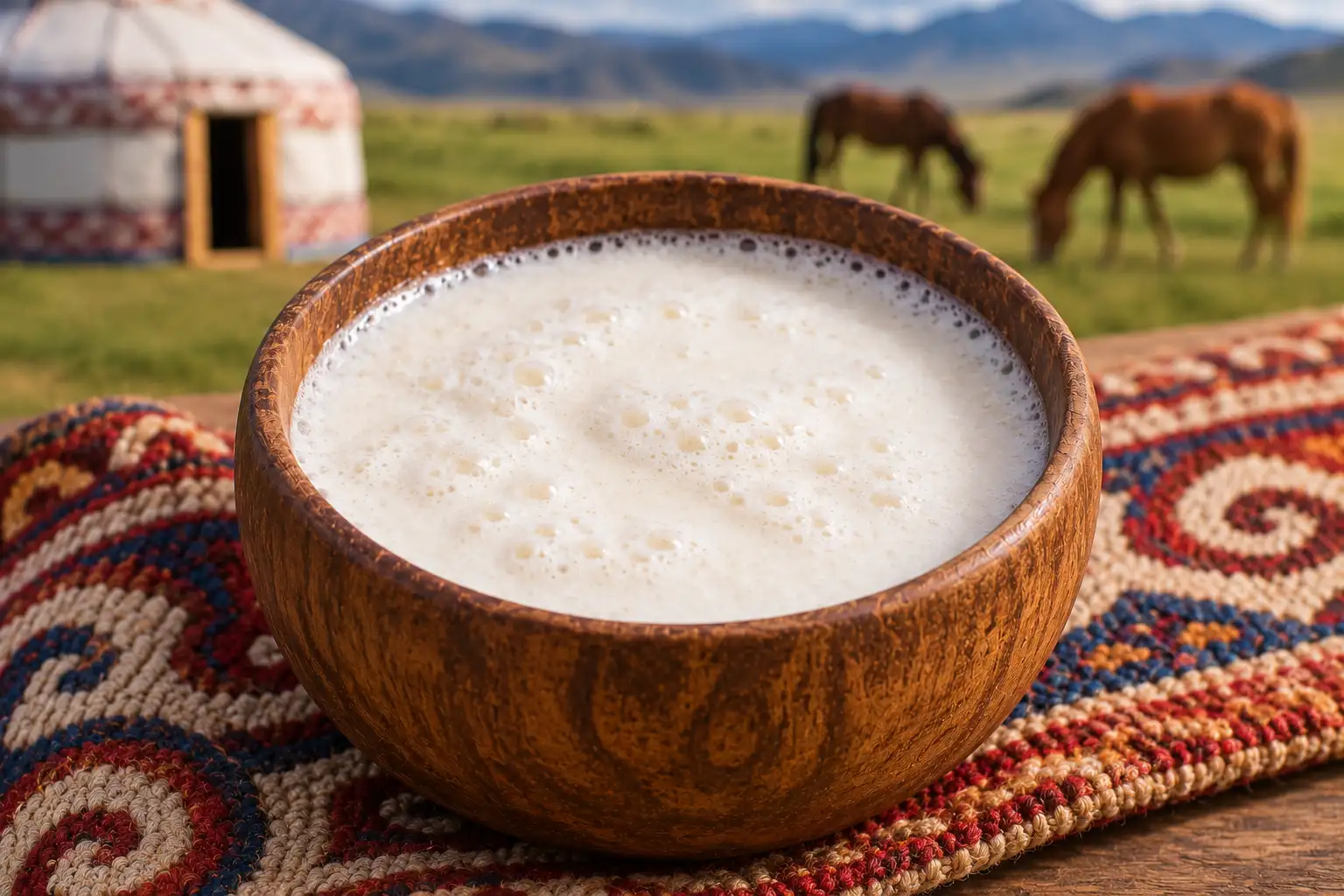
Across the grasslands of Central Asia, horses have provided far more than transportation. Their milk is the foundation of kumis, a traditional fermented drink known for its tangy flavor, delicate fizz, and important place in pastoral life. Made by fermenting mare's milk with lactic acid bacteria and yeasts, kumis develops a refreshing sourness and a small amount of naturally occurring alcohol. Known as qymyz in Kazakhstan and Kyrgyzstan and airag in Mongolia, this distinctive beverage has been shared at family gatherings, offered to guests, and enjoyed during the summer grazing season for generations.
What Is Kumis?
Kumis, also spelled koumiss, kumiss, or kumys, is a fermented dairy beverage traditionally made from the milk of female horses, known as mares. It is especially associated with Kazakhstan, Kyrgyzstan, Mongolia, and other parts of Central Asia where horse breeding has long been important.
Unlike yogurt, which is typically thick and spoonable, kumis is usually a pourable drink. Its appearance ranges from milky white to slightly cream-colored, and it may have a light froth or gentle carbonation.
Its characteristic flavor comes from the combined activity of lactic acid bacteria and yeasts. The bacteria produce lactic acid, giving the milk its tart taste, while yeasts contribute carbon dioxide, aromatic compounds, and ethanol.
As a result, traditional kumis is mildly alcoholic. Its alcohol content varies with fermentation conditions and duration, but research commonly reports levels of approximately 0.6–3 percent alcohol by volume.
The drink is closely associated with pastoral communities whose relationships with horses extend across food production, mobility, ceremony, and cultural identity.
Quick Facts
Quick Facts
- Region: Central Asia, including Kazakhstan, Kyrgyzstan, and Mongolia
- Main ingredient: Mare's milk
- Other names: Koumiss, kumys, qymyz, kymyz, and airag
- Fermentation: Lactic acid bacteria and yeasts
- Appearance: Milky white, sometimes lightly foamy
- Flavor: Sour, mildly sweet, yeasty, and slightly sharp
- Texture: Thin, smooth, and sometimes lightly fizzy
- Alcohol content: Usually low, but variable; often around 0.6–3% ABV
- Traditional season: Spring and summer, during the mare-milking season
- Cultural role: Hospitality, celebrations, and pastoral food traditions
Common Ingredients
Traditional kumis contains very few ingredients. Its complex flavor develops primarily through fermentation rather than the addition of spices or sweeteners.
- Mare's milk: The essential ingredient, naturally containing lactose that provides fermentable sugars.
- Starter culture: A portion of previously fermented kumis or a selected mixture of microorganisms used to begin fermentation.
- Lactic acid bacteria: Microorganisms that transform milk sugars into lactic acid, creating the characteristic sourness.
- Yeasts: Work alongside bacteria to produce carbon dioxide, alcohol, and additional flavor compounds.
Traditional kumis generally does not require added sugar, although commercial adaptations may differ. The lactose naturally present in mare's milk provides much of the material needed for fermentation.
Mare's milk also differs from cow's milk in its composition. It typically contains more lactose and less fat, helping explain why fermented mare's milk develops a relatively light, drinkable consistency.
How Kumis Is Prepared
Traditional kumis production begins during the season when mares are producing milk. Fresh milk is collected and combined with a fermentation starter, often a small amount of kumis retained from an earlier batch.
The mixture is placed in a suitable vessel and repeatedly stirred or churned. Historically, communities have used wooden containers, leather bags, and other locally made equipment.
As fermentation proceeds, lactic acid bacteria and yeasts transform some of the milk's sugars. The drink becomes increasingly sour, while carbon dioxide contributes a gentle sparkle. A small amount of alcohol also develops naturally.
In Kazakhstan, traditional production commonly involves adding fresh mare's milk to a container holding an active starter and mixing it regularly. The process can continue as fresh milk becomes available.
In Mongolia, the related drink airag is traditionally prepared in a container called a khokhuur, often made from cowhide. A wooden paddle is used to churn the milk repeatedly, helping distribute the microorganisms throughout the liquid.
The finished drink is usually served fresh and cool. Its flavor can continue to change during storage because the microorganisms may remain active.
Traditional fermentation requires considerable practical knowledge. Raw milk can contain harmful pathogens, and fermentation does not automatically make contaminated milk safe. Modern commercial production may use pasteurized milk and controlled starter cultures to reduce food-safety risks.
History & Origins
Kumis is closely tied to the history of horse-keeping societies across the Eurasian steppe. Horses have long been central to pastoral livelihoods, providing transportation, labor, and food resources in regions where seasonal movement between grazing areas was common.
Fermented mare's milk has been documented in Central Asian traditions for many centuries. Historical accounts from travelers and neighboring civilizations describe fermented dairy drinks consumed by steppe communities.
Archaeological discoveries have also demonstrated the importance of horse milk in ancient Central Asia. Research on the Botai culture of present-day Kazakhstan has identified evidence consistent with early horse milking, although this does not establish the precise date when modern kumis was invented.
Over time, kumis became a recognizable feature of Kazakh and Kyrgyz hospitality, as well as related pastoral food cultures across the region.
In Mongolia, airag developed its own important place in family gatherings, seasonal celebrations, and ceremonial life. The traditional technique of making airag in a khokhuur, together with its associated customs, was inscribed on UNESCO's Representative List of the Intangible Cultural Heritage of Humanity in 2019.
Today, kumis continues to connect modern communities with livestock traditions, seasonal food production, and the cultural importance of horses.
Varieties & Differences
Kumis is known under different regional names, and its flavor and preparation can vary according to local customs, fermentation duration, and the equipment used.
- Kazakh qymyz: Traditional fermented mare's milk prepared with a starter culture and repeated mixing, often served during gatherings and celebrations.
- Kyrgyz kymyz: A related fermented mare's milk beverage with an important place in Kyrgyz pastoral life and hospitality.
- Mongolian airag: Fermented mare's milk traditionally churned in a leather vessel, with a distinctive cultural role in Mongolian society.
- Mildly fermented kumis: A version with a comparatively gentle sourness and lower alcohol development.
- More strongly fermented kumis: A sharper, more acidic drink that may contain more alcohol and carbonation.
- Commercial cow's-milk kumis-style drinks: Adaptations developed where mare's milk is less readily available. These differ from traditional mare's-milk kumis in composition and sometimes flavor.
Kumis is sometimes compared with kefir, another fermented dairy drink. Both can involve bacteria and yeasts, but kefir is commonly made with cow's milk using distinctive kefir-grain cultures, while traditional kumis relies on mare's milk and a different fermentation system.
How Kumis Is Enjoyed
Kumis is traditionally consumed during the warmer months, when mares are producing milk and pastoral households can prepare fresh batches. It may be served in bowls or cups as part of a meal or offered to visitors as a gesture of welcome.
In Kazakhstan and Kyrgyzstan, kumis can accompany gatherings centered on family, hospitality, and seasonal celebrations. Its slightly sour taste makes it a distinctive contrast to richer meat dishes and other traditional foods.
In Mongolia, airag is associated with festive occasions, including summer celebrations and social gatherings. Sharing it can express respect and reinforce community relationships.
The drink's flavor may initially surprise people accustomed to sweetened milk products. Kumis is usually tart, with a faint yeasty character and sometimes a lightly sparkling sensation. Its thin consistency makes it more refreshing than many thick fermented dairy foods.
Kumis has also been associated with traditional beliefs about health and nourishment. Scientific research has investigated its proteins, fermentation microorganisms, and possible biological effects, but these findings do not establish that the drink prevents or cures disease.
Because kumis contains naturally produced alcohol, it is not an alcohol-free milk beverage. People who avoid alcohol, including during pregnancy, should take this into account. It also remains a dairy product and is unsuitable for people with a milk-protein allergy.
Did You Know?
Traditional kumis undergoes two kinds of fermentation at the same time. Lactic acid bacteria create its sour flavor, while yeasts produce a small amount of alcohol and carbon dioxide. This combination explains why fermented mare's milk can taste both tangy and lightly fizzy.
A Fermented Drink Rooted in Steppe Life
Kumis reflects the close relationship between horses, pastoral livelihoods, and food traditions across Central Asia. Its delicate sourness, gentle carbonation, and natural fermentation distinguish it from ordinary milk and many other dairy drinks. Known as qymyz, kymyz, or airag depending on the region, it remains an important symbol of hospitality and cultural continuity. From seasonal milking practices to ceremonial gatherings, kumis offers a distinctive taste of the history and living traditions of the Eurasian steppe.