
Lutefisk
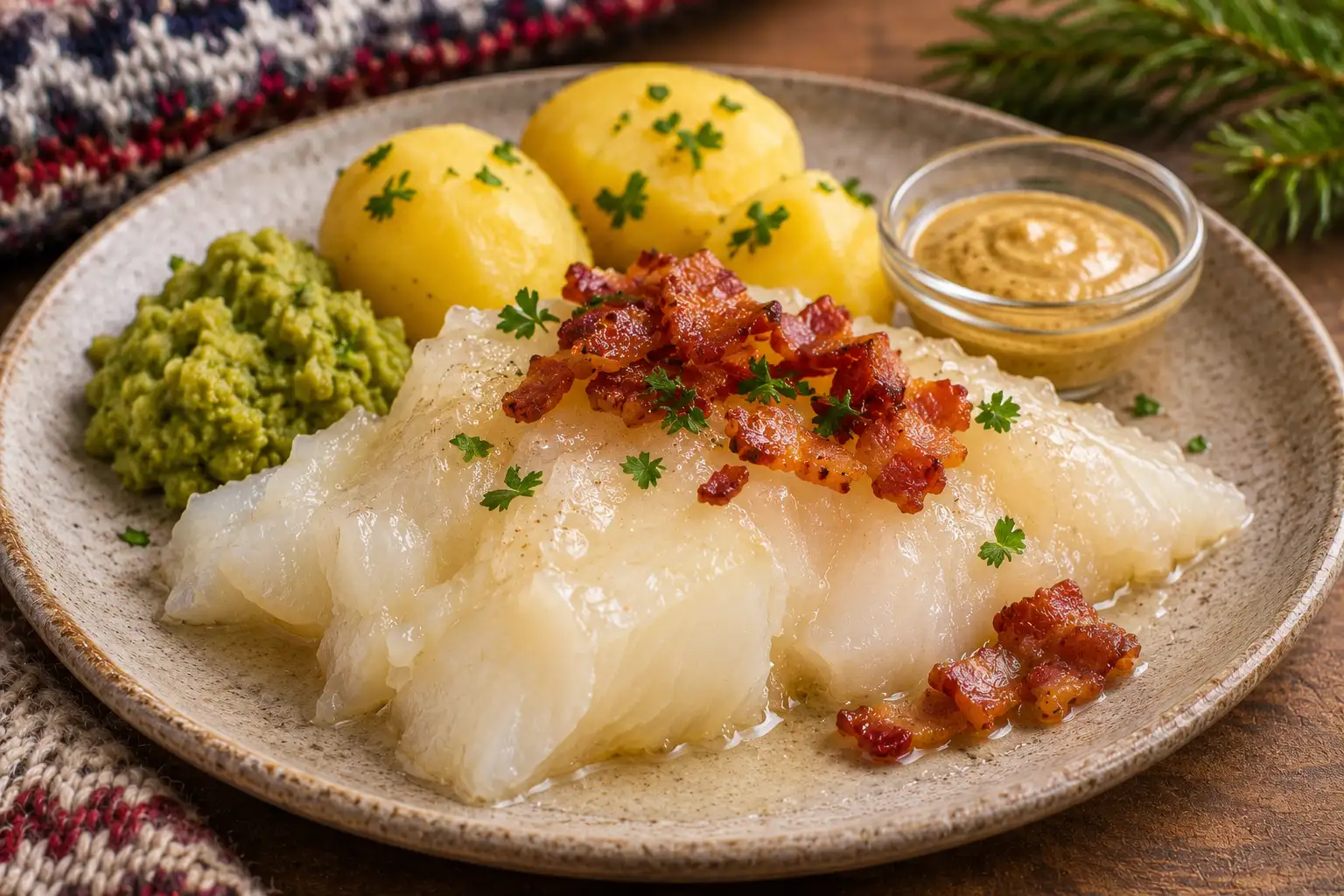
Few Scandinavian Christmas foods inspire as much curiosity as lutefisk. Pale, delicate, and sometimes almost translucent, this traditional fish dish is made by soaking dried fish in water, treating it with an alkaline solution called lye, and then thoroughly rinsing it before cooking. The unusual process transforms tough, air-dried fish into something soft, moist, and occasionally jelly-like. In Norway and Sweden, lutefisk is closely connected with winter celebrations, family meals, and recipes passed down through generations. Its distinctive texture may divide opinions, but its place in Nordic culinary heritage is firmly established.
What Is Lutefisk?
Lutefisk is a traditional Scandinavian dish made from dried whitefish that has been rehydrated, treated with lye, rinsed, and cooked. The Norwegian name combines lut, meaning lye, with fisk, meaning fish. In Sweden, it is called lutfisk.
Cod is the fish most closely associated with Norwegian lutefisk, particularly the air-dried cod known as stockfish. Other whitefish, including ling, are used in some Scandinavian preparations.
The finished fish is usually pale white, with a texture unlike ordinary baked or poached cod. Depending on the fish and its preparation, the flesh may be tender and flaky or unusually soft and gelatinous.
Its flavor is generally mild. Rather than relying on strong seasoning within the fish itself, lutefisk is commonly served with flavorful accompaniments such as bacon, melted butter, pea stew, potatoes, or white sauce.
Although lutefisk is especially associated with Norway, it is also an established Christmas food in Sweden and parts of Finland. Scandinavian immigrant communities have carried the tradition to North America.
Quick Facts
Quick Facts
- Region: Norway, Sweden, and parts of Finland
- Norwegian name: Lutefisk
- Swedish name: Lutfisk
- Main ingredient: Dried whitefish, commonly cod or ling
- Traditional process: Rehydration, lye treatment, thorough rinsing, and cooking
- Appearance: Pale white, sometimes slightly translucent
- Texture: Tender, moist, or gelatinous, depending on preparation
- Flavor: Mild and delicately fish-like
- Common accompaniments: Potatoes, peas, bacon, butter, and white sauce
- Traditional season: Christmas and the winter holidays
Common Ingredients
Lutefisk begins with relatively few ingredients. Its distinctive character comes from the treatment of the dried fish rather than a complicated seasoning mixture.
- Dried whitefish: Traditionally cod, especially Norwegian stockfish, although ling and other suitable whitefish may also be used.
- Water: Essential for restoring moisture to the dried fish and for the extensive rinsing that follows lye treatment.
- Lye: A strongly alkaline processing solution that changes the fish's structure and characteristic texture.
- Salt: Commonly used when preparing the fish for cooking and serving.
- Butter: A traditional accompaniment that adds richness to the mild fish.
- Bacon: Particularly popular in Norwegian preparations, providing a salty and crisp contrast.
- Peas and potatoes: Familiar side dishes served with lutefisk in several regions.
- White sauce: Especially associated with Swedish-style servings, sometimes accompanied by allspice or pepper.
It is important to distinguish stockfish from salted dried cod. Traditional Norwegian stockfish is preserved by air-drying without added salt, although some historical and regional lutefisk preparations have used other forms of dried fish.
How Lutefisk Is Prepared
Preparing lutefisk begins with dried fish that is extremely firm and low in moisture. The fish is first soaked in water to rehydrate the flesh.
It is then treated with a lye solution. This alkaline stage changes the structure of the fish proteins and contributes to the unusual consistency for which lutefisk is famous.
After lye treatment, the fish must be soaked repeatedly in fresh water until the excess alkalinity has been removed and the product is suitable for cooking. Thorough rinsing is an essential part of the process, not an optional finishing step.
Once properly processed, lutefisk is commonly baked or gently cooked. Because the rehydrated flesh holds considerable water and can be fragile, it needs careful handling to prevent it from breaking apart.
Norwegian recipes often bake the fish with salt in a covered ovenproof dish, allowing it to cook in the moisture it releases. The finished portions are transferred gently to plates with potatoes and other accompaniments.
Food-safety consideration: Lye is a highly caustic substance capable of causing serious chemical burns. The traditional treatment requires precise processing and extensive rinsing. Home cooks should purchase properly prepared, food-grade lutefisk from a reputable supplier rather than attempt the chemical treatment without specialized knowledge. Even after rinsing, the fish must be stored and cooked according to the supplier's instructions.
History & Origins
Lutefisk developed within Scandinavia's long history of preserving fish. In northern Norway, cool temperatures, wind, and seasonal fishing made air-drying an important method for storing cod long before modern refrigeration.
Stockfish became a valuable trade product, allowing fish caught along the Norwegian coast to be transported and consumed far from the fishing grounds. Dried fish could be stored for extended periods, but it required rehydration before becoming suitable for many cooked dishes.
The exact origin of lye-treated fish is uncertain. Various legends attempt to explain how someone first discovered the technique, but there is no reliably established inventor or single founding event.
Written references to lutefisk appear in Scandinavian sources by the sixteenth century. Its preparation subsequently became associated with festive meals, particularly during the Christmas season.
In Sweden, lutfisk also became part of holiday food traditions shaped by historical Christian fasting practices. Fish was an important alternative to meat during certain religious observances, contributing to its place on festive tables.
Today, lutefisk remains a traditional seasonal dish, especially in Norway, where restaurants and families serve it during the weeks leading up to Christmas. Swedish households may include it among the foods of the Christmas season as well.
Varieties & Differences
Lutefisk is prepared and served differently across Scandinavia. The choice of fish, cooking technique, and accompaniments can noticeably change the meal.
- Norwegian cod lutefisk: The classic preparation using dried cod, often served with potatoes, pea stew, crispy bacon, and bacon fat.
- Swedish lutfisk: Commonly made with dried whitefish such as ling and served with boiled potatoes, white sauce, peas, and seasonings.
- Butter-served lutefisk: A simple presentation featuring melted butter, allowing the fish's delicate flavor to remain prominent.
- Lutefisk with brown cheese or syrup: Regional Norwegian variations that introduce a sweet contrast to the mild fish.
- Lutefisk with lefse: A serving style in which the fish is paired with soft Norwegian flatbread, sometimes with potatoes and butter.
- Norwegian-American lutefisk: Holiday preparations maintained by Scandinavian-descended communities in the United States, particularly in the Upper Midwest.
Lutefisk should not be confused with ordinary stockfish or klippfisk, the salt-dried cod used in dishes such as bacalao. Those foods are dried or salted fish products, while lutefisk undergoes an additional alkaline treatment that gives it its distinctive texture.
How Lutefisk Is Enjoyed
In Norway, lutefisk is closely associated with Christmas gatherings. Friends, families, and colleagues may meet for a traditional lutefisk dinner during the weeks leading up to the holiday.
The dish is rarely served without accompaniments. Crispy bacon introduces a salty crunch, while potatoes and mashed green peas provide a familiar, hearty base. Melted butter or bacon fat adds richness to the otherwise mild fish.
In Sweden, lutfisk is commonly paired with a creamy white sauce, boiled potatoes, and peas. Ground allspice or pepper may be served alongside it, creating a warmer, more aromatic flavor.
The fish's texture is one of the main reasons it attracts strong opinions. Some diners enjoy its delicate, almost jelly-like consistency, while others prefer firmer portions that retain more recognizable fish flakes.
For Scandinavian families living abroad, lutefisk can also carry a strong sense of nostalgia. Community dinners in parts of the United States preserve recipes, serving customs, and memories associated with Norwegian and Swedish ancestry.
Despite its unusual preparation, lutefisk is generally a mild-tasting food. Its character emerges from the combination of tender fish and the rich, savory, or creamy ingredients served alongside it.
Did You Know?
Lutefisk begins with fish that has been dried until it is hard and lightweight, but the finished dish can be exceptionally soft and moist. The transformation happens through rehydration and alkaline treatment, followed by extensive rinsing. The lye must be removed before the fish is cooked and eaten.
A Scandinavian Holiday Tradition Unlike Any Other
Lutefisk reflects the ingenuity of Nordic fish preservation and the enduring influence of regional holiday customs. Its journey from air-dried fish to tender Christmas centerpiece involves a preparation method that is unusual but deeply rooted in Scandinavian culinary history. Whether served with Norwegian bacon and pea stew or Swedish white sauce and potatoes, lutefisk continues to bring families and communities together. Its distinctive texture may not appeal to everyone, but its importance as a traditional food goes far beyond the first bite.