
Muktuk
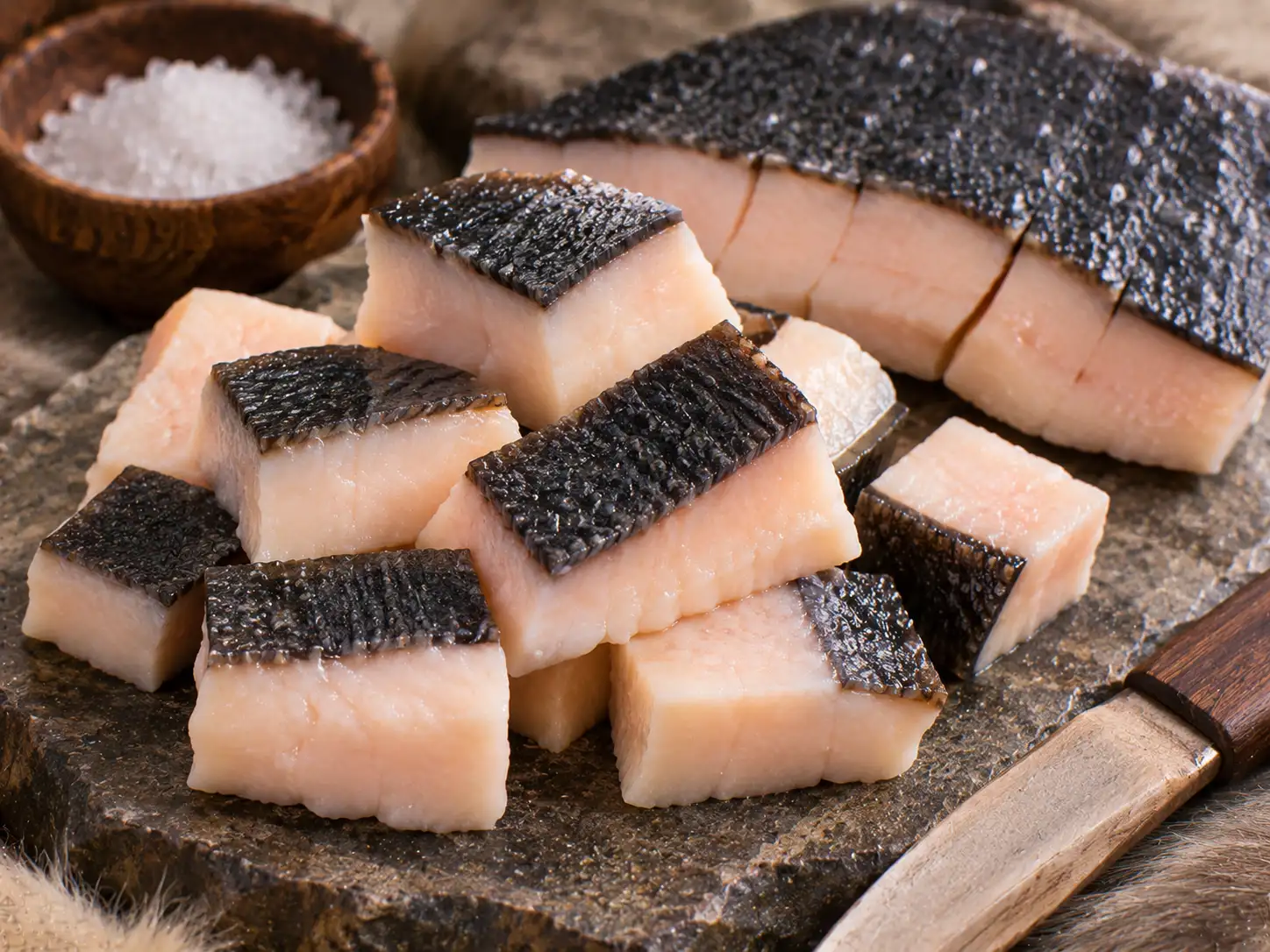
In the Arctic, where people have relied on the sea for generations, few foods carry as much cultural meaning as muktuk. Made from whale skin with a layer of attached blubber, this traditional food is enjoyed in Inuit and other northern Indigenous communities across Alaska, Canada, and Greenland. Its firm, chewy skin and rich, oily fat create a combination unlike conventional meat or seafood. Whether eaten fresh, cooked, or preserved according to regional traditions, muktuk represents far more than nourishment: it reflects the importance of whale harvesting, food sharing, and the enduring relationship between Arctic peoples and the ocean.
What Is Muktuk?
Muktuk is a traditional Arctic food consisting of whale skin and the layer of blubber immediately beneath it. The name is familiar in Alaska, while related terms such as maktaaq, mattaaq, and mattak are used in different Inuit languages and regions. The exact terminology and meaning vary between communities.
The food is prepared from several whale species, including bowhead whales, belugas, and narwhals. Which species is used depends on local ecology, harvesting traditions, and applicable regulations.
Muktuk is visually distinctive. The outer skin may be dark, gray, or pale depending on the whale, while the attached blubber forms a white or creamy layer beneath it. Pieces are often cut into small portions that can be shared and eaten by hand.
The skin has a firm, sometimes crunchy or rubbery texture, while the blubber is smooth, rich, and fatty. Its flavor varies by species and preparation, but descriptions commonly emphasize a mild marine taste and the richness of the fat.
Quick Facts
Quick Facts
- Region: Arctic Alaska, northern Canada, and Greenland
- Cultural association: Inuit, Iñupiat, and other Arctic Indigenous food traditions
- Other names: Maktaaq, mattaaq, mattak, and regional variations
- Main ingredient: Whale skin with attached blubber
- Whale species: Bowhead, beluga, and narwhal, depending on the region
- Texture: Firm, chewy skin with soft, fatty blubber
- Flavor: Rich, mildly marine, and dependent on species and preparation
- Serving styles: Fresh, frozen, cooked, or traditionally preserved
- Cultural role: Food sharing, community gatherings, and ancestral harvesting traditions
Common Ingredients
Unlike many prepared dishes, muktuk does not require a long ingredient list. The whale skin and blubber are the central components, and some traditional servings contain no additional seasoning.
- Whale skin: The outer layer, providing the characteristic firm texture. Its thickness and appearance vary between whale species.
- Whale blubber: The fatty layer beneath the skin, valued for its richness and energy content.
- Salt: Used in certain preserved or seasoned preparations, depending on regional practice.
- Water: Used when muktuk is boiled or otherwise cooked.
- Traditional dipping accompaniments: Some servings may include locally prepared sauces or fermented and rendered marine oils, although practices differ widely.
- Vinegar or pickling seasonings: Used in certain contemporary recipes rather than being universal traditional ingredients.
The simplicity of the ingredients highlights the importance of the whale itself. Unlike a dish built around spices or sauces, muktuk is primarily appreciated for its natural texture, flavor, and place within traditional food practices.
How Muktuk Is Prepared
Preparation begins after a successful, authorized whale harvest. The skin and attached blubber are separated from the whale and divided into manageable sections. Experienced community members use specialized knowledge to handle the meat, fat, and skin while preserving as much of the harvest as possible.
For fresh muktuk, portions may be cut into bite-sized pieces and eaten raw or frozen, depending on local preference. Some communities prefer the distinctive firmness of frozen pieces, while others enjoy muktuk after boiling or another form of cooking.
Traditional preservation methods differ by region. They can involve freezing, controlled aging, or processing with whale oil. In some Inuvialuit communities, beluga products are prepared through methods developed over generations, using knowledge of seasonal temperatures, handling conditions, and storage.
Other preparations involve boiling pieces until the skin becomes more tender, then allowing them to cool. Pickled versions also exist, particularly in contemporary recipes that use vinegar and seasonings.
These descriptions are not a substitute for safe processing instructions. Marine mammal products can carry risks from harmful microorganisms, including those responsible for botulism. Proper harvesting, handling, temperature control, and storage are essential, and traditional preservation should not be improvised without experienced guidance.
History & Origins
Muktuk has deep roots in the food cultures of Arctic Indigenous peoples. For generations, whales have supplied valuable resources in environments where growing crops is difficult and available foods change dramatically with the seasons.
Whale harvesting has provided meat, blubber, skin, and other materials used for food, tools, and everyday life. Muktuk became one of the valued foods obtained from these harvests, especially in communities with longstanding relationships to bowhead whales, belugas, or narwhals.
In northern Alaska, Iñupiat whaling traditions are closely connected with community cooperation and food distribution. A successful bowhead harvest provides food for many households, with portions shared according to established local customs.
In Canada's Arctic, Inuit communities have also maintained important relationships with belugas, narwhals, and other marine mammals. Whale harvesting remains connected to cultural identity, family knowledge, and the responsibility to share food with relatives, neighbors, and Elders.
In Greenland, mattak is a recognizable part of traditional food culture. The specific whale species, preferred preparations, and occasions for eating it vary across the region.
Although these communities share certain Arctic food traditions, their languages, harvesting practices, and cultural relationships with whales are not identical. Muktuk is best understood through those distinct regional histories.
Varieties & Differences
Muktuk varies according to the whale species, the thickness of the skin and blubber, and the preferred preparation method.
- Bowhead whale muktuk: Particularly associated with Iñupiat whaling communities in Alaska. It contains skin and a layer of blubber from the bowhead whale.
- Beluga maktaaq: A traditional food in several Canadian Inuit and Inuvialuit communities, often valued for its contrasting skin and fat textures.
- Narwhal mattak: Prepared from narwhal skin and blubber in regions where narwhals are traditionally harvested, including parts of Greenland and the Canadian Arctic.
- Fresh or frozen muktuk: Pieces eaten with little additional preparation, highlighting the natural texture and flavor.
- Boiled muktuk: A cooked version in which heating changes the texture of the skin and fat.
- Preserved or aged muktuk: Regional preparations using specialized preservation knowledge and conditions.
These varieties should not be treated as interchangeable. Differences in whale species, climate, cultural knowledge, and harvesting regulations affect both preparation and consumption.
How Muktuk Is Enjoyed
Muktuk is commonly shared among family members and neighbors after a whale harvest. In many Arctic communities, food distribution is part of a broader system of mutual support, ensuring that the benefits of a successful hunt extend beyond the people who participated directly.
It may be eaten as part of a meal featuring other traditional foods, including whale meat, fish, or locally harvested animals. Community feasts and seasonal gatherings can also provide occasions for sharing muktuk.
Its texture is a defining feature of the experience. The skin provides resistance and chew, while the blubber offers richness. People accustomed to conventional meat cuts may find the combination unfamiliar, but it is an established and valued part of Arctic food traditions.
Muktuk also has nutritional significance. Whale skin and blubber can contribute energy and important nutrients, while certain forms of whale skin are recognized as sources of vitamin C. Nutrient levels differ by species and portion.
At the same time, some marine mammal tissues can contain environmental contaminants, including persistent organic pollutants and certain metals. Health recommendations depend on the species, tissue, region, and individual circumstances. Local public-health guidance is particularly important when assessing these risks.
Whale harvesting is governed by species-specific conservation rules, Indigenous rights, and national or international regulations. Muktuk is therefore not an ordinary commercial food that can be sourced without regard to its cultural and legal context.
Did You Know?
Whale skin can provide vitamin C, a nutrient historically important in Arctic diets where fresh plant foods were not available throughout the year. Muktuk is one example of how traditional Arctic food systems supplied nutrients through locally harvested animals.
More Than a Traditional Arctic Food
Muktuk represents a close relationship between people, whales, and the Arctic environment. Its combination of firm skin and rich blubber makes it a distinctive food, but its importance extends well beyond taste. Through harvesting, preparation, and sharing, Inuit and other northern Indigenous communities maintain cultural knowledge and strengthen relationships across generations. Understanding muktuk means recognizing not only what it is made from, but also the communities and traditions that give it meaning.