
Pig Blood Cake
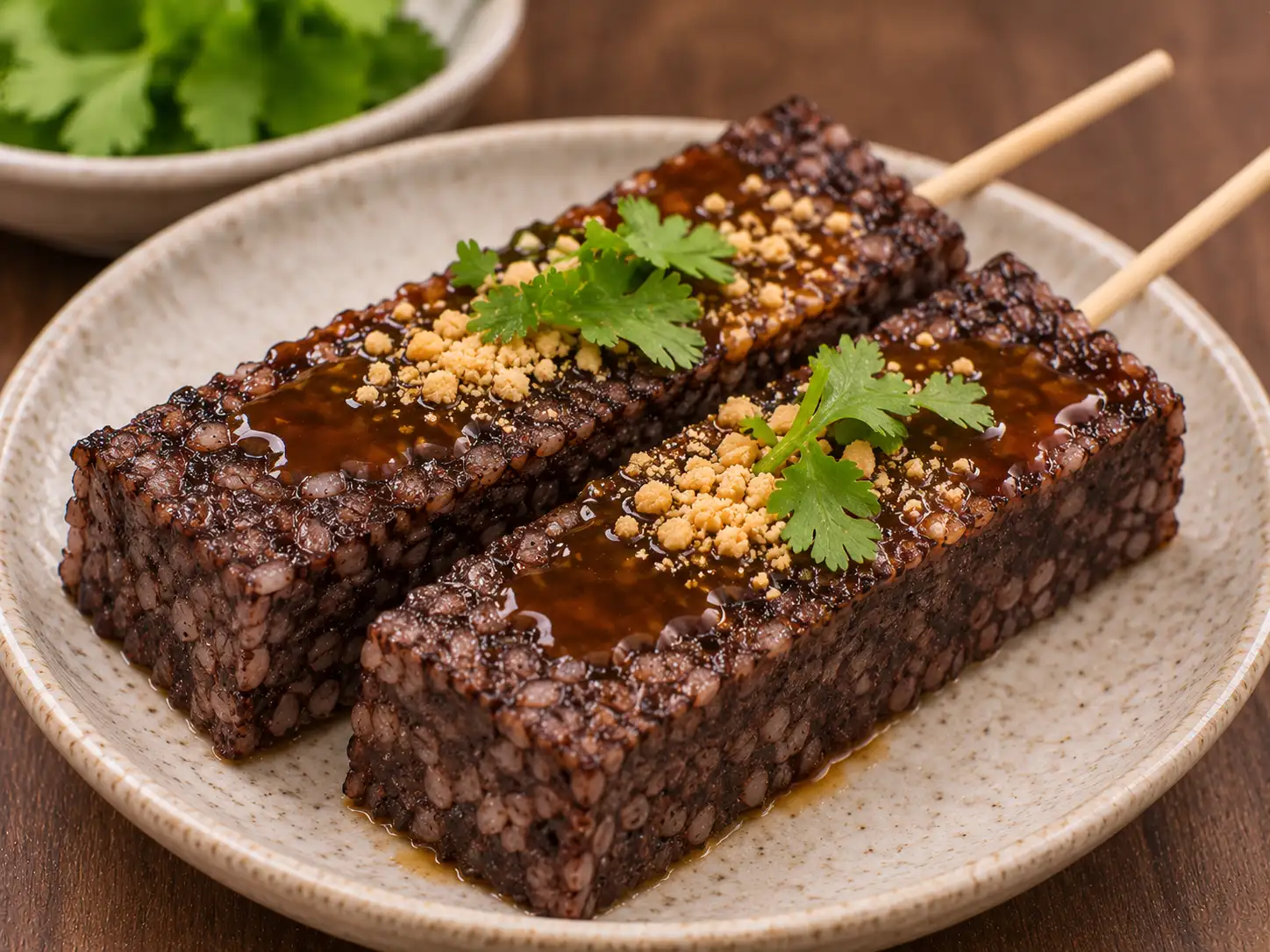
A rectangular block of dark rice cake, covered in crushed peanuts and fresh cilantro, might not look like an ordinary street-food treat. In Taiwan, however, pig blood cake is a familiar and much-loved snack. Known as zhūxuègāo (豬血糕), it combines pig blood with glutinous rice to create a dense, springy cake that is steamed, coated in sauce, and often served on a bamboo stick. Its earthy, savory flavor and satisfyingly chewy texture have made it a distinctive fixture of Taiwanese night markets.
What Is Pig Blood Cake?
Pig blood cake is a traditional Taiwanese savory rice cake made by combining pig blood with glutinous rice. The mixture is cooked until firm, producing a dark brown or nearly black cake that can be sliced into rectangular portions.
Despite its English name, it is not a baked cake or a dessert. The word “cake” describes its compact, molded shape. Its texture is closer to a dense, chewy rice cake, with the cooked blood helping bind the grains together.
The most recognizable street-food version is steamed until hot, brushed with a savory-sweet sauce, coated in finely ground peanuts, and topped with cilantro. Vendors often insert a bamboo stick into the cake so customers can eat it while walking through a market.
Pig blood cake is also called mǐxuègāo (米血糕), meaning rice blood cake, although that broader term may refer to products made with blood from other animals. The snack is especially associated with Taiwan, where it appears at night markets, food stalls, and shops selling traditional prepared foods.
Quick Facts
Quick Facts
- Origin: Taiwan
- Chinese name: Zhūxuègāo (豬血糕)
- Related name: Mǐxuègāo (米血糕)
- Main ingredients: Pig blood and glutinous rice
- Appearance: Dark brown or nearly black rectangular cake
- Texture: Dense, springy, sticky, and chewy
- Flavor: Mildly earthy and savory, often enhanced by sweet sauce
- Classic toppings: Peanut powder, cilantro, and sweet soy-based sauce
- Serving style: Commonly steamed and served on a stick
Common Ingredients
Pig blood cake uses a relatively simple base. Much of its flavor comes from the sauce and toppings added when it is served.
- Pig blood: The defining ingredient, giving the rice cake its dark color and helping form a firm structure during cooking.
- Glutinous rice: Also called sticky rice, it provides the chewy grains that make up much of the cake's texture.
- Sweet soy-based sauce: Adds saltiness, sweetness, and a glossy coating to the finished snack.
- Ground peanuts: Create a nutty, slightly sweet outer layer that contrasts with the dense rice cake.
- Fresh cilantro: Supplies a bright herbal aroma and a recognizable green garnish.
- Chili sauce: An optional addition for people who prefer a spicy version.
The proportions and sauces vary between vendors. Some emphasize the fragrance of the peanuts, while others add more sweet sauce or chili. The classic combination balances earthy rice cake, savory seasoning, nutty sweetness, and fresh herbs.
How Pig Blood Cake Is Prepared
Traditional pig blood cake begins with food-grade pig blood and glutinous rice. The ingredients are combined and cooked until the rice softens and the blood proteins set, creating a cohesive mass.
The mixture is usually steamed in a mold or container, then cooled enough to hold its shape. Once firm, it can be cut into rectangular slabs or smaller pieces.
For the familiar street-food presentation, a portion is reheated by steaming or simmering until hot. The vendor then coats it with a thick, savory-sweet sauce and rolls or sprinkles it with ground peanuts. Fresh cilantro is added before the cake is served on a bamboo stick.
Other cooking methods are possible. Pieces of rice blood cake can be braised in seasoned broth, added to hot pot, or fried as part of a larger dish.
Because pig blood is an animal product, hygienic collection, processing, and thorough cooking are important. Pig blood cake is a cooked food, unlike raw blood puddings such as Vietnamese tiết canh. Nevertheless, improperly sourced or handled blood products can cause foodborne illness. Consumers should purchase prepared cakes from reputable food businesses and follow appropriate storage and reheating instructions.
History & Origins
Pig blood cake is closely linked to Taiwan's tradition of making practical use of animal ingredients. Blood has been used in many cuisines around the world, and combining it with rice offers a way to create a substantial, filling food from ingredients that might otherwise be overlooked.
Accounts of Taiwanese pig blood cake frequently connect its development with the economic hardship of the years following World War II. A local origin story places an early version near a slaughterhouse in Taipei's Dalongdong area, where pig blood was combined with glutinous rice and steamed.
Although this story is widely repeated, the exact invention of pig blood cake is difficult to establish. Related rice-and-blood preparations existed in broader regional cooking traditions, and Taiwan's modern version likely reflects both inherited food practices and local adaptations.
Over time, pig blood cake became closely associated with Taiwanese street-food culture. Its inexpensive ingredients, filling texture, and convenient serving style made it well suited to busy markets.
Today, it is widely recognized as a Taiwanese snack, appearing not only at traditional stalls but also in hot pot restaurants, braised-food shops, and other casual eateries.
Varieties & Differences
Pig blood cake can be enjoyed in several forms, depending on the cooking method and accompanying seasonings.
- Classic peanut-coated pig blood cake: A steamed rectangular portion brushed with sweet sauce, coated in peanut powder, and topped with cilantro.
- Spicy pig blood cake: A street-food variation with chili sauce or other hot seasonings.
- Braised rice blood cake: Pieces simmered in a seasoned liquid, often alongside tofu, eggs, or other foods sold at Taiwanese braised-snack stalls.
- Hot pot rice blood cake: Smaller pieces added to simmering broth, where they absorb the surrounding flavors.
- Fried rice blood cake: Pieces fried to create a firmer exterior while retaining their chewy center.
Pig blood cake should also be distinguished from other blood-based foods. European black pudding is generally a sausage containing blood and other ingredients, while Vietnamese tiết canh is traditionally made with uncooked blood. Taiwanese pig blood cake is a cooked, rice-based food whose defining characteristic is its dense, chewy texture.
How Pig Blood Cake Is Enjoyed
The most iconic way to eat pig blood cake is directly from a stick at a Taiwanese night market. Its compact shape makes it easy to carry, while the peanut coating and cilantro turn a simple block of rice cake into a flavorful snack.
A bite combines several contrasting sensations. The center is firm and sticky, the peanuts add a slightly powdery nuttiness, and the sauce supplies sweetness and saltiness. Cilantro brings a fresh note that cuts through the richness.
Despite the presence of pig blood, the flavor is generally less intense than newcomers might expect. The glutinous rice and seasonings are prominent, while the blood contributes a subtle earthy character and helps create the cake's unusual texture.
Pig blood cake is also enjoyed as part of a larger meal. In hot pot, it absorbs broth while maintaining much of its chewiness. At braised-food stalls, it can be served with other ingredients in a flavorful sauce.
For many Taiwanese diners, it is an ordinary comfort food rather than a novelty. Its popularity reflects the appeal of familiar street-food flavors and the satisfying texture of sticky rice.
Did You Know?
Pig blood cake gets its firm texture from two ingredients working together. As the cake is cooked, the blood proteins form a structured network while the glutinous rice starch softens and gelatinizes. This combination creates the dense, springy chew that makes Taiwanese pig blood cake so distinctive.
A Taiwanese Street-Food Favorite with a Unique Texture
Pig blood cake demonstrates how a few simple ingredients can become a memorable regional specialty. Its dark appearance, sticky rice interior, sweet-savory sauce, and peanut-and-cilantro coating create a combination unlike most familiar snacks. From night-market sticks to hot pot and braised dishes, zhūxuègāo remains a distinctive part of Taiwan's everyday food culture and its tradition of making flavorful use of available ingredients.