
Piki Bread
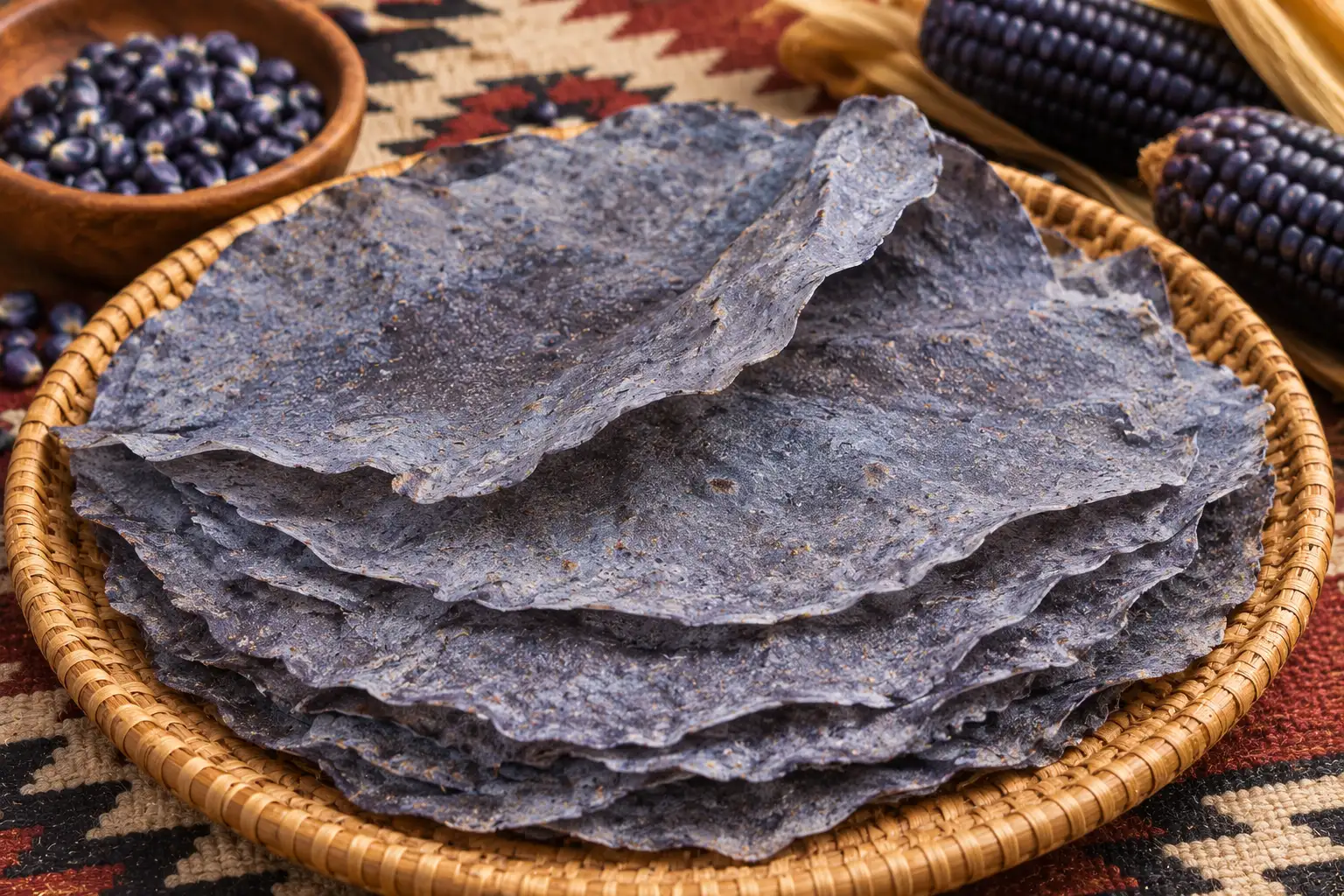
So thin it resembles delicate sheets of paper, piki bread is one of the most remarkable traditional foods of the American Southwest. Made primarily from finely ground blue corn, water, and specially prepared plant ash, this Hopi bread is spread by hand across a hot stone and cooked in an exceptionally thin layer. The finished sheets are carefully lifted, folded, or rolled into fragile bundles. More than an unusual flatbread, piki is deeply connected to Hopi agricultural knowledge, family traditions, ceremonies, and the cultural importance of corn.
What Is Piki Bread?
Piki bread, also written piiki, is a traditional Indigenous American flatbread most closely associated with the Hopi people of northeastern Arizona. It is made from a thin, pourable mixture of finely ground cornmeal, water, and a small amount of specially prepared alkaline plant ash.
Unlike ordinary flatbreads, piki is not made from a dough that can be kneaded or rolled out. Its batter is spread directly onto a heated stone in an extraordinarily thin layer. The result is a delicate sheet that can be lifted from the cooking surface and folded or rolled.
Piki is commonly made with blue corn, giving the bread a distinctive gray-blue, lavender, or greenish-blue appearance. Its flavor is mildly sweet, earthy, and roasted, sometimes with subtle smoky notes from the traditional ingredients and cooking method.
Although piki is especially significant in Hopi culture, related thin corn breads and preparations are also found among other Pueblo communities. These traditions share elements of Indigenous corn agriculture and food preparation but should not be treated as identical across all communities.
For the Hopi, piki is both a food and an expression of cultural knowledge. Preparing it properly requires considerable experience, particularly because the batter must be spread quickly and evenly across a very hot stone.
Quick Facts
Quick Facts
- Origin: Hopi communities of northeastern Arizona, United States
- Cultural tradition: Hopi, with related traditions among other Pueblo peoples
- Other spelling: Piiki
- Main ingredient: Finely ground blue cornmeal
- Other traditional ingredients: Water and specially prepared plant ash
- Cooking equipment: A smooth, flat piki stone heated from below
- Appearance: Extremely thin gray-blue or blue-green sheets
- Texture: Delicate, crisp, papery, and easily folded or rolled
- Flavor: Earthy, mildly sweet, and lightly toasted
- Cultural role: Everyday food, ceremonies, celebrations, and family traditions
Common Ingredients
Traditional piki has a remarkably short ingredient list. Its distinctive character comes less from added seasoning than from the corn, alkaline ash, and specialized preparation technique.
- Blue cornmeal: The primary ingredient, traditionally ground very finely. Blue corn provides the bread's characteristic color and earthy, mildly sweet taste.
- Water: Mixed with the cornmeal to produce a thin batter that can be spread across the cooking stone.
- Prepared plant ash: Traditionally produced from selected plants, including juniper or saltbush in documented preparations. It contributes alkalinity and can influence the color, flavor, and handling properties of the batter.
- Oil or fat for the stone: Some documented traditional methods use small amounts of oil made from squash or other seeds, or animal fat, to prepare the cooking surface.
- Alternative corn varieties: White, red, or other corn varieties are used in some regional or ceremonial preparations, although blue corn remains particularly characteristic.
The ash is not simply a flavoring or a decorative ingredient. Its alkaline properties affect the corn mixture, making it an important part of the traditional preparation.
However, ash from an ordinary fireplace, barbecue, or unidentified plant material is not an appropriate substitute. Traditional food-grade ash preparation depends on knowing the correct plants and handling methods.
How Piki Bread Is Prepared
The production of piki begins with corn that is dried and ground into an exceptionally fine meal. Traditionally, grinding could involve repeated work with stone tools to achieve the smooth consistency needed for the batter.
The meal is combined with water and a carefully prepared alkaline ash ingredient. The mixture is worked until it becomes fluid and smooth enough to spread in a nearly transparent layer.
A special flat cooking stone is heated from below. Known as a piki stone, it must have a smooth surface and retain enough heat to cook the batter rapidly.
The most demanding step comes next. An experienced maker quickly spreads a small amount of batter across the hot surface by hand. The movement must be controlled and even so the bread forms a continuous sheet without becoming too thick or tearing.
Because the layer is so thin, it cooks rapidly. Once ready, it is gently peeled away from the stone. Several sheets may then be stacked, folded, or rolled into a compact bundle.
The finished bread is exceptionally fragile. A slight mistake in spreading, lifting, or folding can cause it to tear, which is why proficiency with piki is regarded as a specialized skill.
Traditional piki making involves direct work near a very hot surface and should not be approached casually as an ordinary home flatbread recipe. The technique requires experience, appropriate equipment, and knowledge of the ingredients.
History & Origins
Piki is part of the longstanding agricultural traditions of the Hopi people, whose communities have cultivated corn in the dry landscapes of northeastern Arizona for generations.
Corn is central to Hopi foodways, social responsibilities, and ceremonial life. Different varieties are cultivated and prepared for particular uses, reflecting detailed knowledge of planting, harvesting, storing, and processing the crop.
Piki developed within this broader tradition of corn preparation. Its exact invention date is unknown, but archaeological research documents the use of flat cooking stones associated with the production of thin corn breads in Ancestral Pueblo contexts.
The University of Arizona Press has noted that piki stones have archaeological counterparts at ancestral Hopi sites. Such findings help demonstrate the long history of the cooking technology, although they do not establish that every ancient preparation was identical to modern piki.
Historically, piki-making knowledge has been passed down through families, particularly among women. Preparing the bread requires mastery of grinding, batter consistency, stone temperature, and rapid hand movements.
Older ethnographic accounts describe learning to make piki as an important skill for young Hopi women. However, these accounts should be understood within their historical context rather than treated as a universal description of contemporary Hopi family life.
Today, piki remains an important expression of Hopi cultural continuity. It is prepared for ceremonial occasions and family gatherings, while some households continue to enjoy it as an everyday traditional food.
Varieties & Differences
Although blue-corn piki is the best-known version, documented preparations and related breads show some variation.
- Traditional Hopi blue-corn piki: Made from finely ground blue corn, water, and prepared plant ash, then cooked in extremely thin sheets on a hot stone.
- White-corn piki: A documented variation using white corn rather than blue, with a lighter appearance.
- Other colored-corn piki: Some preparations use different corn varieties, including red corn, depending on household and ceremonial traditions.
- Rolled piki: Thin sheets gathered or rolled into delicate bundles for handling, storage, or serving.
- Related Pueblo wafer breads: Thin corn breads produced in other Indigenous Southwestern communities using their own methods and cultural traditions.
Piki is sometimes compared with a tortilla because both are corn-based flatbreads. However, their preparation and texture are very different.
A typical tortilla is formed from a workable dough and cooked into a flexible round. Piki begins as a thin batter spread directly across a hot stone, producing a papery sheet that is much more fragile.
It also differs from commercial blue-corn chips or crackers. Those foods may share some corn flavor, but they do not reproduce the traditional piki-making technique or its cultural significance.
How Piki Bread Is Enjoyed
Piki can be eaten on its own, allowing the flavor of the corn to remain central. Its thin, lightly crisp texture offers a very different experience from a thick bread or tortilla.
The sheets can be folded or rolled into small bundles and served with other traditional foods. Their delicate structure makes careful handling part of the experience.
Within Hopi communities, piki also has ceremonial significance. It may be prepared for weddings, other celebrations, and religious occasions in accordance with community traditions.
Because some of these traditions carry spiritual meaning, piki should not be understood merely as a novelty food. Its preparation and sharing can express family relationships, responsibility, continuity, and respect for corn.
Visitors encountering piki for the first time may notice its unusual color. Blue corn contains natural anthocyanin pigments, and the alkaline ingredients used in preparation can influence the final hue.
The bread's flavor is subtle rather than heavily seasoned. Descriptions commonly emphasize sweet corn, roasted grain, earthy notes, and a delicate crispness.
Piki also highlights a practical achievement: transforming ground corn into a food that is lightweight, compact, and relatively easy to store and carry when properly prepared.
Why Piki Bread Matters to Hopi Food Culture
One of the most meaningful aspects of piki is the skill required to make it. The bread cannot be fully understood through an ingredient list alone. Its preparation depends on practiced movements, knowledge of the cooking stone, and an understanding of how the batter behaves under heat.
Traditional food knowledge is often learned through observation and participation, with techniques passed between generations. For piki, these skills help preserve a distinctive part of Hopi identity.
Blue corn itself is also culturally significant. Hopi agricultural traditions reflect generations of experience growing food in a dry environment, with careful selection and preservation of locally adapted corn varieties.
Maintaining foods such as piki therefore involves more than preserving a recipe. It can also mean sustaining corn cultivation, intergenerational learning, and the community practices in which the bread is made and shared.
Did You Know?
Traditional piki bread is spread by hand over a hot stone rather than rolled from dough. The batter cooks into sheets so thin that they resemble tissue paper. Making and lifting the bread without tearing it requires exceptional skill, which is why piki-making knowledge has traditionally been passed down through generations.
A Paper-Thin Bread with Deep Cultural Roots
Piki bread shows how a few simple ingredients can become an extraordinary food through generations of knowledge and craftsmanship. Its delicate blue-corn sheets, rapid stone-cooking technique, and earthy flavor make it distinctive, but its deeper importance lies in Hopi agriculture, family life, and ceremonial traditions. Closely associated with the Hopi people and related Pueblo foodways, piki remains a living expression of Indigenous Southwestern culinary heritage and the enduring cultural significance of corn.