
Tarako
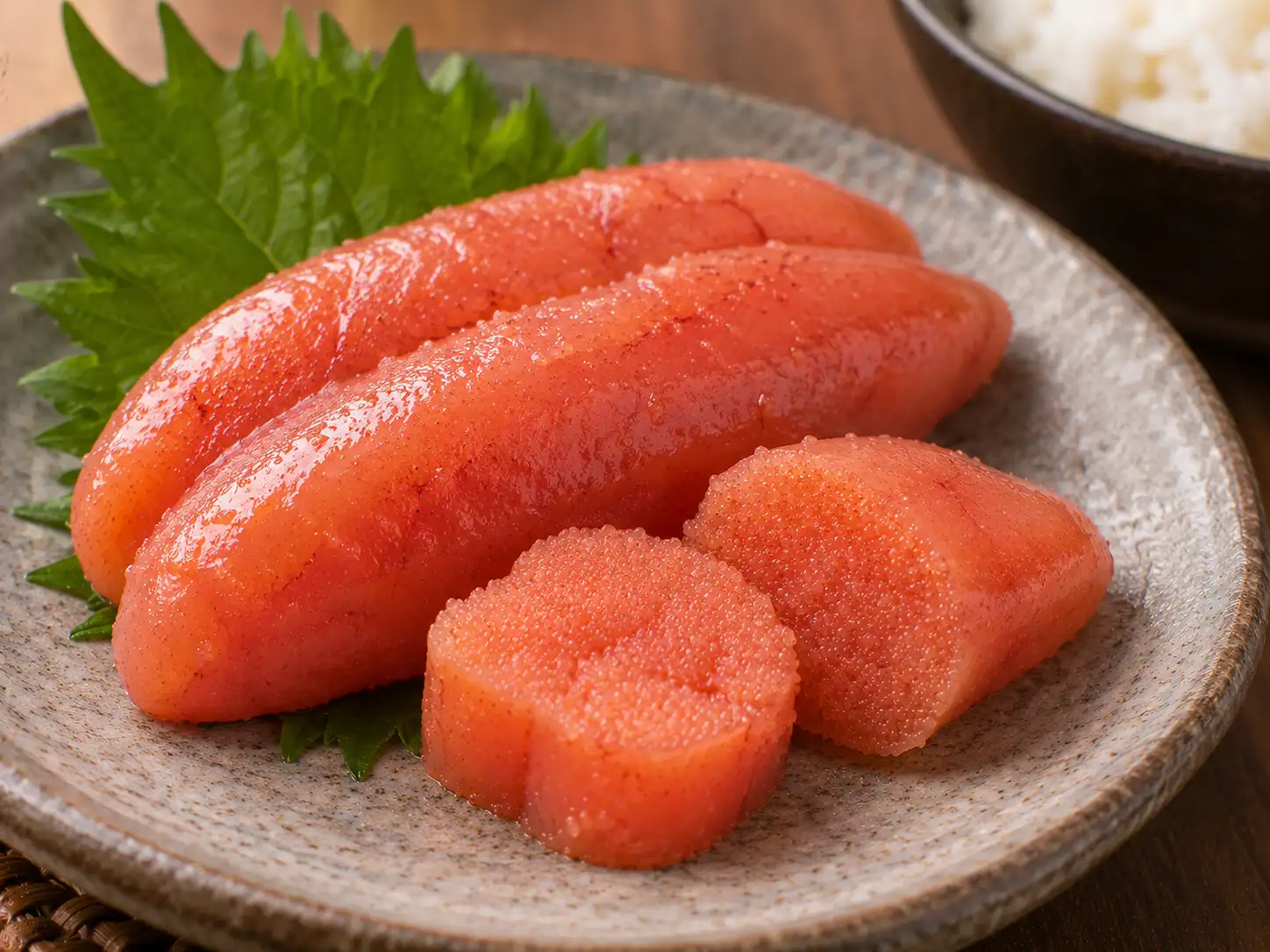
Soft pink, delicately salty, and filled with thousands of tiny eggs, tarako is a familiar ingredient in Japanese home cooking. Made from the salted roe of Alaska pollock, a fish belonging to the cod family, tarako is traditionally sold in its thin, natural egg sac. It can be enjoyed with steaming rice, tucked inside a rice ball, lightly grilled, or mixed into buttery Japanese-style pasta. Its appeal lies in a subtle seafood flavor and a fine, grainy texture that makes even a small portion memorable.
What Is Tarako?
Tarako (たらこ or 鱈子) is a Japanese food made from salted fish roe, most commonly the eggs of Alaska pollock (Gadus chalcogrammus). Although the name translates roughly to "cod roe," the familiar commercial product is generally made from pollock, a member of the cod family.
Unlike loose fish eggs served individually, tarako is commonly preserved inside the natural membrane that surrounds the roe. This creates an elongated, slightly curved sac containing countless tiny eggs. The surface is usually pale pink, beige, or light orange, depending on processing and the product.
Tarako has a mildly salty, savory flavor with a noticeable seafood character. Its texture is especially distinctive: the tiny eggs create a fine, granular sensation that can be soft and moist or slightly firmer when cooked.
It is widely enjoyed in Japan as a rice accompaniment, an ingredient in onigiri, and a flavoring for pasta. Tarako is closely related to mentaiko, but the two are generally distinguished by their seasoning.
Quick Facts
Quick Facts
- Country: Japan
- Japanese name: Tarako (たらこ / 鱈子)
- Main ingredient: Salted Alaska pollock roe
- Fish species: Alaska pollock (Gadus chalcogrammus)
- Appearance: Pale pink to light orange roe sacs
- Flavor: Mildly salty, savory, and marine
- Texture: Soft with fine, closely packed eggs
- Preservation method: Salt curing
- Common uses: Rice, onigiri, pasta, and grilled dishes
- Related food: Mentaiko, or seasoned spicy pollock roe
Common Ingredients
Traditional tarako has a short ingredient list. The focus is on preserving the roe while retaining its natural flavor and delicate structure.
- Alaska pollock roe: The essential ingredient, generally collected and processed while the egg sacs remain intact.
- Salt: Provides the characteristic seasoning and helps preserve the roe during curing.
- Water or brine: Used in some commercial curing methods to distribute salt evenly.
- Additional seasonings: Certain commercial varieties may contain flavor enhancers or other ingredients, although plain salted tarako is the classic style.
When tarako is used in a finished dish, ingredients such as butter, soy sauce, rice, nori, lemon, and pasta may be added. These are accompaniments rather than essential parts of the preserved roe itself.
The roe's quality depends on factors such as the condition of the fish eggs, careful processing, and the balance of salt. Different producers may favor a softer or firmer texture.
How Tarako Is Prepared
Tarako production begins with the roe sacs of Alaska pollock. The sacs are carefully handled to preserve their membranes and prevent the tiny eggs from spilling out.
The roe is cleaned and cured with salt, commonly through a controlled salting or brining process. The salt seasons the eggs and changes their texture as moisture moves through the roe. The product is then packed and kept under appropriate refrigerated or frozen conditions.
The finished tarako may be sold as whole roe sacs or in smaller portions. In Japanese cooking, it can be served without additional heating when the product is specifically intended for that use, or it may be grilled or incorporated into cooked dishes.
Light grilling changes the texture noticeably. The roe becomes firmer and more crumbly, with a concentrated savory aroma. For rice dishes, the membrane may be opened and the eggs gently separated so they can be spread over rice or mixed into another ingredient.
One of the most familiar modern preparations is tarako pasta. The roe is removed from its sac and combined with ingredients such as butter, then tossed with cooked spaghetti. The tiny eggs coat the pasta, giving it a lightly salty seafood flavor without requiring a heavy sauce.
Food safety is important because salt curing does not necessarily eliminate all harmful microorganisms or parasites. Tarako should come from a reputable supplier, be stored according to its label, and be thoroughly cooked when required. Pregnant people and others at increased risk from foodborne illness should avoid raw or undercooked seafood products.
History & Origins
Tarako belongs to Japan's long tradition of preserving seafood with salt. Before modern refrigeration, salting was an important way to extend the usefulness of fish and other marine foods.
Japan's Ministry of Agriculture, Forestry and Fisheries recognizes salted Alaska pollock roe, or shio-tarako, as part of the country's traditional salted-food culture. Salted pollock roe became especially associated with northern Japan, where cold-water fisheries supplied the raw ingredient.
Hokkaido has played an important role in tarako production, particularly in coastal communities connected with Alaska pollock fishing and seafood processing. The region's fishing history helped establish tarako as a recognizable Japanese preserved-food specialty.
Over time, tarako moved beyond its role as a simple rice accompaniment. Its fine texture and salty flavor made it useful in modern Japanese home cooking, including rice balls, sandwiches, and Japanese-style spaghetti.
The development of spicy mentaiko also broadened the popularity of pollock roe. Although related, tarako generally refers to the simpler salted product, while mentaiko is associated with additional seasonings, especially chili.
Varieties & Differences
Tarako is available in several forms, and its closest relatives are sometimes confused with it.
- Shio-tarako: The classic salt-cured roe, valued for its mild seafood taste and relatively simple seasoning.
- Yaki-tarako: Tarako that has been grilled or roasted, producing a firmer texture and a more pronounced savory flavor.
- Karashi mentaiko: Pollock roe seasoned with chili and other flavorings. It is generally spicier and more strongly seasoned than ordinary tarako.
- Tarako pasta: A popular Japanese-style pasta dish in which the tiny eggs are mixed with butter or other ingredients and tossed with spaghetti.
- Tarako onigiri: Rice balls containing salted or grilled tarako, often wrapped in nori seaweed.
Tarako is also different from ikura, the larger orange eggs of salmon, and kazunoko, the firm, golden roe of herring. These foods belong to Japan's broader roe tradition but have different textures, flavors, and culinary uses.
How Tarako Is Enjoyed
One of the simplest ways to enjoy tarako is with hot steamed rice. A small amount adds enough saltiness and seafood flavor to transform an otherwise plain bowl.
Tarako is also a familiar filling for onigiri, Japan's portable rice balls. The roe may be tucked into the center, where the surrounding rice balances its concentrated seasoning.
In Japanese-style pasta, tarako creates an especially appealing combination of textures. The fine eggs coat individual strands of spaghetti, while butter adds richness and helps distribute the flavor. Nori or chopped shiso may be sprinkled on top for freshness and aroma.
Grilled tarako is another popular option. Heating changes the soft roe into a firmer, lightly crumbly accompaniment that pairs well with rice, making it suitable for breakfast or a bento lunch.
Because tarako is salt-cured, it can contain a substantial amount of sodium. It is commonly enjoyed in relatively small portions alongside rice or other mild foods rather than eaten as a large main dish.
Did You Know?
Although tarako is often translated into English as "cod roe," the familiar Japanese product is usually made from Alaska pollock, which belongs to the cod family. Its close relative, mentaiko, generally uses the same type of roe but adds seasonings such as chili peppers.
A Small Ingredient with a Distinctive Japanese Flavor
Tarako demonstrates how a simple preservation method can produce an ingredient with lasting culinary appeal. Its tender pink roe sacs, delicate grainy texture, and mild saltiness make it equally suited to traditional rice meals and modern pasta dishes. From Hokkaido's seafood-processing heritage to everyday Japanese home cooking, tarako remains a distinctive expression of Japan's appreciation for carefully preserved marine ingredients.