
Tejate
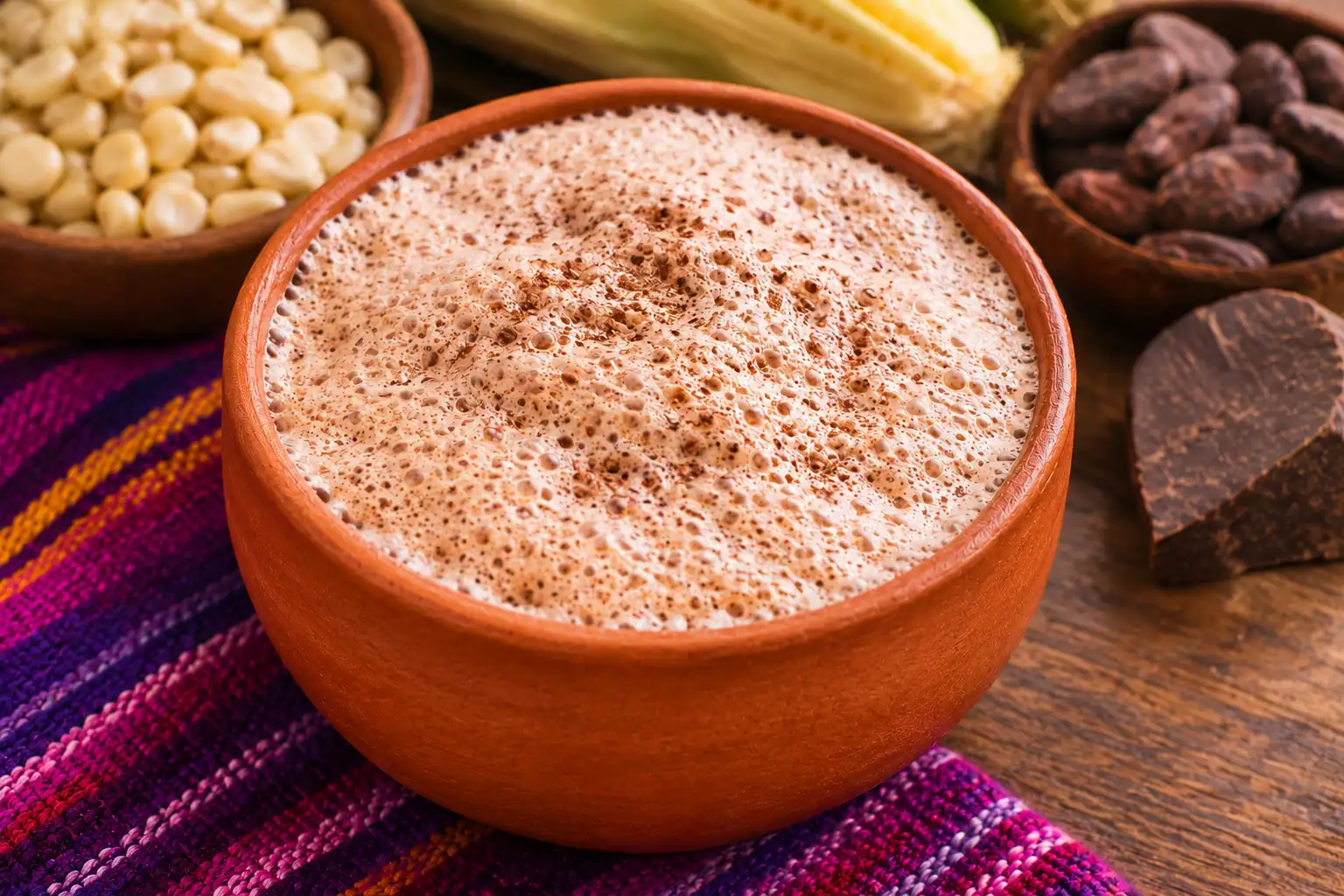
In the markets of Oaxaca, Mexico, large clay bowls hold a traditional drink unlike ordinary hot chocolate or corn-based beverages. Called tejate, this refreshing mixture of maize, cacao, mamey seeds, and aromatic flowers is famous for the delicate, creamy foam that floats across its surface. Served cool and often sweetened to taste, tejate has been prepared in the Central Valleys of Oaxaca for generations. Its ingredients and careful hand-mixing reflect the culinary knowledge of Zapotec communities, making it an important part of the region's cultural heritage.
What Is Tejate?
Tejate is a traditional Mexican beverage made from maize, cacao, mamey sapote seeds, and fragrant flowers known as rosita de cacao. It is especially associated with the Central Valleys of Oaxaca and the Zapotec community of San Andrés Huayápam.
The drink has a light brown or beige appearance beneath a distinctive layer of pale, creamy foam. Unlike hot chocolate, tejate is generally served cool. Its flavor combines the earthiness of maize, the gentle bitterness of cacao, and the subtle floral character of rosita de cacao.
Its texture is equally important. The liquid can feel lightly grainy or substantial because of the ground maize, while the floating foam has a softer, richer consistency. A serving may be sweetened with sugar, although the amount varies according to local preferences.
Tejate is sometimes called the "drink of the gods," a nickname reflecting its longstanding cultural importance. It is enjoyed as an everyday refreshment, sold in traditional markets, and celebrated at community festivals.
Quick Facts
Quick Facts
- Origin: Central Valleys of Oaxaca, Mexico
- Cultural association: Zapotec communities
- Famous locality: San Andrés Huayápam, Oaxaca
- Main ingredients: Maize, cacao, mamey seed, and rosita de cacao
- Traditional maize preparation: Processing with alkaline wood ash
- Appearance: Pale brown liquid with a creamy, light-colored foam
- Flavor: Earthy, nutty, mildly bitter, and floral
- Serving temperature: Cool or at room temperature
- Typical serving: A cup or bowl, often made from a dried gourd
- Cultural role: Market refreshment, household tradition, and festival drink
Common Ingredients
Tejate is built around four characteristic ingredients. Each contributes to the drink's flavor, body, or remarkable surface foam.
- Maize: Forms the main body of the drink. Traditional preparations in Oaxaca often use maize processed with wood ash, a regional form of alkaline cooking.
- Cacao: Roasted cacao seeds contribute richness, gentle bitterness, and an aroma reminiscent of chocolate without making the beverage taste like conventional hot cocoa.
- Mamey seed: Known locally as pixtle, the seed of the mamey sapote fruit is prepared and ground into the mixture. It contributes flavor and helps create the drink's distinctive texture.
- Rosita de cacao: Aromatic flowers from Quararibea funebris, a tree associated with southern Mexico. Despite the name, this plant is not the same species as the cacao tree.
- Water: Used to turn the ground ingredients into a drinkable mixture and develop its characteristic consistency.
- Sugar: Often added according to the drinker's preference, balancing the natural bitterness of cacao.
Some local recipes include additional ingredients, such as coconut, nuts, or other regional flavorings. However, the combination of maize, cacao, pixtle, and rosita de cacao remains central to the traditional beverage.
How Tejate Is Prepared
Making traditional tejate requires several stages of preparation, many of which are carried out before the beverage is mixed.
The maize is cooked and processed to soften the kernels and prepare them for grinding. In many traditional Zapotec recipes, wood ash provides the alkaline conditions needed for this process. The prepared maize is then ground into a smooth dough or paste.
Separately, cacao seeds and mamey seeds are roasted and processed. The aromatic rosita de cacao flowers are also prepared before being combined with the other ingredients.
These components are ground together to form a thick, fragrant paste. Water is gradually added while the mixture is worked and blended, traditionally by hand, until it becomes a drink with a recognizable layer of foam.
The formation of this foam is one of the most important signs of a well-prepared tejate. Rather than coming from whipped dairy cream, it develops through the interaction of the drink's plant-based ingredients and the vigorous mixing technique.
Once ready, tejate is served cool, frequently from large earthenware containers. The vendor may add sugar to individual portions, allowing customers to choose how sweet they want the beverage.
Traditional preparation relies on specialized knowledge, particularly when processing maize with ash and preparing the mamey seeds. These steps should not be improvised using unidentified plant materials or unsuitable alkaline substances.
History & Origins
Tejate belongs to a long Mesoamerican tradition of beverages made from maize and cacao. Both crops were important to Indigenous societies well before Spanish colonization, appearing in everyday food preparation as well as ceremonial contexts.
The drink is especially connected with Zapotec communities in Oaxaca's Central Valleys. Regional accounts describe tejate as a beverage associated historically with agricultural ceremonies and the seasonal rhythms of planting and harvesting.
Its precise date of invention is unknown. Although tejate is widely described as pre-Hispanic, the exact composition of ancient recipes cannot always be established. Historical and archaeological research nevertheless supports the longstanding importance of maize-and-cacao beverages in the region.
San Andrés Huayápam has become particularly famous for maintaining tejate-making traditions. The community is closely associated with the cultivation and use of rosita de cacao, an essential aromatic ingredient.
Women have played a central role in preserving and transmitting the knowledge required to prepare tejate. Recipes, ingredient selection, grinding techniques, and methods of developing the foam have often been passed from one generation to another.
Today, community festivals and local producers continue to celebrate tejate as both a regional specialty and a living expression of Zapotec food heritage.
Varieties & Differences
Tejate does not have one universal recipe. Ingredients and proportions vary between communities, families, and individual vendors.
- Traditional tejate: The classic combination of maize, cacao, pixtle, rosita de cacao, and water, often sweetened when served.
- San Andrés Huayápam tejate: A locally celebrated preparation closely associated with the community's traditional ingredients and methods.
- Nut-enriched tejate: Regional variations that may incorporate peanuts, walnuts, or other ingredients for additional richness.
- Coconut tejate: A variation that includes coconut, adding a different aroma and a slightly richer taste.
- Less-sweetened tejate: A serving that emphasizes the natural maize, cacao, and floral flavors instead of added sugar.
Tejate is sometimes compared with atole, another traditional Mexican maize-based beverage. However, atole is commonly served hot and thickened through cooking, while tejate is generally served cool and distinguished by its foam.
It also differs from conventional chocolate drinks. Although cacao is essential, tejate has a more complex combination of maize, seeds, and aromatic flowers, giving it a flavor that cannot be described simply as chocolate milk.
How Tejate Is Enjoyed
Tejate is a familiar refreshment in markets and public spaces throughout Oaxaca's Central Valleys. Vendors traditionally serve it from large clay vessels, sometimes using dried-gourd bowls or cups.
Its cool temperature makes it especially appealing during warm weather. A serving combines lightly earthy, nutty flavors with a creamy foam that may cling to the sides of the drinking vessel.
Some people enjoy tejate with little or no added sugar, while others prefer a sweeter version. The drink can accompany a market meal or be enjoyed on its own as a substantial refreshment.
In San Andrés Huayápam, tejate is celebrated through a community festival that recognizes local producers and the beverage's importance to the area's identity and economy.
The drink also remains meaningful beyond Oaxaca. Research on Zapotec migration has documented how tejate-making knowledge and ingredients have traveled with families to other regions, including communities in the United States. Preparing and sharing it can help maintain connections with home.
For visitors, a cup of tejate offers more than an unfamiliar flavor. It provides an opportunity to appreciate the ingredients, labor, and cultural knowledge behind a beverage that continues to connect generations.
Did You Know?
Rosita de cacao, one of tejate's signature ingredients, does not come from the chocolate-producing cacao tree. It is the fragrant flower of a different species, Quararibea funebris. Together with maize, cacao, and mamey seed, it helps give tejate its distinctive aroma and creamy, floating foam.
A Living Tradition in Every Foamy Cup
Tejate brings together four remarkable ingredients and generations of specialized knowledge. Its earthy maize base, cacao richness, floral fragrance, and soft foam make it unlike ordinary chocolate or corn drinks. Closely tied to Zapotec communities and the markets of Oaxaca, tejate remains both a refreshing beverage and a meaningful expression of Indigenous culinary heritage. Each cup reflects the continuing importance of traditional food knowledge, community identity, and the remarkable diversity of Mexican cuisine.