Tiết Canh
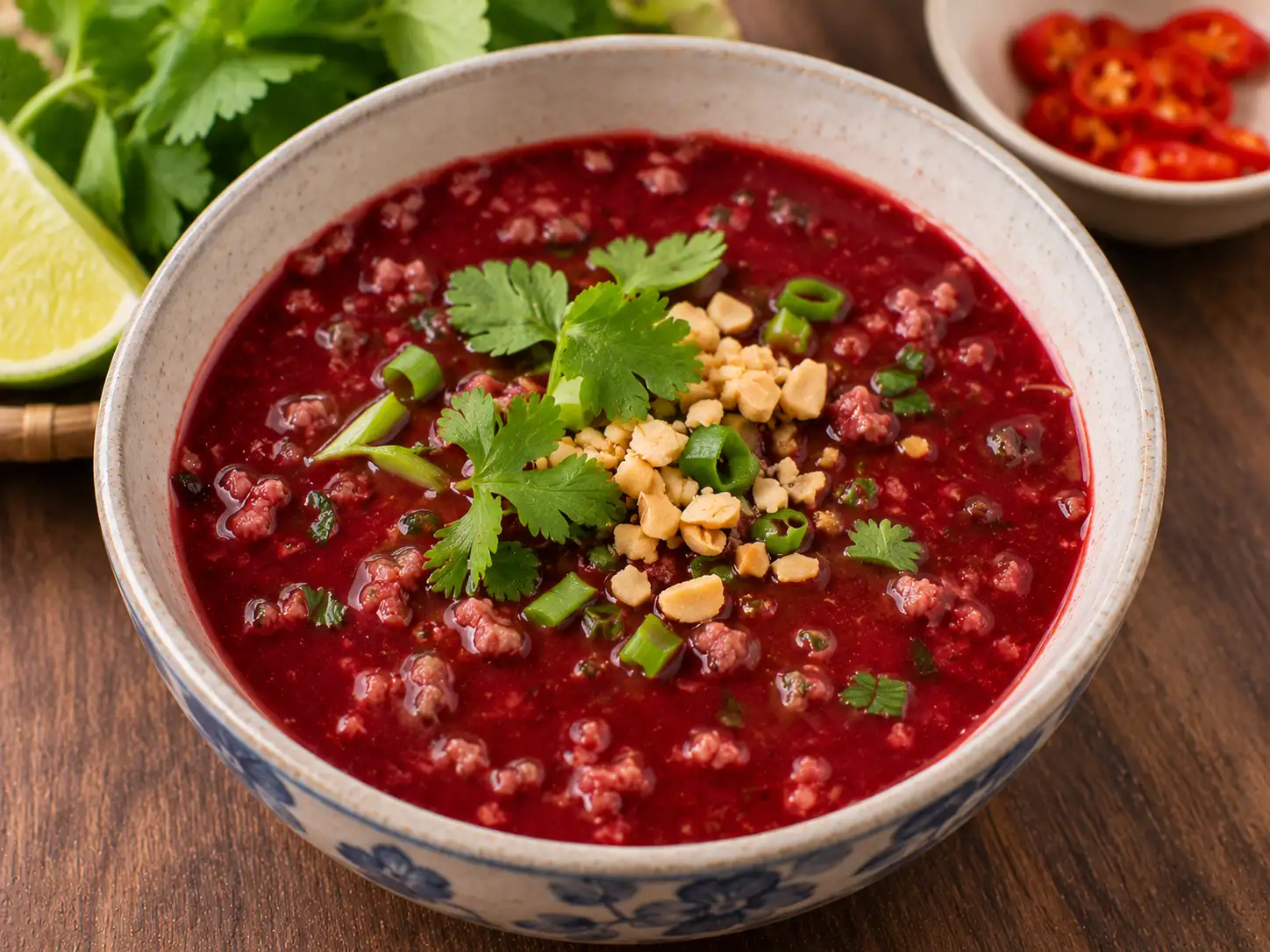
Silky, savory, and traditionally served cold, tiết canh is one of Vietnam's most distinctive regional foods. This unusual pudding is made from fresh, uncooked animal blood that sets into a soft jelly, typically accompanied by chopped cooked meat, herbs, and roasted peanuts. Particularly associated with northern Vietnamese food traditions, tiết canh has appeared at family gatherings and communal meals for generations. However, unlike cooked blood dishes found elsewhere in the world, its raw ingredients carry serious infection risks, making it a traditional food that health authorities strongly advise against eating.
What Is Tiết Canh?
Tiết canh is a Vietnamese savory blood pudding prepared using fresh animal blood, most commonly from ducks or pigs. The name is often translated as “blood soup,” although its consistency is generally closer to a soft, set pudding than a liquid soup.
The dish traditionally contains a layer of coagulated raw blood combined with chopped cooked meat, organs, or cartilage. Its surface is frequently decorated with herbs, roasted peanuts, and other seasonings.
Depending on the animal used and the preparation style, tiết canh may be deep red, burgundy, or reddish brown. Its texture is smooth and delicate, contrasting with the firmer meat pieces and crunchy toppings.
Tiết canh is particularly associated with northern Vietnam, although variations exist elsewhere. It has historically been served during gatherings, celebrations, and meals connected with animal slaughter and preparation.
The defining characteristic is that the blood remains uncooked. This distinguishes tiết canh from many other blood-based foods and creates significant food-safety concerns.
Quick Facts
Quick Facts
- Origin: Vietnam, especially northern regions
- Vietnamese name: Tiết canh
- Type: Savory raw blood pudding
- Main ingredient: Fresh, uncooked animal blood
- Common varieties: Duck blood and pig blood
- Additional ingredients: Cooked meat, offal, herbs, and roasted peanuts
- Texture: Soft, gelatinous, with contrasting crunchy toppings
- Flavor: Savory, mildly metallic, and herbaceous
- Serving style: Traditionally served cool in a shallow bowl
- Food-safety status: High-risk raw animal product; consumption is discouraged by health authorities
Common Ingredients
Traditional tiết canh uses ingredients associated with the animal from which the blood was collected. Recipes vary between households and regions.
- Fresh animal blood: The defining component, commonly obtained from ducks or pigs. It forms the soft pudding-like base.
- Cooked meat: Finely chopped meat adds substance and a contrasting texture.
- Organ meats: Some versions include cooked liver, gizzard, or other edible organs.
- Fish sauce: Traditionally used to contribute saltiness and savory depth.
- Roasted peanuts: Provide crunch and a nutty flavor.
- Vietnamese coriander: Adds a fresh, peppery herbal note.
- Mint and other herbs: Used in some preparations to provide fragrance and freshness.
- Chili and lime: Optional accompaniments that introduce heat and acidity.
Although the toppings may be cooked or otherwise prepared, the traditional dish still contains raw blood. Adding salt, fish sauce, lime, herbs, or other seasonings does not reliably eliminate infectious microorganisms.
How Tiết Canh Is Traditionally Prepared
Unlike conventional blood pudding, which is cooked until firm, tiết canh depends on the natural coagulation of fresh blood. The traditional process combines uncooked blood with seasoned ingredients and cooked animal tissues, allowing the mixture to develop a soft, jelly-like consistency.
It is usually presented in a shallow bowl or dish, with chopped meat and organs distributed through the mixture. Roasted peanuts, fresh herbs, and other garnishes are added before serving.
The finished dish has a smooth surface and a delicate texture. It is traditionally eaten without further cooking, which preserves its characteristic consistency but also leaves potential pathogens alive.
This preparation should not be attempted as a home recipe. Fresh animal blood can contain dangerous bacteria and other infectious agents even when the animal appears healthy. Coagulation, refrigeration, seasoning, and careful presentation do not make raw blood safe to eat.
Vietnamese public-health authorities and international medical organizations recommend avoiding raw blood dishes because of the possibility of severe, sometimes fatal infection.
History & Origins
Tiết canh belongs to a wider tradition of using different parts of livestock and poultry in Vietnamese cooking. In rural communities, the preparation of freshly slaughtered animals often involved making use of meat, organs, bones, and blood rather than discarding edible portions.
The dish became associated with communal meals and gatherings, particularly in northern Vietnam. Preparing food from a freshly slaughtered duck or pig could form part of a larger occasion in which relatives, neighbors, or friends shared a meal.
Its precise date of origin is unknown. Unlike some dishes with documented inventors or recognizable founding moments, tiết canh developed within local food practices over generations.
Historically, its appeal came from a combination of freshness, texture, and the opportunity to use more of an animal. However, traditional popularity does not establish that a food is medically safe.
In recent decades, Vietnamese health agencies have repeatedly warned against eating raw blood pudding, particularly after cases of serious bacterial infection associated with raw pig blood and pork products. Public-health campaigns have sought to reduce these risks while addressing an established food custom.
Varieties & Differences
The main variations of tiết canh are distinguished by the animal providing the blood and the meat used as accompaniments.
- Tiết canh vịt: Duck blood pudding, traditionally combined with chopped cooked duck meat or organs, peanuts, and herbs.
- Tiết canh lợn: Pig blood pudding, typically accompanied by cooked pork tissues. This version has a particularly well-documented association with human Streptococcus suis infections.
- Other animal varieties: Regional or less common versions may use blood from other animals, with accompanying ingredients changing accordingly.
- Cooked blood dishes: Vietnamese cuisine also includes thoroughly cooked, congealed blood used in soups and noodle dishes. These are different from raw tiết canh.
Duck blood pudding and pig blood pudding should not be assumed to carry identical infectious risks. Streptococcus suis is especially associated with pigs, while raw poultry products can expose consumers to other dangerous pathogens. Neither version can be regarded as safe merely because of the animal used.
Health Risks of Tiết Canh
Tiết canh presents unusually serious food-safety concerns because its defining ingredient is uncooked animal blood. Some infections associated with raw blood exposure can progress rapidly and cause severe complications.
One of the most important documented risks is Streptococcus suis, a bacterium associated with pigs. Human infection may occur through exposure to infected pigs or consumption of contaminated raw pork products, including pig blood pudding.
The infection can cause meningitis, bloodstream infection, sepsis, and septic shock. Survivors may experience lasting complications, including hearing loss. Fatal cases have also been documented.
Research published in the CDC's journal Emerging Infectious Diseases has identified raw pig blood consumption as a significant risk factor for Streptococcus suis infection in Vietnam. The CDC's travel-health guidance specifically advises against eating dishes containing uncooked blood or meat from pigs and other animals.
Raw duck blood carries other potential risks from foodborne microorganisms. There is no dependable way to determine whether raw blood is free from harmful pathogens by examining its smell, appearance, or texture.
Food-safety warning: Tiết canh made with raw blood should be avoided. Using fresh ingredients, choosing a familiar vendor, adding acidic seasonings, or allowing the blood to set does not remove the danger. People who develop fever, severe headache, vomiting, confusion, neck stiffness, or other concerning symptoms after exposure should seek urgent medical care and tell clinicians about the raw animal product consumed.
How Tiết Canh Has Traditionally Been Enjoyed
Tiết canh has historically been served as part of a shared meal, often alongside other dishes prepared from duck or pork. Its chilled, smooth consistency contrasts with the firmer meat, herbs, and crunchy peanuts.
The taste is described as savory and slightly metallic, with the added ingredients contributing most of the aroma. Vietnamese coriander, mint, and chili help create a distinctive combination of herbal freshness and richness.
For some diners, the dish has represented a connection to family gatherings and rural food traditions. However, many Vietnamese people do not eat tiết canh, and public awareness of the health risks has increased.
Travelers interested in Vietnamese blood-based dishes can instead explore properly cooked preparations, such as noodle soups containing fully cooked blood cubes. These provide a different texture and culinary experience without requiring the consumption of raw blood.
Did You Know?
Unlike many traditional blood puddings around the world, tiết canh is not cooked to make it set. Its raw blood coagulates naturally, creating a soft jelly-like consistency. This difference is also why the dish presents significant infection risks that seasoning, chilling, and careful presentation cannot eliminate.
A Traditional Dish with Important Modern Health Concerns
Tiết canh illustrates the complexity of food traditions that have developed around animal husbandry, communal meals, and the use of locally available ingredients. Its unusual texture and place in Vietnamese culinary history make it notable, but its raw-blood preparation creates documented risks that cannot be overlooked. Understanding the dish means recognizing both its cultural background and the strong medical reasons for avoiding its consumption. It remains an important example of how traditional food practices and modern food-safety knowledge can lead to different conclusions about what is appropriate to eat.